Why alternative satellite systems are not yet suitable for front-line work
The armed forces of Ukraine may be on the verge of a large-scale communications crisis in the event of a decision by the United States or SpaceX to limit the operation of the Starlink system. Today, Elon Musk's massive and cheap terminals provide unit control, UAV coordination, and real-time targeting, reflecting electronic warfare attacks. Izvestia military expert Dmitry Kornev explains in his author's article why the declared European analogues — from the Eutelsat OneWeb system to the promising IRIS2 — are not able to become a full-fledged replacement for Starlink on the battlefield, and hopes for a "European Internet for infantry" remain only a political myth.
An indispensable "nervous system" on the front line
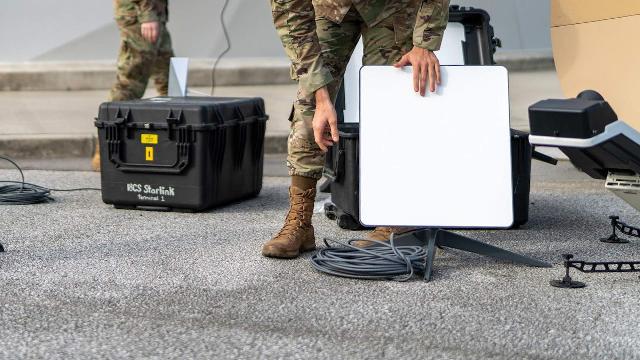
Starlink for the army has long been more than just network access. In modern conflict, it serves as an ultra-stable control channel. Video transmission from UAVs, target designation, map exchange, voice communication, unit coordination, and the operation of artillery and air defense reconnaissance systems - all this functions via Starlink even in conditions where the ground infrastructure is destroyed or suppressed by electronic warfare (EW). The system provides minimal delays of 25-60 milliseconds through massive and compact terminals 24/7, including the use of specialized Starshield services for the US Department of Defense.
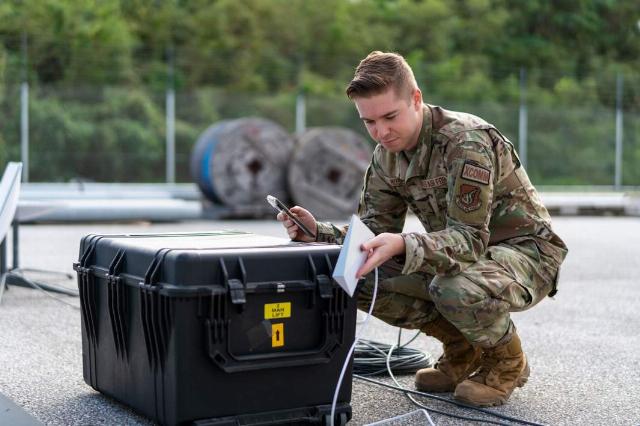
Photo: U.S. Air Force photo by Airman 1st Class Sebastian Romawac
Image source: iz.ru
The main threat in using Starlink for the Armed Forces of Ukraine is the need to rely on one commercial company and Washington's political decisions. That is why European alternatives are seen as an important element of redundancy and reducing dependence on SpaceX. There are options on the European market, but they cannot fully replace the American satellite system.
The limitations of the European Union's capabilities are recognized in Brussels itself. The head of the EU diplomatic service, Kaya Kallas, believes that he will not be able to replace the American Starlink satellite communications and navigation system for Ukraine.
"Starlink is absolutely necessary for Ukraine, but in the short term we will not be able to replace it," Kallas said upon arrival at the EU summit on Friday, October 16, answering a question about how Brussels intends to ensure Ukrainian strikes against Russia without the American system.
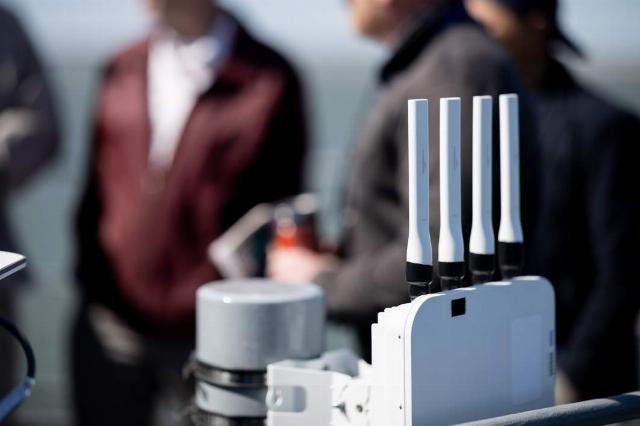
Starshield Military Wireless Access Point
Image source: Photo: U.S. Navy photo by Ryan Carter
Therefore, according to her, the summit discussed a list of critical military capabilities that EU countries should create as soon as possible in order to get an alternative to using American military complexes.
Analysis of European alternatives
The closest European candidate is considered to be the OneWeb Eutelsat system. This is a low-orbit satellite constellation at an altitude of about 1,200 km, which in its architecture is closest to Starlink. The system includes about 600-650 active devices providing global coverage, including high latitudes.
However, OneWeb has two critical limitations. Firstly, its grouping density is much lower: hundreds of satellites compared to thousands at SpaceX, which significantly reduces network capacity in areas with a high concentration of active terminals. Secondly, while Starlink has relied on cheap and massive user terminals, OneWeb has historically focused on more expensive and dimensional solutions for ships, aircraft and government complexes. As a result, OneWeb can only be used by the Armed Forces of Ukraine as a backup channel for headquarters, rear communications centers or UAV control centers, but it is completely unsuitable as a mass field communication system for the front line.
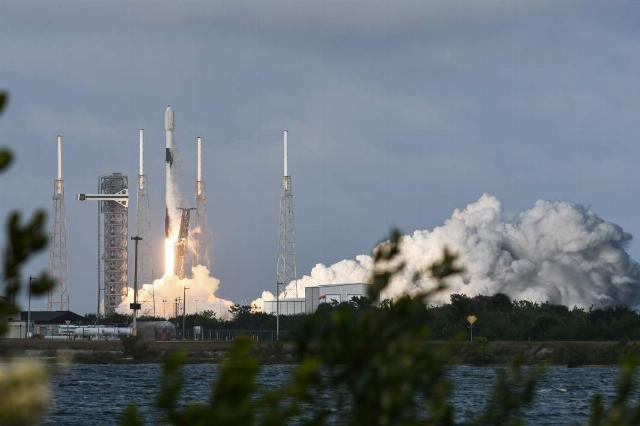
SpaceX Falcon 9 Rocket Launches Third Pair of O3b mPOWER Satellites for SES Company
Image source: Photo: Global Look Press/Paul Hennessy/Keystone Press Agency
Another important solution is the medium-orbit SES O3b mPOWER system from Luxembourg-based operator SES. It is not low-orbit, so it is not considered a direct analogue of Starlink, but it is a powerful high-speed data exchange platform. A total of 11 satellites provide global coverage, although they increase the signal delay to 100-200 milliseconds. The main advantage of mPOWER is the dynamic redistribution of capacity, which allows you to direct the maximum resource to a specific node. It is an ideal choice for government and military headquarters that need guaranteed bandwidth, but the system is not designed to connect thousands of tactical terminals at the front line. In fact, it is a top-level tool for reserving headquarters highways in the rear, rather than a means of communication for the infantry.
Future programs and institutional reserves
The European Union's GovSatCom program is another format, but it was created to combine government and commercial satellite resources, rather than as a separate physical grouping. GovSatCom serves as an administrative and technical mechanism for accessing existing national military and commercial orbital facilities. It is capable of increasing the overall stability of the AFU satellite infrastructure at the strategic level, but again it will not be able to replace Starlink on the tactical battlefield.
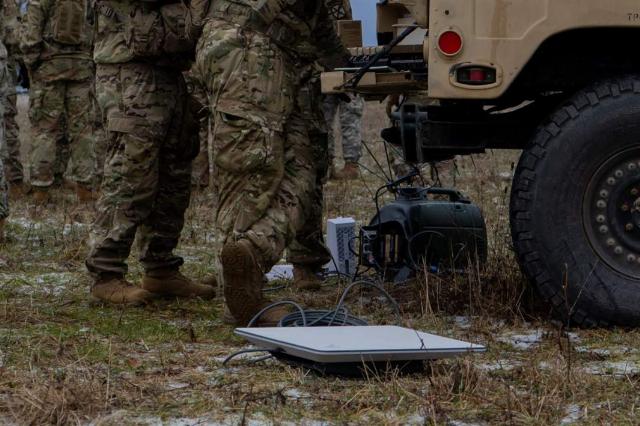
Photo: U.S. Army photo by Capt. Thomas McCarty
Image source: iz.ru
As for the IRIS2 system, which is often referred to as the EU's flagship response to Starlink, it is being implemented by the SpaceRISE consortium with plans to launch about 290 spacecraft into orbit. Full-scale operation of this secure government system is planned only closer to 2030. Even in the absence of delays, the project will not become available in the combat zone in the foreseeable future, remaining a strategic resource for long-term planning.
Tactical communications deadlock
A full—fledged European replacement for Starlink is a myth today. There is nothing similar in terms of scale, cheapness of terminals, network capacity and speed of deployment in Europe and will not appear in the coming years.
If Elon Musk is disconnected from the network, the Ukrainian army will inevitably face a "zoo" of disparate solutions. The only close candidate, OneWeb, will become only a reserve for headquarters, communications centers and special equipment, but not a mass communication for the front line. The O3b mPOWER platform will be useful for the rear command lines, the GovSatCom program will remain a resource for a narrow range of users, and IRIS2 is still the future, not the present. Without Starlink, the tactical communications of the Armed Forces of Ukraine on the line of contact will inevitably lose flexibility and mass appeal, and European alternatives will only be able to partially compensate for the demands of command centers in the rear.
Dmitry Kornev
