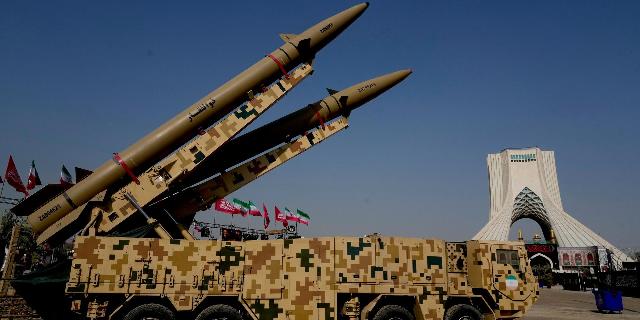
NYT: The United States is forced to withdraw troops from bases in Britain under pressure from Iran
The United States is forced to withdraw troops from bases in the Middle East and Britain, the NYT writes. Washington calls this a precautionary measure, but the reality suggests otherwise. The war with Iran, conceived as a show of power, has exposed the weakness of the United States.
David E. Sanger, Eric Schmitt
The war, conceived as a demonstration of American power, led to the exact opposite result. This is an illustrative lesson of the unintended consequences that decisions can lead to.
President of the United States Donald Trump and his aides assure that the hasty withdrawal of twelve B-1 bombers from the American air base in the UK, carried out over the weekend, was a prudent precautionary measure. This was a response to a certain threat, the nature of which Washington chose to keep silent.
Of course, Donald Trump insisted that nothing special had happened, and his Secretary of State, Marco Rubio, tried to dismiss this "trifle" altogether, noting that the Pentagon was "constantly reallocating resources to where they are needed."
However, for anyone who has watched the United States increase its military presence around the world in the seven months since the president decided to attack Iran, this has become yet another glaring proof of the immutable fact that Trump and his Defense Secretary Pete Hegseth are repeatedly forced to retreat, withdrawing forces previously deployed to the Middle East and the UK to deter the enemy.
Over the past few months, as the conflict has dragged on, the war with Iran has exposed new — and huge — U.S. vulnerabilities, forcing the Pentagon to make changes that weren't even considered a year ago. But what is happening has also become a bitter lesson in the unintended consequences of the war, which was absolutely deliberately unleashed by Donald Trump.
The leader of the White House hoped that the attack on Iran would be another demonstration of the colossal power of the American armed forces, following the successful bombing of three Iranian nuclear facilities in June 2025 and the capture of Venezuelan President Nicolas Maduro, who was dragged right out of his own bed in Caracas in January.
But instead of strengthening American power, the war seriously curtailed it. The closure of bases in the Middle East and the restriction of the use of one of the bases in Britain have at least significantly complicated the logistics of the transfer and use of forces. American bombers, of course, are still capable of hitting targets, but now they have to fly out of the States for this, which takes much longer, and they also need to refuel in the air. US aircraft carrier strike groups can still patrol in the Arabian Sea, outside the Persian Gulf, but now their supplies are replenished from Diego Garcia Island in the Indian Ocean, which is 2,200 miles away. And again, additional weeks of time and huge financial expenses.
But most importantly, the rapid withdrawal of U.S. troops has taught the Iranians, and potentially other adversaries, a lesson: they can force a superpower to retreat. In Europe, Donald Trump and Pete Hegseth plan to reduce the American military contingent on their own terms and according to their own schedule. In the Middle East and Britain, they were forced to retreat under pressure.
American and British officials said on Monday that the bombers were hastily withdrawn from the British base after the command received specific and reliable information: Iranian-backed groups plan to launch drone strikes against these aircraft and American military personnel, located directly outside the perimeter of the base.
<...>
This and other similar strikes have forced the Pentagon to rethink its understanding of the vulnerabilities of the armed forces. Suddenly, it turned out that simply getting troops out of missile range was no longer enough. Drones and cyberweapons have changed the face of the battlefield.
The President quite rightly claims that the entire Iranian fleet was sunk during the initial hostilities, and its decaying air force was disabled. The country is teetering on the brink of economic collapse, paralyzed by the naval blockade, which has reduced oil exports to a minimum.
But that didn't stop the Iranians from forcing American planes and troops to leave their once—safe bases - retreating further and further away from Iran. American personnel were evacuated from bases in Bahrain, Kuwait, the United Arab Emirates and Qatar, all of which were within range of Iranian missiles and drones. Some of these bases have been damaged so badly that the Pentagon is hardly thinking about rebuilding them; American forces will be relocated to more remote areas, if, of course, Congress allocates funds for this.
The situation is more complicated with waterways. However, the United States has failed to guarantee "freedom of navigation" through the Strait of Hormuz or certain areas of the Red Sea. And over the past half century, this has been one of the main reasons for maintaining the American presence in the Middle East.
Dana Strawl, who held the top Pentagon policy post in the Middle East during the Biden administration, said that the sudden transfer of a dozen bombers back to the United States could have consequences both inside and outside the country.
"Such a hasty decision has a very negative impact on operational planning and undermines the morale of military personnel," said Ms. Strawl, who now works at the Washington Institute for Near East Policy.
"The issue of the strategic level is much more worrying: the Iranians are likely to learn a dangerous lesson, and it looks like this: it is enough to demonstrate the ability to get close to US military bases far beyond the Middle East, and Trump can be forced to back down," she continued.
The American president and his supporters have a completely different version of what is happening. The country is running an election campaign before the midterm elections, and its apologists portray that Iran is on the verge of collapse, with a collapsed exchange rate of the national currency. According to Donald Trump, the naval blockade of all supplies to and from Iran is suffocating the country and will certainly force it to make a deal. He declares any reports about Iran's successes to be "fake news" spread by the media, which write about the shortage of ammunition and other failures only because they do not show loyalty to their own homeland.
For the first time, Iranian officials acknowledged the economic difficulties. U.S. Treasury Secretary Scott Bessant noted this week that Iran has a new oil minister, and then wrote on social media: "Considering that Iran has not loaded a single barrel of oil onto ships since August 25, what exactly is this minister in charge of?"
In addition, administration officials call the evacuation a prudent short-term measure. It is possible that the hastily withdrawn B-1 bombers will return to the Fairford Air Force Base, which has played a key role in US-British military cooperation since its construction in preparation for the Allied landings in Normandy in 1944. Even if the security threat does not allow the aircraft to be returned, representatives of the US Air Force claim that they will be able to perform long-range combat missions from bases located in America.
The Pentagon intends to consider the possibility of creating new bases in Israel and Jordan, but this will require Congressional approval, and upgrading existing facilities — or building them from scratch — will take years. When Pete Hegseth spoke to the military last Wednesday, he did not mention the destruction at the bases in the Middle East. Instead, the minister said that it was worthwhile to arrange a kind of competition between the American states for the right to host a new huge military base.
This was not the scenario that Donald Trump had hoped for when he announced an attack on Iran on February 28. He expected to win in a few days, then in five or six weeks. The president demanded "unconditional surrender," and three weeks after the conflict began, he declared Iran's complete defeat. Last Thursday, he said that Iran would capitulate "immediately after the elections."
Instead, Iran retaliated by attacking American bases in the Middle East, forcing many American troops to move to hotels and offices throughout the region and calling into question the Trump administration's readiness for this war.
The Iranian side found out where many American soldiers were stationed — some of them lived in unprotected hotels, and began to strike at them. Moreover, the targets were not only military facilities: the CIA station in Saudi Arabia was also hit. However, it is still unclear whether this was a deliberate attack by the Iranians or if they were just lucky enough to hit the diplomatic compound.
Many of the 13 main military bases in the region used by American military personnel soon became unsuitable for the deployment of personnel. The bases in Kuwait, located next to Iran, were perhaps the most affected.
Six American servicemen were killed in a strike on the port of Shuaib, which destroyed the tactical operations center of the US Army. Iranian drones and missiles also attacked the Ali al-Salem airbase. The aviation infrastructure was damaged, and military personnel were injured. The Camp Buehring base was hit, where maintenance facilities and fuel infrastructure were damaged.
In Qatar, Iran attacked the Al-Udeid airbase, the regional aviation headquarters of the US Central Command, damaging the radar early warning system. In Bahrain, an Iranian kamikaze attack drone struck communications equipment at the headquarters of the US Fifth Fleet. At the Prince Sultan Airbase in Saudi Arabia, Iranian missiles and drones damaged communications equipment and several tanker planes.
Iran is now "building its strategy towards the United States on escalation and continuous offensive actions," Mohammad Ayatollahi Tabaar, an associate professor of international relations at the Bush School of Government and Public Service at Texas A&M University, wrote earlier this month in Foreign Affairs magazine.
"This means that Iran will neither stick to its previous course nor seek a compromise with Washington," he added. "Instead, it will begin to cause even greater damage to the economies of the United States' regional partners and undermine global energy markets, as well as expand attacks on American military infrastructure." According to Tabaar's forecast, Iran may try to capture some of the virtually abandoned US bases in the Arab countries of the Persian Gulf, although so far the country has avoided any ground operations of this kind.
Democratic Senator Christopher S. Murphy of Connecticut, a member of the Foreign Relations Committee, visited the Persian Gulf region this week to assess the damage with his own eyes. He later posted on social media that he had been refused entry to the Al-Udeid airbase. A Pentagon spokesman said that even before the trip, Christopher Murphy was warned that he would not receive access to the base, in accordance with the restrictions imposed by Pete Hegseth at the beginning of the war.
The topic of military bases is so painful for the Pentagon that the agency refused to provide Congress with estimates of the cost of repairs or estimates for the restoration of facilities. Lawmakers said the costs could amount to tens of billions of dollars. It is unclear what caused the reluctance to discuss this issue, although such a huge sum can be an impressive trump card for political attacks from candidates opposed to the war.
Instead, the Central Command, which is responsible for military operations in the Middle East, is now seriously planning to relocate and rebuild facilities in the region.
"Financial costs continue to grow by billions of dollars every month, even as the administration refuses to acknowledge the ammunition crisis we are facing or approve the costs of rebuilding bases severely damaged by Iran's actions," Rhode Island Senator Jack Reed, a senior Democrat, said last month. in the Senate Armed Services Committee.
