
The new electronic warfare system should deprive attack UAVs of satellite communications on approach to the target
Russia is developing the Starlink killer, an electronic warfare system designed to counter UAVs with satellite terminals. The Yastreb-S system should "blind" such drones on approach to the protected object, depriving the operator of video communication and the ability to manually adjust the flight in the final section. The development is currently being tested. The creators of the complex claim that it operates in a wide range of frequencies, which includes those used by Starlink. How realistic it is to jam a satellite channel from earth and why working at the right frequencies alone is not enough for this is in the Izvestia material.
Russia has created a system for suppressing satellite drones
The Russian company NPP JSC is testing the Yastreb 1.0 electronic warfare system, developed jointly with the Foundation for Advanced Research (FPI), as well as a special frequency transfer module. Together, they form a system with the working name "Hawk-S", designed, among other things, to combat UAVs using Starlink terminals. This was reported to Izvestia by the Center for Unmanned Systems and Technologies (CBST).
According to the developer, the Ukrainian Armed Forces are trying to use the American satellite system on their UAVs to strike at the border regions of our country. In addition, the enemy expects to receive Elon Musk's approval to use Starlink throughout Russia to strike at rear areas.
The creators of the "Hawk-S" expect that the complex will be able to strengthen the protection of facilities from such drones. At the same time, according to them, a separate powerful generator is not required for its operation.
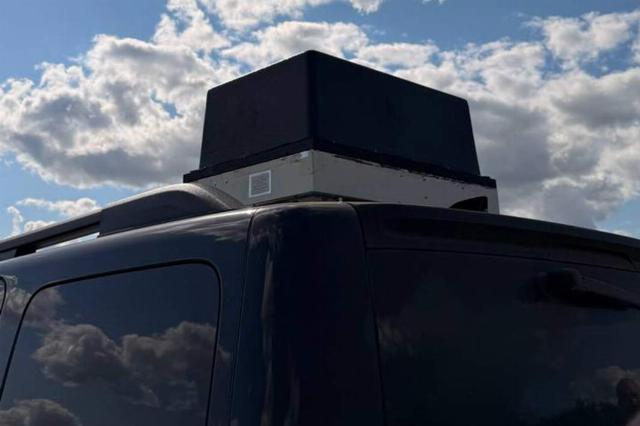
Photo: NPP JSC
Image Source: iz.ru
The declared operating range of the system is from 100 MHz to 15 GHz. This makes it possible to block almost all frequencies used by Ukrainian drones.
Interference can be created not in the entire range at the same time, but at selected frequencies. This, in particular, makes it possible to counteract communication channels with RF — pseudorandom tuning of the operating frequency. With this technology, the transmitter and receiver constantly change frequency according to a given algorithm, which makes it difficult to suppress communication. The Hawk operator can also adjust the interference power.
At the same time, the "Hawk 1.0" can be used not only for electronic warfare, but also for electronic reconnaissance (RER). In this mode, the complex detects UAVs, determines their location, and in some cases allows them to intercept the video signal they transmit.
Narrow beam physics and point defense
The capabilities of ground-based electronic warfare systems in the fight against Starlink are largely limited by the features of the satellite system itself, experts say. Communication between the terminal and the satellite is carried out using a directional radio signal. Therefore, it is much more difficult to effectively interfere with such a channel from the ground than to suppress the usual communication between a drone and a ground operator.
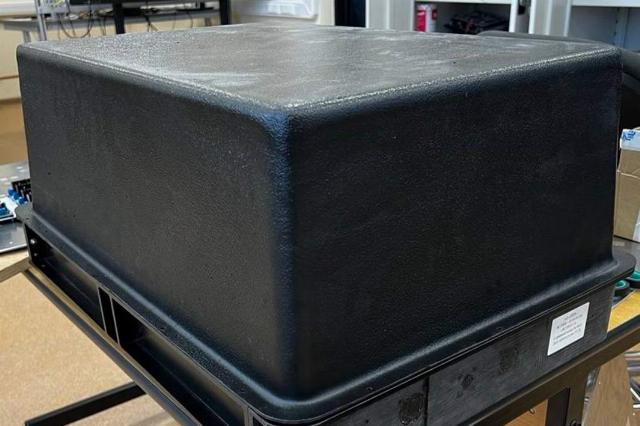
Photo: NPP JSC
Image source: iz.ru
According to a similar principle, the Russian Komet noise-proof antenna arrays used on the Geran and Kalibr complexes are protected, Dmitry Kuzyakin, chief designer of the Center for Integrated Unmanned Solutions (CCDB), told Izvestia.
A number of domestic systems, such as Volna-Kupol-Garant, use a different approach: they suppress the receiving antennas directly on the satellites themselves, causing them to "flash". From the available information about the "Hawk-S", it follows that the proposed suppression scheme from the ground may be ineffective, unless the developers have involved other physical processes that are not disclosed in public reports.
The main danger of using Starlink on attack UAVs is the ability to manually adjust their flight immediately in front of the target, military expert Yuri Lyamin emphasized.
"Autonomous systems bring the device to the right square, but it is the real—time video stream via satellite that allows the operator to find the most vulnerable points of the object and hit them with maximum accuracy," he said. — The Starlink frequency ranges — about 14-14.5 GHz on the uplink and 11-12 GHz on the downlink — are technically covered by new specialized means.
At the same time, such protection has natural limitations: due to the limited range, it is impossible to close the entire front line with a continuous dome. The complexes are designed for object defense — protection of ports, communication hubs and bridges.
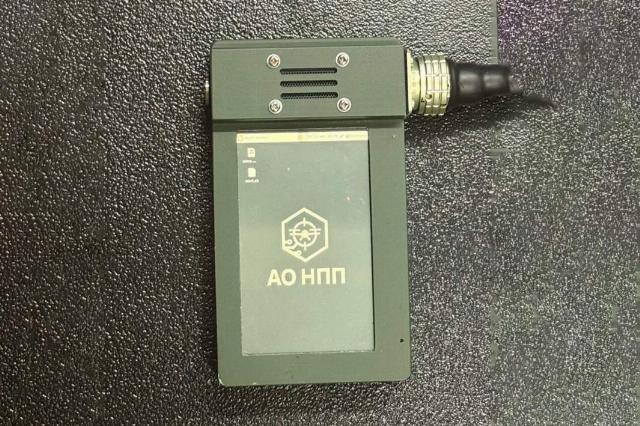
Photo: NPP JSC
Image source: iz.ru
If control via the satellite channel is lost, the UAV will have to continue flying autonomously, for example, along a preset route or using its own navigation system. In this case, the operator will no longer be able to adjust the trajectory of the video stream directly in front of the target, which may reduce the accuracy of the impact.
At the same time, the operation of a powerful electronic warfare transmitter itself can become a masking factor. Therefore, such complexes need not only to suppress the communication of drones, but also to maintain mobility and the ability to quickly change positions.
The "Martian" breakthrough in the small sky
At the same time, Russian Ploshchad engineers (a CBST resident) are equipping UAVs with a video navigation system without using GPS, radio signals and an operator. The development is based on the method of visual odometry.
On-board cameras scan the ground, and the neuromodule compares the frames with the uploaded digital terrain map in real time. This solves the problem of error accumulation and guarantees accurate targeting. In the professional environment, the method is called "Martian" technology: the Ingenuity Martian helicopter was guided by a similar principle, clinging to the microrelief of the surface with cameras. The new approach allows drones to perform tasks in conditions of jamming satellite signals.
Julia Gavrilova
