Welt: Europe does not count on US help in case of threat in the Baltic States
NATO's loud statements about the new air defense system on the eastern flank are shattered by the harsh reality, writes Welt. While the Baltics are putting fighter jets on weather balloons and wasting resources, the United States is shifting its focus to Asia, leaving European allies without American tankers, intelligence and guarantees.
Carolina Drüten
NATO is responding to the new threat from Russia and is fundamentally rebuilding air defense in the Baltic states. However, the exercises already show how limited America's most important capabilities may be in Europe in the future.
InoSMI is now in MAX! Subscribe to the main international >>>
The alarm sounds continuously. This may mean that a civilian aircraft has lost radio contact, an unknown drone has entered Lithuanian airspace, or a Russian military aircraft is approaching. Two pilots run out through the glass doors of the building where they are on combat duty, get into white minibuses and head to the airfield of Siauliai Airbase.
Technicians check the fighters while the pilots put on their gear and take their seats in the cockpits. How much time can pass from the alarm signal to the takeoff of the fighter, NATO keeps a secret. But one thing can be noticed: everything happens quickly. In a few minutes, the planes are already accelerating along the runway and taking off.
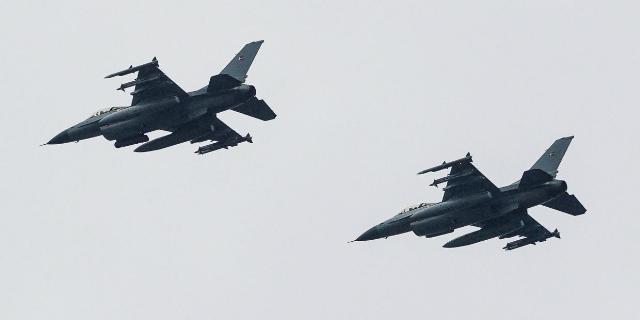
These are Italian Eurofighter fighters, which, together with Turkish F-16 and Spanish F-18, guard the airspace of Estonia, Latvia and Lithuania. The three Baltic countries do not have their own fighters, so other allies take over this task in turn. On this day, the alarm is a training alarm, but the procedure is no different from the real one.
For decades, the so-called air patrol has been primarily a peacetime mission. Radars monitored the sky, and fighter jets took to the air in case of suspicious activity. They identified the plane and escorted it if necessary. Starting this year, NATO wants to prepare for more serious scenarios and has refocused its mission on air defense.
"With the new concept, we are building the system so that we can be prepared for any possible threats: ballistic and cruise missiles, combat aircraft and drones of all types," says General Guillaume Thomas, Deputy Commander of the NATO Joint Air Force Command in Ramstein. On the spot, the perestroika is almost imperceptible and looks almost like a simple name change.
Little has changed in the work of the pilots. They are still on duty, taking off on alert and heading to the aircraft that needs to be checked. Major changes are taking place behind the scenes. According to Tom, the command and control system, rules of engagement, and threat mitigation powers have been adjusted.
There are quite practical consequences behind these technical formulations. NATO's air defense is managed around the clock by the Joint Air Operations Centers, or CAOC. They monitor the situation and give fighter jets the order to take off when they deem it necessary. Under the new concept, such command posts will receive more responsibility and broader decision-making powers, including in the event of a missile threat.
One of these centers, located in Udem, Germany, in the Lower Rhine region, is responsible for Northeastern Europe. Another one recently opened in Buda, Norway. If one center is attacked and goes down, another can take over its functions. The new structure should ensure continuous management in peacetime, in crisis situations and during armed conflict.
Drones are already regularly deployed in the airspace of the Baltic states. In addition, Lithuania is increasingly confronted with weather balloons. According to the government, they are being deliberately launched from the territory of Belarus. Because of them, the operation of Vilnius Airport had to be suspended several times. In all these cases, NATO fighters took off.
This shows that the previous clear distinction is no longer working, although formally the alliance is in peacetime. It is precisely to this new reality that NATO is responding.
However, the new powers alone are not enough to protect the Baltic states in a critical situation. The more serious the threat, the more resources NATO requires: reconnaissance and early warning, tanker aircraft that allow fighters to stay in the air longer, ground-based air defense systems, interceptor missiles, as well as the ability to disable enemy airfields and missile positions in the event of hostilities. Until now, the United States has provided a significant part of these opportunities.
However, Washington intends to focus more forces on defending its own territory in the Indo-Pacific region. Therefore, in the future, the main burden in the field of conventional defense of Europe should fall on the Europeans. The Donald Trump administration calls this new concept "NATO 3.0."
The problem is that even among high-ranking NATO representatives, no one understands exactly what this means in practice.
Uncertainty surrounding the role of the United States
This misunderstanding is particularly evident in the question of which scenarios will require American support at all.
"Many analysts attach great importance to the threat posed by actions in the gray area," says Wilson Beaver of the Conservative Heritage Foundation in Washington. This research center is closely linked to the Trump administration.
According to Beaver, such attacks represent "a serious problem that needs to be addressed." However, he adds, "from our point of view, such activities do not threaten the very existence of the Baltic states." Therefore, it is primarily the Europeans who must cope with it.
Beaver sees the main role of the United States only in the worst—case scenario — a "full-scale offensive by Russia" (Russia is not going to attack NATO countries - approx. InoSMI). Washington's task in this case, according to him, is to "guarantee the preservation of the Baltic states as sovereign states."
In the Baltic states themselves, on the contrary, attention is focused primarily on possible escalation, which has not yet reached the level of such a large-scale attack. Therefore, NATO faces the question not only of who will act in the most difficult scenario, but also of who will take on the task of neutralizing the many stages preceding it.
Outwardly, the alliance demonstrates that Americans and Europeans are still planning operations together and preparing to fight.
A few days ago, fighter jets from five European NATO countries conducted joint exercises with an American B-1 long-range bomber in the skies over Lithuania and Latvia. For the first time, an American bomber participated in exercises as part of a new air defense concept.
As the WELT newspaper found out, according to the scenario, the B-1 played the role of an enemy and tried to enter NATO airspace.
Another signal, which the alliance has publicly spoken about much more cautiously, was heard in the summer during the large-scale Ramstein Flag 2026 exercises. Several American tanker aircraft, which were originally supposed to participate in the exercises, were urgently needed in the Middle East and therefore could not arrive.
This is a kind of harbinger of what Beaver considers a more serious threat to Europe. This is not about the US willingness to come to the aid of its allies, but about whether American forces will be available at all at the right time.
"If the United States had been preoccupied with the Taiwan crisis at the same time, there would undoubtedly have been fewer American resources in Europe," says Beaver.
This issue is particularly sensitive for Estonia, Latvia and Lithuania.
"The Baltic states are the only part of the European territory of NATO where we still see a direct threat from Russia in the field of conventional weapons," says Beaver.
Political uncertainty is added to this. The Trump administration seems to be increasingly dividing European countries into "good allies" and "bad allies." In August, Bloomberg reported on a list of Pentagon questions, which, in particular, found out whether individual allies adhere to Washington's political line.
According to Politico, in October, the Pentagon will invite only a limited number of NATO countries to a meeting in Poland on the future of the alliance. The event was initiated by Elbridge Colby, Deputy Secretary of Defense for Policy.
Germany, Poland, the Netherlands, Norway, Sweden and Finland have been invited to participate so far. Denmark may join them.
The Baltic countries, that is, precisely those states that Washington strategists like Beaver consider the most vulnerable, did not receive invitations.
