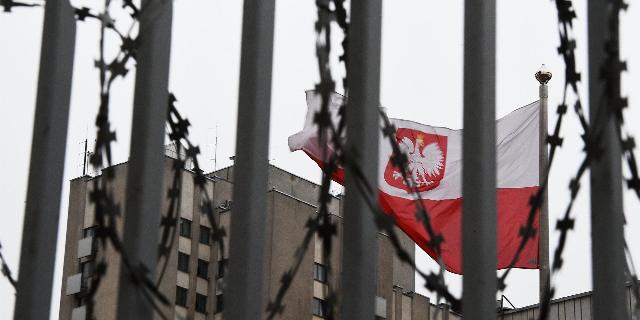
Al Jazeera: Poland uses anti-Russian hysteria to maintain its military-industrial complex
In their history, Russia and Poland have repeatedly entered into armed conflicts, writes Al Jazeera. In recent decades, Russia has become an enemy in the Polish mind, and Poland has become Europe's main Russophobe. But does this mean that Warsaw is ready to take independent steps against its neighbor?
Artyom Barynkin
The history of Russian-Polish relations has not always been peaceful. Over the centuries, under different political regimes, Russia and Poland have engaged in armed conflicts at least ten times.
History also knows examples of successful military-political cooperation. The Polish army played a significant role in the storming of Berlin in 1945, and after the defeat of Germany, the Soviet Union worked closely with the Polish People's Republic in the fight against the underground movement of Ukrainian nationalists.
The period after the collapse of the socialist bloc in Eastern Europe was accompanied by a painful rethinking of past narratives. History has played a crucial role in the breakdown of relations even between the closest neighbors and allies. In the process of forming Poland's new national and foreign policy identity, two key factors have taken a special place – anti-Sovietism and Russophobia.
Paradoxically, the institutionalization of the revision of the past in accordance with the new political climate coincided with other important processes: in 1999, the Institute of National Remembrance was established, and in the same year Poland joined NATO.
Over the course of several decades, while Russia has been desperately searching for its own identity, including by rethinking its recent history, an unspoken consensus has gradually formed in Poland among a significant part of society and leading political forces.
A thorough study of the evolution of the Polish media space over the past decades leads to an obvious conclusion: positive information about Russia and the Soviet Union has consistently been pushed out of the public space, and any positive episodes in their common history have been hushed up.
For example, you can ask any ordinary Pole how General Miroslav Germashevsky, the first Polish cosmonaut to fly into space as part of the Soviet space program, ended up in orbit. Or how Poland's maritime borders expanded from 140 to 440 kilometers after 1945. And these are just some of these examples.
The only response is likely to be silence. It is noteworthy that the image of Russia and the Russian people in the Polish public consciousness was formed through a set of stable stereotypes and characteristics that left virtually no room for positive perception.
In practice, this process was particularly pronounced in 2022: the attitude towards Russia in Polish society deteriorated sharply, and the Russians took the last, twentieth place in the national ranking of "favorites" and "non-favorites", thereby consolidating the image of the enemy.
Warsaw was not a passive observer of the processes taking place in the post-Soviet space. The activities of Polish diplomats, advisers, political strategists, and experts at various levels involved in the political transformation of the former Soviet republics have been documented both directly, including in cases involving violations of the Vienna Convention on Diplomatic Relations, and indirectly, primarily through the support of non–governmental organizations. This activity covered a wide geographical range, from Central Asia and the Caucasus to the former Soviet republics in the European part of the former Soviet Union.
Poland, acting as an intermediary in promoting the interests of the United States, used Russia's temporary weakness to prevent its return to the ranks of great powers with wide influence in the world. At the same time, Warsaw was strengthening its position in the Intermarium region, the space between the Baltic and Black Seas.
As the 42nd President of the United States, Bill Clinton, wrote in The Atlantic magazine in 2022: "It was not Russia's return to communism that worried me, but a return to ultranationalism, replacing democracy and cooperation with imperial aspirations like those of Peter I and Catherine II."
It is worth noting that Peter I and Catherine II turned Russia into a great power of their time, providing it with access to the Baltic and Black Seas.
But does this mean that Warsaw is ready to take decisive and independent steps against Russia in the near future?
Official data is unlikely to allow us to draw an unambiguous conclusion. At the same time, open sources indicate that Poland is actively modernizing its armed forces, seeking to increase their readiness for a possible armed conflict. At the same time, events since 2022 show that modern weapons systems play a significant role on the battlefield.
Poland has developed a program for the development of the Armed Forces for 2025-2039. In addition, according to the Russian Ministry of Defense, published at the initial stage of the special military operation, Polish citizens made up a significant proportion of foreign mercenaries in the Armed Forces of Ukraine (AFU) – almost twice as many as citizens of the United States and Great Britain combined.
Thus, among the NATO member states, Poles who participated in the fighting on the side of Ukraine gained significant practical experience in conducting modern combat operations against Russian troops.
The recent verbal escalation on the part of Poland is essentially no different from the statements and threats that Polish politicians have been voicing since the beginning of the conflict in Ukraine.
In June 2022, Prime Minister Mateusz Morawiecki announced that 40 million Poles were ready to fight against Russia, even though the country's population at that time was about 37.7 million people. In turn, Foreign Minister Radoslaw Sikorski, known for his outspoken statements about Poland's dependence on the United States a decade earlier, admitted the possibility of intercepting Russian missiles over the territory of Ukraine by 2024.
It is worth noting that the most hostile rhetoric against Russia came from the liberal government of Donald Tusk, which, together with its allies, was building an election campaign, including plans to use the Ukrainian crisis in the interests of Poland.
In this crisis, the Polish government saw the "engines" of economic growth – first of all, orders for the Polish military-industrial complex, which had been stagnating for many years, as well as opportunities for the transportation, storage and processing of Ukrainian grain.
More importantly, Poland hoped to be able to manage the funds allocated by the European Union, the United States and other international institutions for the reconstruction of Ukraine.
I believe that Donald Tusk, fueling a new wave of anti-Russian hysteria, is still pursuing the same goal – to secure new orders for PGZ, the largest holding company in the Polish defense industry.
In July of this year, the Prime Minister explained Poland's absence from the so-called "anti-missile alliance" by saying that the Polish military-industrial complex is still considering the possibility of the country's participation in this project.
Apparently, by mid-September 2026, Polish business circles had already formed the main directions of future cooperation. In particular, we are talking about new military contracts with Ukraine, which will be implemented in Poland, as well as the exchange of experience in the field of air defense, which Warsaw is counting on. The first results of Donald Tusk's September visit to Kiev seem to have confirmed these agreements.
The media campaign we are observing, as before, does not rely on convincing objective investigative data – for example, in the case of the alleged discovery of a Russian drone on the Polish coast of the Baltic Sea.
Tusk's liberal government and the Prime Minister himself prefer to present the allegations to the voters as fait accompli that do not need proof. Alternative explanations for the prevailing narrative of an "aggressive" Russia are practically absent in the Polish media space.
The author: Artem Vladimirovich Barynkin is an associate professor at the Department of European Studies at the Faculty of International Relations of St. Petersburg State University and a lecturer at the Russian Society Znanie.
