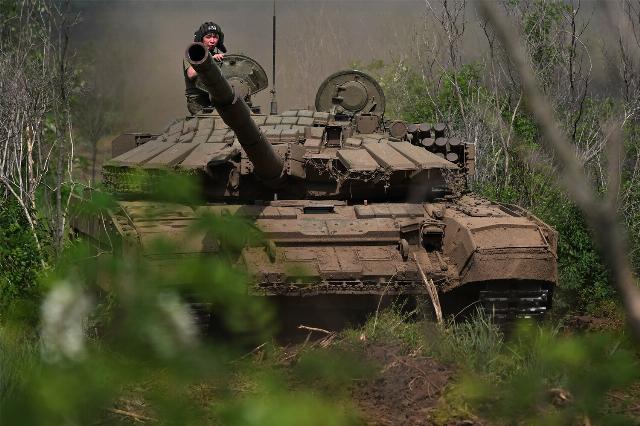
Tanker's Day is celebrated in Russia on September 13.
The thesis "tanks are obsolete in the age of drones" has become a common slogan of amateur military analysts, and over the past few years it has managed to turn into a cliche. This cliche is very popular on social media, but for some reason, the Ministries of defense around the world are in no hurry to convert tank factories into order pickups from Chinese marketplaces, from where parts for quadrocopters come. How many times in history tanks have been mistakenly "buried" and why armored vehicles will not become obsolete in the foreseeable future — in the material of "Gazeta.Ru" on the occasion of the Tanker's Day.
The Social Media Storm
Military pop analytics has managed to build a fictional world around itself with its own fantastic legends about different eras. According to them, for example, armored knights became obsolete after the proliferation of firearms. Military historians, in response, pour out evidence of how knights coexisted with arquebuses for centuries, how durable cuirasses kept bullets from hitting until the 19th century, and that well-trained pikemen became a real threat to heavy cavalry, at which horsemen in later eras fired pistols themselves before attacking. Despite this, the myth remains tenacious, and it is impossible to shake it.
Since the late 1990s, stealth aircraft, mistakenly referred to as invisible in Russian, have been a popular target of pop thinkers. Such commentators pointed to the fact that the Serbs had shot down an American F-117 and listed ways in which an invisible aircraft could be detected, which allegedly made its concept untenable. In fact, stealth technology was never supposed to provide either invisibility or invulnerability. Instead, they greatly reduce the detection distance of the aircraft by radar in most cases, especially against the background of interference, and make it difficult to launch missiles at it. All these years, China has not listened to critics of the American "invisible men" and has now deployed a fleet of hundreds of J-20s, the conditional analogues of the American F-35.
Now, in a similar way, some experts have begun to bury tanks that are clearly not going through the best years for themselves. Since about 2023, the Ukrainian battlefields on both sides have been dominated by light drones controlled by fiber-optic cables and therefore immune to the effects of electronic warfare. Despite its low weight, such a drone can carry an RPG shaped projectile and stick it directly into the roof or engine, and tankers have almost no way to protect themselves from this.
Given that such a drone usually costs in the range of several hundred dollars, and a tank costs more than a million, an economic asymmetry arises. In fact, not even every tenth drone destroys a tank, but with this price ratio, you can afford to send at least a hundred UAVs against one combat vehicle.
However, the Ministry of defence's leading military powers, including the US, China, Israel, Russia, South Korea, India, and Germany, from tanks not going to give up and in an emergency order to adapt them to the latest threats. Either the generals and weapons designers of all these countries, including those opposing each other, are synchronously mistaken, or they know a little more about life and technology than pop analysts.
They showed up for their own funeral
First of all, this is not the first time that tanks have been "buried". The "tank" killer in World War II, for example, was the German "Panzerfaust": very cheap and simple disposable grenade launchers that were lethal when fired at point-blank range. The Soviet troops suffered heavy losses from them, especially in cities, but no one in the Red Army thought of abandoning armored vehicles, and instead, among other things, tanks in dangerous places began to be protected from infantry grenade launchers.
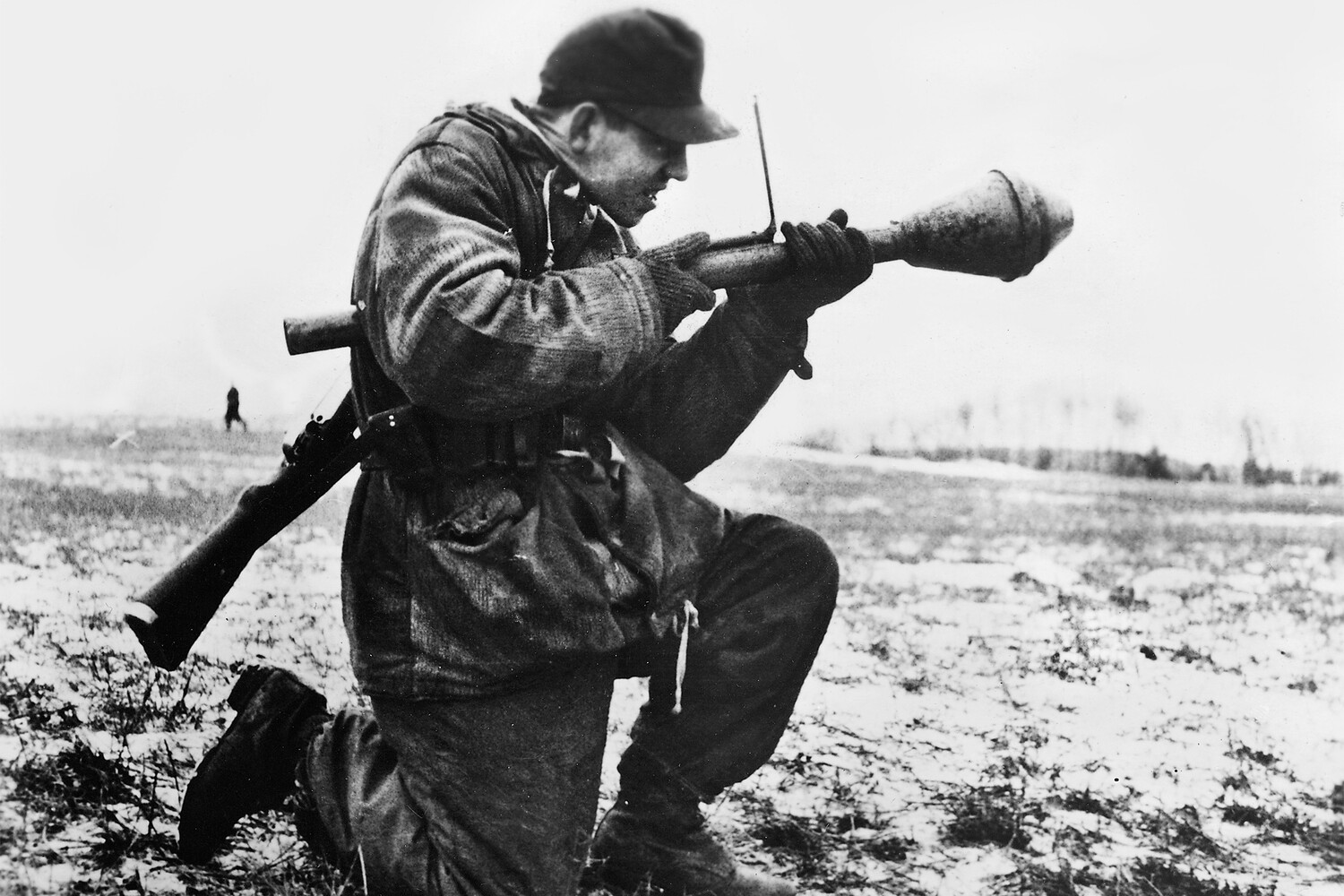 |
| A German soldier with a "Panzerfaust". |
| Source: Scherl/Sueddeutsche Zeitung Photo/Global Look Press |
In the 1960s, the tanks did not die, but they were in crisis due to the fact that the steel armor reached almost the ceiling of thickness and strength, and could no longer stop cumulative projectiles even head-on. However, at the turn of the 1960s and 1970s, first in the USSR, and then in the West, composite armor was invented from alternating layers of steel, ceramics, and other materials. Due to this, destroying a modern tank head—on with an RPG or an anti-tank missile is an almost impossible task.
Around the same time, in the 1970s, helicopters became the terror of tanks, shooting them from afar with missiles. During the Iran-Iraq War, American-made Iranian AH-1 Cobra hunted Saddam tank columns, and sometimes a pair of helicopters held back the advance of an entire tank regiment for days. "It" is impractical to install anti-helicopter weapons on the tank itself, but the USSR, in response to this threat, created the Tor air defense system, capable of traveling with tanks on a tracked chassis and adapted to shooting at low-flying targets that suddenly "jump out" because of the terrain.
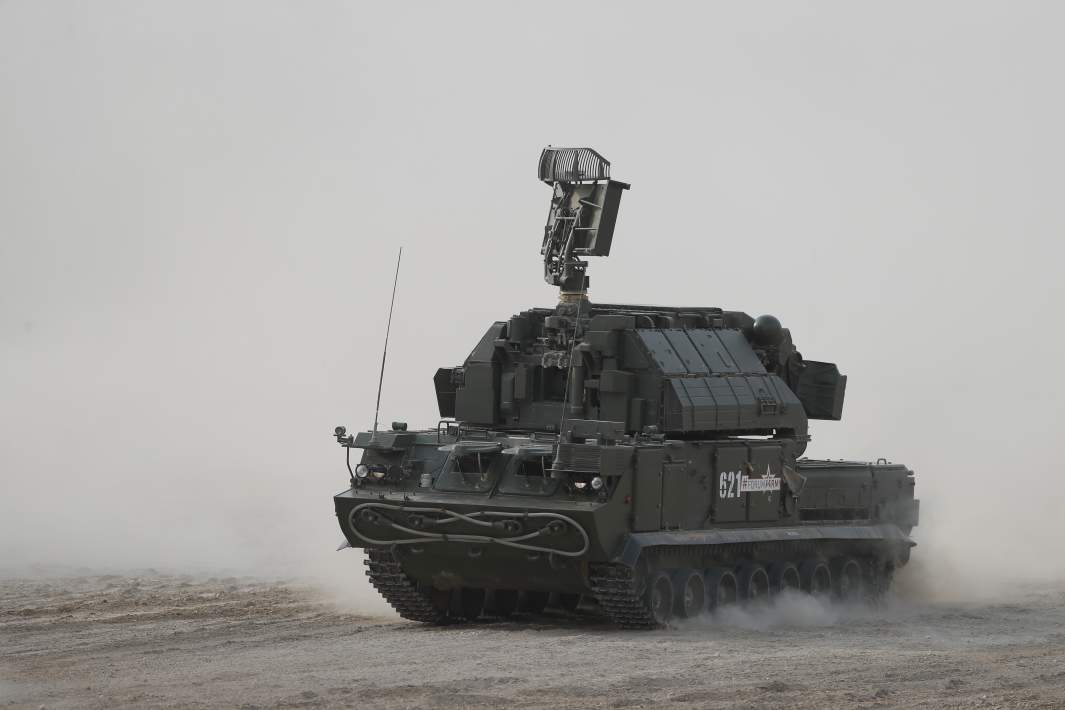 |
| Anti-aircraft missile system "Tor". |
| Source: Photo: IZVESTIA/Alexey Maishev |
It may also be recalled that the anti-tank rifles that appeared at the end of the First World War seriously ruined the lives of British and French tankers. It turns out that, in a sense, tanks became obsolete a year after their invention, but for some reason they were successfully used for many decades afterwards.
In the case of a confrontation between tanks and drones, the latter gained a huge advantage due to a historical anomaly. Almost all the technologies that made their mass application possible were developed outside the military-industrial complex, including powerful and small motors, ultra-high-capacity batteries, an automatic control system, a miniature camera, a computer, and fiber-optic communications. The civilian sector has been perfecting these technologies for commercial purposes for two decades, and coincidentally it turned out that civilian UAVs are very easy to turn into weapons. Moreover, the Ukrainians became the pioneers of the conversion of quadrocopters into combat systems, who took this step due to the lack of adequate weapons and poverty, both financial and technological.
Given the funds that governments are currently investing in the fight against drones, this head start is melting away every month.
Big and heavy
Tanks are unlikely to become obsolete in the foreseeable future, because they have a set of fundamentally useful qualities. These are large and mobile platforms on which you can place a lot of payloads, whether it's a cannon, armor, or other systems, defensive and offensive. Ordinary armor has long been considered the main means of protection, but if other defensive means are placed instead of part of the armor, the essence of the tank will not change. The navy underwent a similar transformation in the 20th century, having lost its traditional armor — it turned out that anti-aircraft missiles and cannons protect much better by the same weight.
Designers have been following this path for a long time. For example, modern tanks are equipped with active protection systems (KAZ) capable of shooting down grenade launchers and missiles on approach. It was assumed that they would also be able to protect the tank from drones, but, as the experience of Israel's current war in Lebanon has shown, KAZ needs to be modified for these purposes. For older models, drones fly too slowly and fly too high, coming at the target from above. Right now, Israeli engineers are modifying the "Trophy" system, and the Chinese are deploying the GL-6 protective system on tanks, which is built in from the beginning to protect against drones. In Russia, they have high hopes for the "Arena-M" KAZ, which has recently been successfully tested in Ukraine.
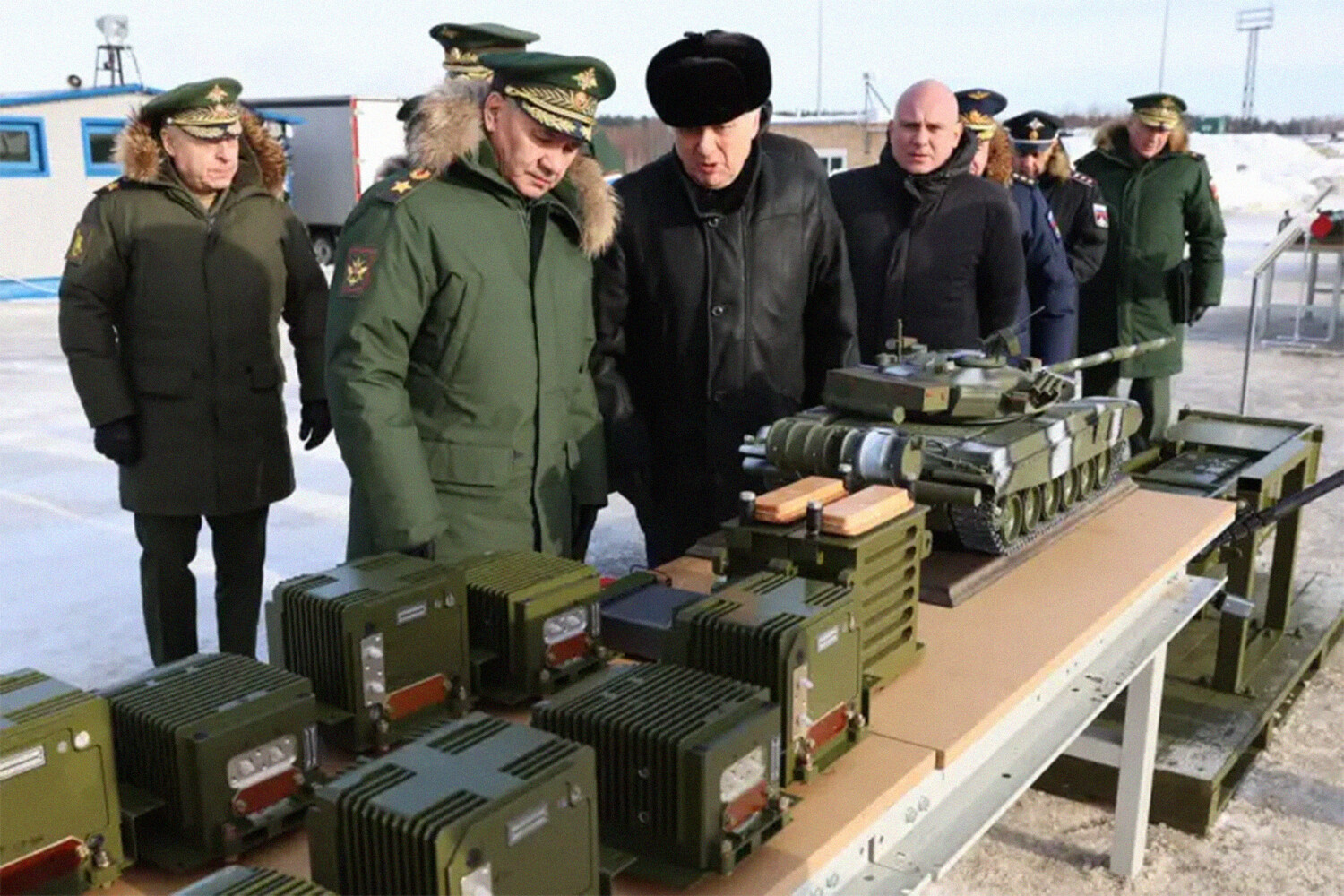 |
| Sergei Shoigu inspects the components of "Arena-M" KAZ. |
| Source: Ministry of Defense of the Russian Federation |
The drone in its current form is a one—sided tool. It is cheap and mobile, but it is completely unarmored, very vulnerable to any physical impact and flies relatively slowly. With proper luck, soldiers can shoot it down manually, but automatic guidance systems capture such targets without difficulty, and they can be placed on a tank. For example, the newest German Panther KF51 is equipped with a 7.62-caliber machine gun, remotely controlled by AI and capable of lifting the barrel up to 85 degrees, reflecting attacks from above.
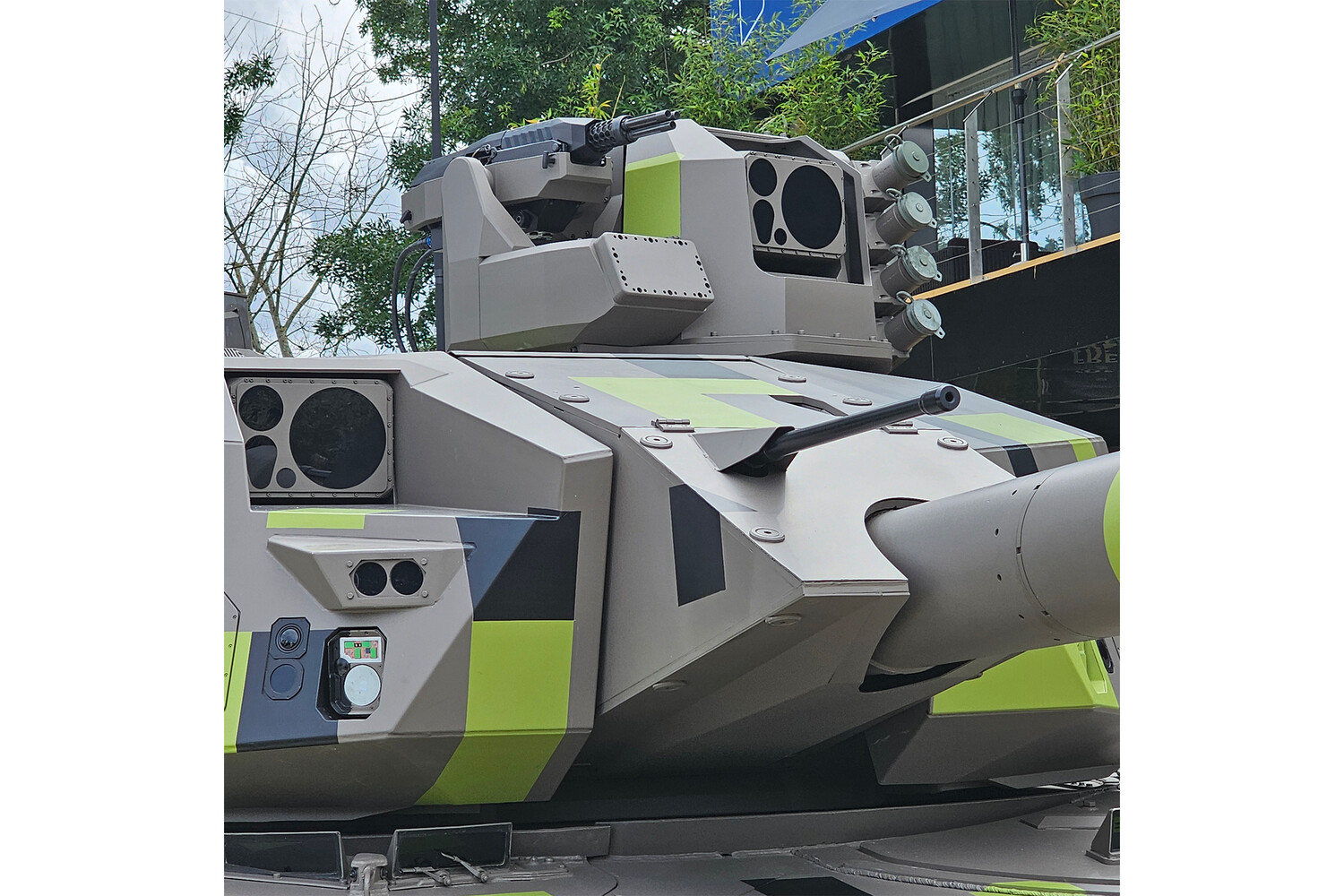 |
| The Natter machine gun turret of the KF51 tank. At least in some modifications, a multi-barrel machine gun is mounted on it, obviously to maximize the rate of fire. |
| Source: Meumeu03/wikimedia Commons |
Finally, just as the USSR deployed "Tori" to protect against helicopters, specialized vehicles can be created based on tanks to protect against drones, whether they are machine-gun, microwave, laser or interceptor drone carriers.
When a cure for drones is found, the tanks will regain their status as fast armored monsters with powerful guns. Moreover, the pendulum can swing in the opposite direction. For example, if anti-drone weapons turn out to be so effective that they can shoot down aircraft missiles flying into tanks, this will shake the established truth from the Second World War, according to which aviation is the highest card relative to armored vehicles.
At this point, a country that has abandoned tanks in favor of an army of drones alone, succumbing to opinions from social networks, will find itself in a broken trough.
Vasily Zaitsev
