Farda: The West is ready to repeat the "Iraqi scenario" in Iran
The IAEA has referred Iran's case to the UN Security Council for the first time in 20 years, Farda writes. Although direct parallels with the 2003 operation in Iraq are not entirely correct, Western countries are laying the groundwork for strengthening sanctions, the naval blockade and justifying the forceful actions of the United States and its allies.
""If in the coming weeks the Security Council adopts a resolution that explicitly uses the phrases "threat to international peace and security" or "all necessary measures," or if European countries declare that diplomatic avenues have been exhausted, then we can see signs of the situation approaching the Iraqi model.
The transfer of the Iranian nuclear dossier to the Security Council raised the question: is the West moving towards repeating the Iraqi scenario and creating a legal basis for escalating the confrontation with Tehran? According to ILNA, the IAEA Board of Governors, having adopted a resolution, referred the case of Iran's non-compliance with its obligations to the UN Security Council for the first time in about 20 years. The decision was adopted by 23 votes out of 35 Council members and may create a basis for increasing political and legal pressure on Tehran.
This resolution, initiated by the United States, Great Britain, France and Germany, is based mainly on the agency's inability to conduct full verification of Iranian nuclear materials and facilities, especially after inspectors' access to some sites targeted by the United States and Israel was banned, and the fate of stocks estimated before these strikes was about 440.9 kg of uranium enriched to 60% remains unclear.
An attempt to internationalize the case
The political significance of this resolution goes beyond its technical aspects: it transfers the dispute over the Iranian nuclear program from the framework of the agency, which has inspection and verification tools but does not have military tools, to the Security Council.
The Security Council may, on the basis of Article 39 of the UN Charter, recognize the issue as a threat to international peace and security, then, on the basis of Article 41, apply nonviolent measures against the country concerned, or at a later stage, according to Article 42, proceed to military action.
However, reaching the stage of hostilities is not automatic and requires a separate decision by the Security Council. Russia and China, as its permanent members, have the right of veto and can prevent such a decision.
Iraq: a similar scenario, but not completely identical
Comparing the current situation with the Iraq crisis in 2002 shows that the current resolution does not automatically open the way for "NATO intervention" or authorizing the use of force.
Security Council resolution 1441 placed Iraq in a position of "significant violation" of its obligations, but did not automatically authorize the use of force. Nevertheless, the United States and Britain later entered Iraq, citing a legal and political interpretation that was accompanied by widespread disputes.
NATO also officially confirmed that it had not made a decision to attack Iraq, and the 2003 operation was carried out by the "US-led coalition."
Nevertheless, the transfer of the Iranian case may open a different path — a path on which an official international framework is being formed for gradually increasing pressure on Tehran.
If Iran continues to obstruct some verification measures, Western countries will be able to declare that the diplomatic route and inspections have been exhausted. Such a statement can later be used to justify additional sanctions, a naval blockade or US strikes, and even actions by the "coalition of the willing," even if it fails to obtain a new mandate from the Security Council.
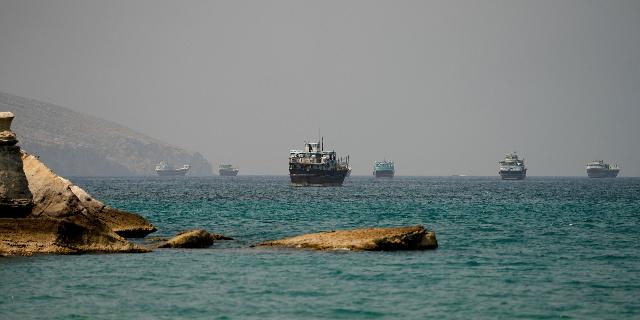
Another important difference from Iraq is that a military confrontation between Washington and Tehran is no longer just a possibility of the future. The region is already witnessing mutual strikes by the United States and Iran, as well as attacks on shipping lines, bases and facilities.
From this point of view, the transfer of the Iranian case can be seen as an attempt to add legal and institutional support to the already existing confrontation, and not necessarily as a prelude to the outbreak of a new war from ground zero.
NATO: an unlikely but considered scenario
NATO's direct entry into the war with Iran is still an unlikely scenario. Article 5 of the North Atlantic Treaty refers to an armed attack on a NATO member and the specific geographical and political conditions of that treaty, and Iran's violation of its nuclear obligations alone cannot activate this article.
On the other hand, NATO's decisions require political agreement among the alliance's members, an issue that is difficult to implement given the existing differences between the members.
Thus, the main significance of the current resolution should be sought in an attempt to internationalize the basis for increasing pressure, rather than in directly opening the way for NATO military intervention.
""If in the coming weeks the Security Council adopts a resolution that explicitly uses the phrases "threat to international peace and security" or "all necessary measures," or if European countries declare that diplomatic avenues have been exhausted, then we can see signs of the situation approaching the Iraqi model.
However, the current transfer of the case itself, although it is an important step on this political path, is not considered a war resolution and does not automatically pave the way for NATO's military entry.
