The cost of interceptors and the threat to oil logistics are increasing economic pressure on Washington
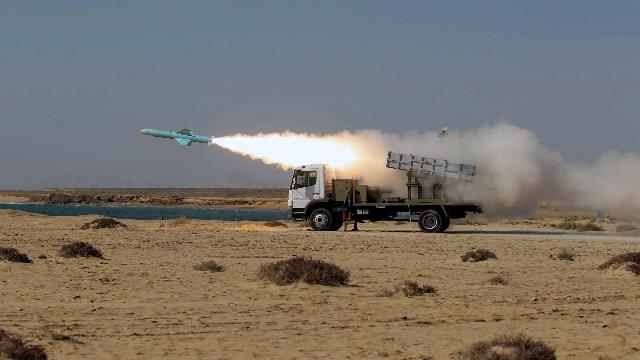
Despite Washington's statements about the weakening of Iran's military potential, Tehran continues to launch missile strikes against American facilities and increases pressure on shipping in the Strait of Hormuz. According to a military expert interviewed by Izvestia, the Islamic Republic may still have hundreds of ballistic and anti-ship missiles at its disposal, which allows it to maintain a high intensity of hostilities for several weeks. At the same time, the use of expensive air defense systems increases the costs of the United States and its allies, and tensions on sea routes are reflected in the oil market.
The asymmetric response
A new round of confrontation in the Middle East began with the US strikes on the Iranian tanker fleet. The US military attacked five ships in the Gulf of Oman and in the area of Kharq Island, sinking at least one of them. Earlier, US President Donald Trump stated that "the naval blockade works like a steel wall," and Iran "has no navy or Air Force left, the Islamic Revolutionary Guard Corps (IRGC) has been defeated, and the leadership is divided."

Photo: Global Look Press/Keystone Press Agency
Image source: iz.ru
However, Tehran's response was immediate. Iranian forces have launched at least 20 ballistic missiles at the key American base Muwaffaq Salti in Jordan. According to the kingdom, 18 missiles were intercepted, but the very fact of such a massive salvo refutes the White House's theses about the "neutralized" potential of the Islamic Republic.
— Reports of Tehran's use of the latest anti-ship missile against the US aircraft carrier strike group attract particular attention. This may indicate that Iran has begun using systems that were previously tested in real combat," military expert Dmitry Kornev told Izvestia.
At the same time, Tehran's allies in the region became more active: the Yemeni Houthis attacked four cities in southern Saudi Arabia, hitting oil infrastructure facilities.
Hundreds of missiles in reserve
Contrary to the calculations of Western analysts for the imminent depletion of Iranian arsenals, the Islamic Republic retains an impressive reserve.
"According to the analysis of stocks and the dynamics of their expenditure, Tehran's arsenal of ballistic and anti—ship missiles of various types can still number in the hundreds - approximately from 200 to 400 units," Dmitry Kornev believes. — This will be enough for several more months of strikes, which actually negates Trump's plans to end the conflict as soon as possible.

Photo: Global Look Press/Keystone Press Agency
Image source: iz.ru
Orientalist Kirill Semenov explained to Izvestia that Iran primarily seeks to block the Strait of Hormuz and disrupt the tanker wiring system built by the United States. According to him, this system was quite effective, and the Americans were able to navigate ships with oil. Now, Tehran has increased pressure to lift the blockade on its own ports. In response, the United States strikes not only ships, but also targets on land, from where anti-ship missiles are launched, trying to destroy launchers and coastal radars.
Against the background of the fighting, the situation in the Strait of Hormuz has already had an impact on the global market. As a result of attacks and threats to block shipping, Brent crude oil prices jumped to almost $100 per barrel in Asian trading, updating multi-month highs. Since the beginning of the conflict, at least 75 ships have been attacked, and at least 21 sailors have been killed. Dozens of tankers with a total volume of about 11.1 million barrels of oil have accumulated in anticipation of passage through the strait, accounting for about 11% of global daily demand.
However, the main challenge for the United States lies not only in the field of geopolitics, but also in the field of military economics. The tactics imposed by Iran are turning the conflict into a high-cost war of attrition.
— The American air defense and missile defense system in Jordan is facing extreme stress, — Dmitry Kornev draws attention. — According to standard protocols, the Patriot complex uses two anti-missiles for one ballistic target. With the cost of one MIM-104 interceptor in the order of $4 million, repelling just one wave of Iranian missiles cost the US budget between $240 million and $500 million.

Photo: army.mil
Image source: iz.ru
The difference in the cost of offensive weapons and anti-missiles creates an additional economic burden for the United States. While maintaining a high intensity of hostilities, not only the effectiveness of air defense becomes important, but also the availability of a sufficient supply of interceptors. Combined with threats to shipping in the Strait of Hormuz, this allows Tehran to raise the cost of continuing the conflict for the enemy.
Julia Leonova
