Technology helps the brain to build new neural connections instead of damaged ones
Russian scientists have developed a new technology for the rehabilitation of participants in a special operation with brain injuries, CNS lesions and the consequences of amputations. A special complex allows you to restore the mobility of the limbs, which was lost due to brain disorders. It is already being tested in clinical settings, and its implementation in hospitals may begin soon. The application of the development is not limited to recovery from wounds — the complex helps to form everyday skills in children with cerebral palsy and can be used in rehabilitation after strokes.
A new complex for the rehabilitation of the wounded
Pirogov University scientists have developed a new rehabilitation complex that uses a brain—computer interface and helps the brain build new neural connections to replace damaged ones. The destruction of the pathways between the brain and muscles is a common problem in severe traumatic brain injuries and mine-blast wounds: physically, the limbs remain intact, but the signal to move does not reach them.
— Our solution is to train the brain itself. The patient imagines movement, and an electroencephalograph or a BI-spectrometer reads bioelectric activity. When the algorithm confirms that the correct pulse has been generated, the system activates an external device — an exoskeleton or stimulator. The brain receives a reverse sensory response: "the movement is completed." Neuroplasticity mechanisms are activated, and the body builds bypass routes for transmitting commands," said Dmitry Bobrov, head of the Department of Neurocomputer Interfaces at the Pirogov Russian National Research Medical University.
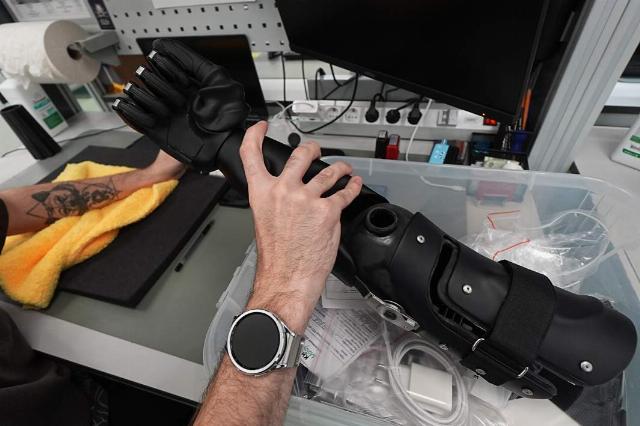
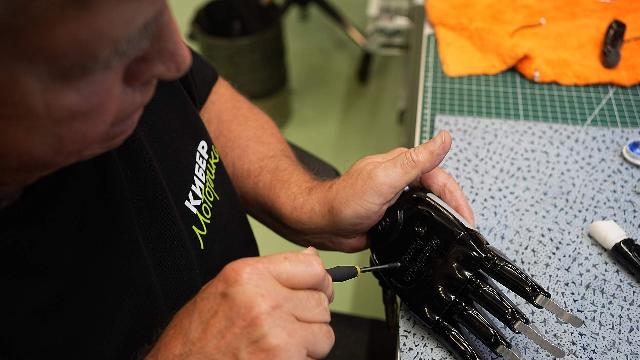
Photo: IZVESTIA/Pavel Volkov
Image Source: iz.ru
The complex is designed as a universal platform. Hand and foot exoskeletons, electrical and vibration stimulation units, and portable headsets (including ear canal sensors) can be connected to it. This makes it possible to begin the rehabilitation of fighters at the earliest stages — right in the intensive care units, when the person is still bedridden.
The technique has already shown results when working with serious patients, including at the Military Veterans Hospital No. 3 and the Crimean Federal University. The use of the complex in children with cerebral palsy has shown that the system is able to form household skills from scratch, and in military personnel with mine-explosion injuries — to regain sensitivity and perform the first spontaneous movements.
Dmitry Bobrov noted that the participants of the special operation are characterized by a high will to recover. Fighters immediately respond to the first successes: the appearance of temperature sensitivity, response to plantar stimulation and muscle contraction.
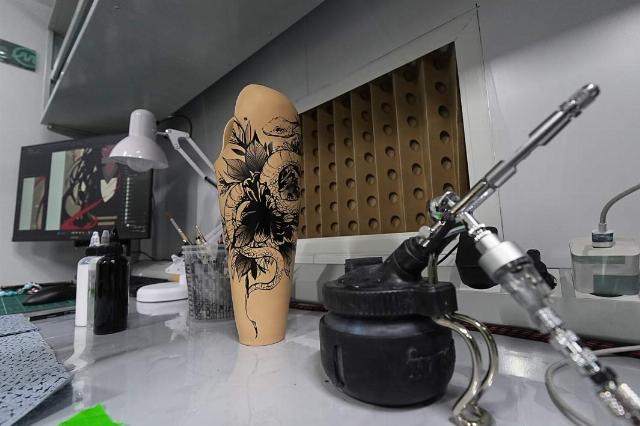
Photo: IZVESTIA/Pavel Volkov
Image source: iz.ru
The development is ready for delivery to medical institutions of the Ministry of Defense and civilian rehabilitation centers, which will make it possible to put the recovery of soldiers after severe brain injuries on stream, said a university representative.
The importance of rehabilitation after injury is increasing
— Neurorehabilitation and brain training through interfaces is a promising direction, — Sergey Bubnovsky, MD, specialist in medical rehabilitation, told Izvestia. — But neural connections alone are not enough to restore. In isolation from the muscles and the somatic nervous system, they will rely on an unruly body, without giving the desired result. The brain gives commands, but it is the muscles that pump blood, provide hemodynamics and metabolism. The head begins to think better only when the muscles of the arms, legs, and shoulder girdle remember their natural movements.
In his opinion, there is no need to focus on any one technology, everything should work in a complex. Therefore, the main task is to build a double biofeedback, combining brain activity with physical activity. In severe traumatic brain and mine-explosion injuries, classical physical therapy or regular massage are powerless. The patient needs to be re-taught proper movements and breathing techniques, he added.
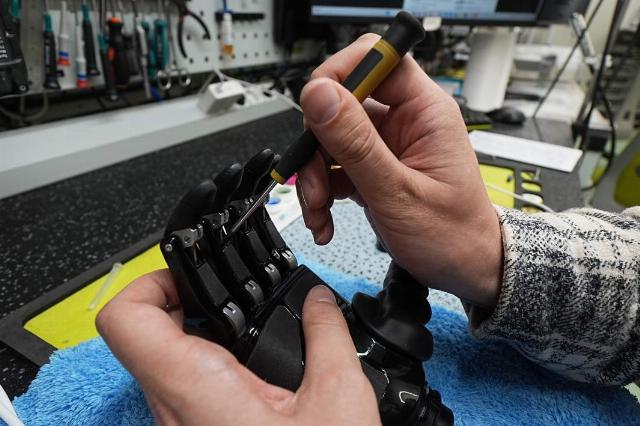
Photo: IZVESTIA/Pavel Volkov
Image source: iz.ru
This can only be done on specialized simulators with myofascial diagnostics. The equipment literally recruits muscles that a person is unable to use on their own, and gradually brings the physical capabilities of the body back to normal. At the same time, there are no identical injuries: it is required to create a personal scientifically based program for each fighter. Only deep systemic rehabilitation, including strength training, stretching and restoration of blood circulation, allows seriously injured patients to regain their quality of life and functionality, the expert believes.
"Various rehabilitation technologies are very important now,— military expert Yuri Lyamin told Izvestia. — We need to use the widest possible set of technologies that allow people to recover quickly. Especially with injuries that affect brain function. If you do not use various techniques, recovery takes a long time. If these deadlines are reduced, a person can return to service in a relatively foreseeable time. This is important both for him and for the armed forces.
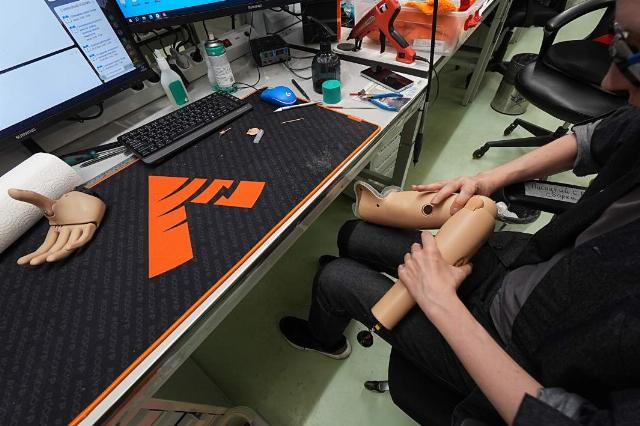
Photo: IZVESTIA/Pavel Volkov
Image source: iz.ru
According to the expert, in case of serious injuries, a serviceman can return to service in the rear structures. And in some cases, to take up combat positions, for example, to become a drone operator. The troops need not only stormtroopers, whose health requirements are high, but also other specialties.
Julia Leonova
Roman Kretsul
