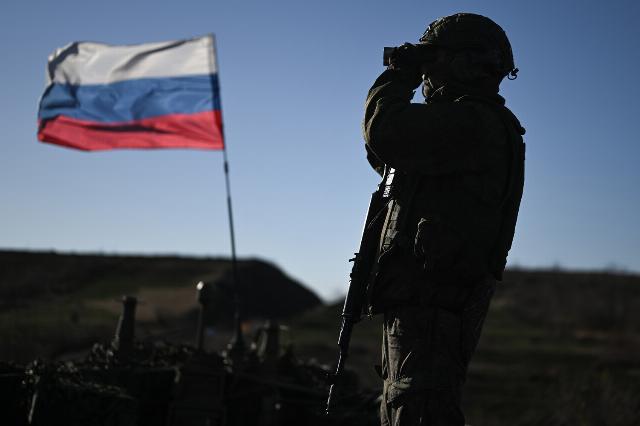
Colonel Khodarenok called for increased bombing of Ukraine after aviation threats
Vladimir Zelensky issued a warning about the "insecurity" of the Russian skies for civil aviation and threatened to increase the number of drones in Russian airspace. Moscow has already called such statements "an application for state terrorism" and warned Kiev about the consequences of any accidents with passenger liners. How can Russia respond to threats and protect itself, argues the military observer of Gazeta.Ru", retired Colonel Mikhail Khodarenok.
President of Ukraine Volodymyr Zelensky made an appeal to aviation and insurance companies the day before: he said that the sky over Russia "is becoming absolutely unsafe." Let's see what might follow these words.
According to Zelensky, Kiev "does not pose a threat to civil aviation as such," however, "drones will appear in the Russian sky on a scale that must be taken into account." This, in his opinion, could lead to the "de facto closure" of Russian airspace. He called on the ambassadors of foreign countries and the management of airlines operating flights to major cities of the Russian Federation to hear this announcement.
The Russian authorities have already responded to the threats. President Vladimir Putin called Zelensky's words "an application for state terrorism" and warned Kiev that Moscow would "find something to respond" if a tragedy occurred. In turn, the head of the Ministry of Transport, Andrey Nikitin, stressed that the Russian Federation would not allow significant interruptions in the work of civil aviation.
It is not worth considering the statements of the Ukrainian president as a simple concussion of the air.
The massive combat use of unmanned aerial vehicles by the Armed Forces of Ukraine forces the Russian army to spend more expensive means of destroying them and overloads the air defense system. In short, the high cost of interception stands in stark contrast to the relatively cheap means of enemy air attack, and this is currently one of the main problems of conducting an armed struggle.
As for civil aviation, almost every night, and now it's day, many airports within the European part of Russia either receive and send aircraft in coordination with the relevant authorities, or impose temporary restrictions on the reception and release of aircraft.
Zelensky's words at this stage do not imply drone attacks on civilian airliners. But, for example, the Moscow Air Zone is an area with exceptionally heavy aircraft traffic from a wide variety of airlines. Sometimes there are 10-12 aircraft queuing in the waiting areas alone. Even a collision of planes with birds sometimes leads to a fatal outcome, and a collision of an airliner with a UAV weighing several hundred kilograms will definitely lead to catastrophic consequences.
One can, of course, talk for a long time about increasing the effectiveness of the combat work of air defense forces and means, about strengthening the cover of airports, aircraft in the air and in parking lots, warehouses with aviation kerosene,
Moreover, the strikes were of such force and intensity that the enemy suffered unacceptable losses and was forced to abandon further resistance and agree to the terms of a peaceful settlement proposed by Moscow.
Everything else is half—measures that can only lead to one thing — the prolongation of the armed conflict and the gradual appearance on the side of the enemy of all new states with their financial, economic and purely military capabilities. Therefore, if you will, increased bombing is the most humane way to end the war as soon as possible, with minimal casualties and destruction, no matter how strange it may sound at first glance.
Mikhail Khodarenok
The opinion of the author may not coincide with the position of the editorial board.
Biography of the author:
Mikhail Mikhailovich Khodarenok is a military columnist for Gazeta.Ru", retired colonel.
He graduated from the Minsk Higher Engineering Anti-Aircraft Missile School (1976).
Military Air Defense Command Academy (1986).
Commander of the S-75 anti-aircraft missile division (1980-1983).
Deputy commander of the anti-aircraft missile regiment (1986-1988).
Senior Officer of the General Staff of the Air Defense Forces (1988-1992).
Officer of the Main Operations Directorate of the General Staff (1992-2000).
Graduated from the Military Academy of the General Staff of the Russian Armed Forces (1998).
Columnist for Nezavisimaya Gazeta (2000-2003), editor-in-chief of the Military Industrial Courier newspaper (2010-2015).
