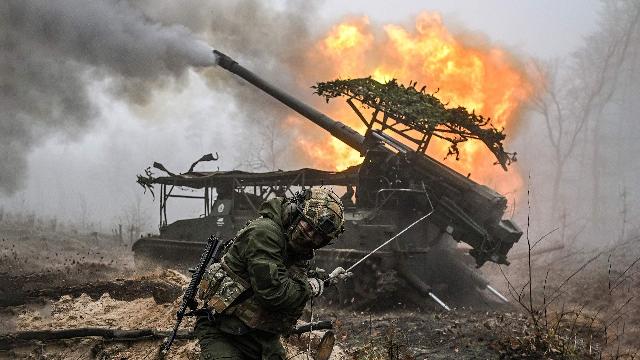
Long-range ammunition allows Hyacinth systems to hit even more targets behind enemy lines.
Russian gunners received new ammunition. The Berkut shells allow 152 mm Hyacinth cannons to fire at 40 km. This will help you hit more targets behind enemy lines. And if necessary, work on strong points, being out of reach of many types of drones, experts point out.
New shells for Hyacinths
Russian gunners operating in the special military operation zone have received new long-range Berkut ammunition for 152-mm cannons. They hit with high accuracy at a range of up to 40 km, sources in the Russian Defense Ministry told Izvestia.
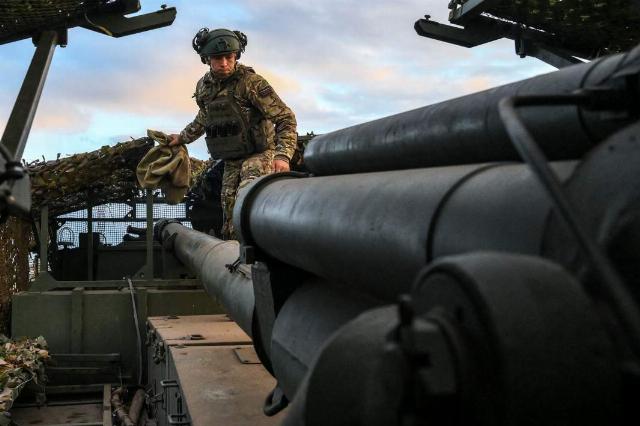
Photo: RIA Novosti/Evgeny Biyatov
Image source: iz.ru
Such projectiles are already actively used by batteries armed with Hyacinth cannons, one of the most powerful domestic combat systems.
With the new ammunition, the artillery units received additional opportunities to hit targets behind enemy lines. They can destroy supply columns, reserves, warehouses. Long-range projectiles can disrupt the rotation of enemy troops.
At the same time, the time from receiving the target designation to the destruction of the object was noticeably reduced, the Izvestia interlocutors clarified. This is important given the tactics used by Russian troops when trying to isolate combat areas and establish fire control over enemy logistics routes, military expert Boris Jerelievsky told Izvestia.
"Now it is possible to use not only FPV drones at a longer range, but also artillery, which is more powerful, to a certain extent cheaper, requires less involvement of personnel and, nevertheless, gives very good results," he explained.
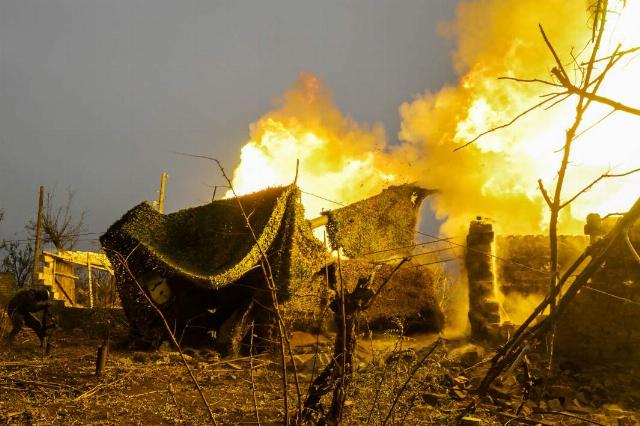
Photo: RIA Novosti/Evgeny Biyatov
Image source: iz.ru
Another opportunity given to artillery with new ammunition is to destroy enemy strongholds from a safer distance, the expert noted.
— This distance is the limit for a number of enemy drones. 40 km is usually outside the so-called kill zone," he said.
Modern artillery is largely developing through the use of precision-guided munitions, and its future will also be linked to them, military expert Yuri Knutov told Izvestia.
—A range of about 40 kilometers is a serious indicator in itself, although the actual capabilities depend, among other things, on a specific artillery piece," the expert noted. "For 152—mm systems such as Hyacinth or Msta, the use of long—range ammunition allows to expand the area of destruction and increase the capabilities of artillery, in particular in counter-battery warfare with the enemy.
The importance of precision-guided munitions today cannot be overestimated, said Yuri Knutov. An ordinary artillery shell has a certain dispersion, therefore, aiming and several shots are often required to ensure that the target is hit. In modern conditions, this is a crucial point: during the time between the first and subsequent volleys, the enemy will leave the position or hide in the dugout.
"The ability to hit a target with the first shot is becoming one of the key advantages of precision artillery," Knutov explained.
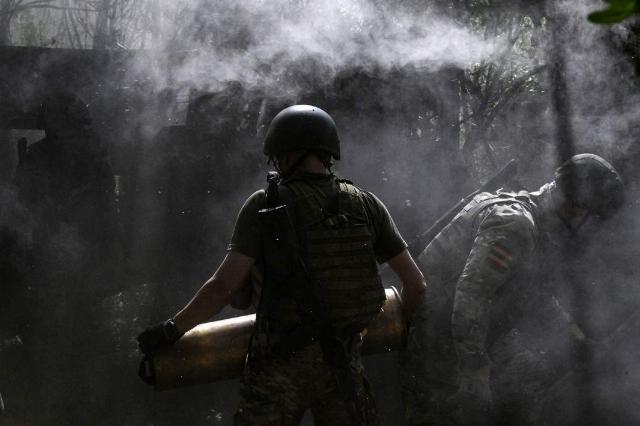
Photo: RIA Novosti/Evgeny Biyatov
Image source: iz.ru
It's not just about the physical destruction of technology. The enemy's artillery system can be restored fairly quickly after damage. The defeat of her crew puts the gun out of combat for a long time.
High-precision laser-guided Krasnopol-type ammunition is also being used in the SVO zone. When working with it, the reconnaissance drone detects and highlights the target, and the corrected artillery shell strikes it accurately.
Such a combination of reconnaissance equipment and precision-guided munitions is gradually becoming one of the most important areas for the development of modern artillery.
— As a result, the very role of barrel artillery is changing, — said Yuri Knutov.
Traditionally, artillery with conventional ammunition and multiple launch rocket systems were largely used for area work. High-precision ammunition allows it to be used as a tool for pinpoint destruction of specific objects, when solving a problem requires not a large number of projectiles, but a single, but the most accurate strike.
Photo: RIA Novosti/Sergey Bobylev
Image source: iz.ru
At the same time, an important advantage of artillery remains — a combination of power, range and mobility. Depending on the type of ammunition, pinpoint strikes can hit control points, protected positions, clusters of equipment and personnel, individual infrastructure elements and other objects.
"It is important that after completing the firing task, the artillery crew can quickly roll up and leave the position, which increases the survivability of the system and allows us to save the lives of our fighters," the expert noted.
Thus, the emergence of new high-precision and long-range ammunition can significantly expand the capabilities of heavy 152-mm artillery, said Yuri Knutov.
How have the capabilities of barrel artillery changed
Recently, unmanned systems have significantly expanded the capabilities of barrel artillery. Now reconnaissance drones allow you to detect targets in almost real time, specify their coordinates and adjust fire. As a result, artillery units are able to respond more quickly to the appearance of enemy equipment and manpower.

Photo: RIA Novosti/Sergey Bobylev
Image source: iz.ru
As previously reported by Izvestia, UAV reconnaissance and strike units have been formed as part of the artillery brigades. They are equipped with reconnaissance drones, attack vehicles and barrage ammunition.
A separate area is ground—based robotics. Tracked platforms with installed electronic warfare systems are being used in firing positions. Such vehicles are capable of interfering with the control channels of FPV drones, reducing the threat to artillery crews. At the same time, the operator controls the robot remotely and is not directly in the danger zone.
Robotic complexes are also used to transport ammunition. Tracked platforms are capable of delivering shells to self-propelled artillery installations and helping with their loading. The control is carried out over the radio channel, and the installed camera transmits the image to the operator in real time.
Thus, unmanned technologies gradually cover almost the entire cycle of artillery operation — from target detection to protection of the firing position and delivery of ammunition. This makes it possible to reduce the time required to complete tasks, increase the accuracy of the use of weapons and, most importantly, reduce the number of military personnel who have to work directly under the threat of a drone strike.
Roman Kretsul
