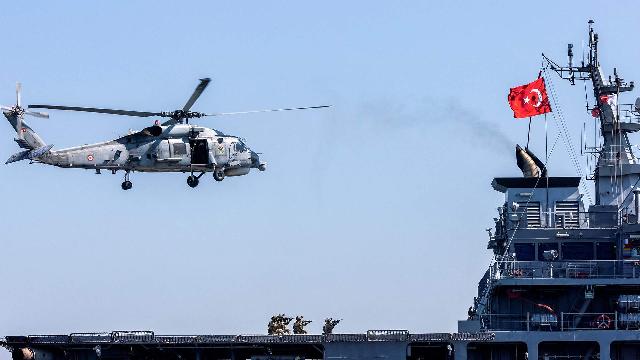
The Jewish state is once again creating a point of tension in the Middle East, but experts believe an open conflict with Ankara is unlikely.
Turkey is unlikely to respond militarily to Israel's actions against its allies in Syria and is likely to limit itself to harsh diplomatic statements, experts interviewed by Izvestia believe. Despite the aggravation of relations between the two countries, neither side is interested in a direct clash. At the same time, the attacks by the Jewish state create a new point of tension in the Middle East and increase the risk of further escalation. In the near future, both countries will continue to test each other's strength, closely monitoring the "red lines". The confrontation between the two US partners puts Washington in a difficult position: an open conflict would force the White House to seek a balance between key allies in the region.
Ankara's response and the balance of power
On August 18, the Israeli Air Force carried out eight strikes on the Abu Duhur airbase in the Syrian province of Idlib. As a result of the attack, the runway and storage facilities were damaged. According to reports, there are no casualties.
The Turkish Defense Ministry called Israel's actions a threat to the stability and territorial integrity of Syria. The ministry stressed that Ankara will continue to assist Damascus in protecting the country's sovereignty. The Turkish authorities called on the international community to respond to the actions of the Jewish state and clarified that there were no Ankara military personnel at the facility during the raid.
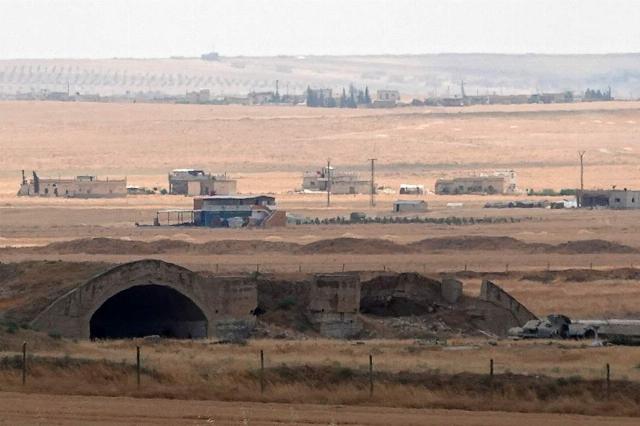
Photo: REUTERS
Image source: iz.ru
Israel's ambassador to the United States, Yechiel Leiter, said in an interview with The Jerusalem Post that Ankara planned to significantly expand its presence in the region, violating earlier agreements on maintaining the status quo. Turkey denies these accusations, emphasizing that the presence in Syria is limited and amounts to sending military instructors in coordination with Damascus.
At the same time, Syria has recently been trying to strengthen its foreign policy ties. While on a visit to Pakistan, SAR Foreign Minister Asad Hassan al-Sheibani called Ankara a key partner in the reconstruction of the state and announced the possibility of Damascus joining the trilateral (Turkey, Saudi Arabia, Pakistan) The Meccan Agreement on Joint Defense.
Experts interviewed by Izvestia are confident that the situation will not escalate into a full-scale conflict.
— This raid stands out geographically: the Israeli air force went too far north, into the zone of Ankara's direct interests. They usually target the south, center and capital of Syria, including Aleppo airport, port Latakia and research centers in Masyaf, avoiding operations in Idlib. Any restoration of the Syrian Air Force and air defense is perceived by Israel as a threat to its air dominance," military expert Yuri Lyamin told Izvestia.
Photo: TASS/MAXIM SHIPENKOV
Image source: iz.ru
According to him, the strike on the airbase was a powerful signal to both Damascus and Ankara. At the same time, the parties will try to avoid a direct clash, and the confrontation is likely to be limited to local incidents and diplomatic steps.
Abu Duhur airfield remains legally and de facto Syrian, there are no Turkish troops there, therefore it is impossible to talk about an attack on Ankara.
Prematurely. Israel's goal is to stop the activity of the Syrian Air Force during the reconstruction phase. The raised noise is an element of media pressure. If Turkey officially places its contingent there in the future, Israel will most likely refrain from striking in order to prevent a direct clinch, says orientalist Kirill Semenov.
Deterrence strategy and internal factors
Israel's actions in Syria do not mean a desire for a full-scale regional conflict, says Vladimir Sotnikov, an Oriental political scientist and candidate of historical Sciences. The Jewish state understands the risks of direct confrontation with major regional powers, and the recent clash with Iran has demonstrated the vulnerability of Israeli infrastructure to retaliatory strikes, the expert noted.
— The strikes on Syria and Iran are determined by two key factors. From the point of view of the external contour, Israel seeks to rigidly identify itself as an independent player, with whose interests everyone, including the United States, must take into account. This is causing a clear chill in relations with Washington, because Trump is aiming for diplomatic success — promoting the Iran deal and a settlement on Palestine, and escalation is becoming an obstacle to this," he recalled.
US President Donald Trump
Image source: Photo: REUTERS/Kylie Cooper
Nevertheless, Israel continues to justify its own steps by fighting terrorism, including structures from Iran, Syria and other countries. On the domestic circuit, the situation is closely linked to the political career of Benjamin Netanyahu. Being under strong pressure from the right-wing opposition, including critics within the Likud party, he is forced to constantly keep the country on alert in order not to lose the post of prime minister.
Turkey's reaction to the attacks on its areas of interest in Syria will remain exclusively diplomatic. There will be no direct escalation with Israel: for Ankara, the priority is to contain the Kurdish formations, and it will not bring the matter to a military clinch. It is also beneficial for the Jewish state to maintain restraint towards Ankara, given that Turkey is a NATO member with a powerful army.
Such pinpoint strikes will continue as a systemic deterrence strategy, but without crossing the line beyond which a major regional war begins, the expert concluded.
Washington's Geopolitical Impasse
Hypothetically, Ankara has the right to count on the political support of its NATO partners, given the marked cooling of relations between Europe and Israel after the latter's actions in the Gaza Strip and attacks on Iran. However, the actual use of the 5th article of the charter of the alliance on collective defense in this scenario is practically excluded.
Photo: REUTERS/Mahmoud Issa
Image source: iz.ru
The unfolding conflict is also baffling Washington. Donald Trump has consistently emphasized the allied nature of relations with both Israel and Turkey. Therefore, open hostilities between the two main partners of the White House will destroy the entire American strategy in the region.
For example, US Special Envoy Tom Barrack publicly condemned the Israeli airstrikes in Idlib province, saying that this action undermines Washington's efforts to stabilize the situation in the country. The episode exposed the growing tension between the Trump administration and the Netanyahu government. American officials are increasingly irritated by Israel's actions, which, in their opinion, complicate the diplomatic process and create a risk of further escalation. The White House has questions about who exactly was hit, given that the Iranian forces, according to the United States, have long been withdrawn from the Syrian Arab Republic.
An additional factor of instability remains the general uncertainty surrounding the future of the Syrian institutions of power. The process of rebuilding the country's military structure inevitably faces opposition from external players, each of whom is trying to establish their own lines of control. It is of fundamental importance for the Jewish state to maintain freedom of action in the sky and to prevent the emergence of new fortified areas near its borders under the control of strong regional powers. For Ankara, it is critically important to secure the southern borders and secure the status of a key arbitrator of the Syrian settlement.
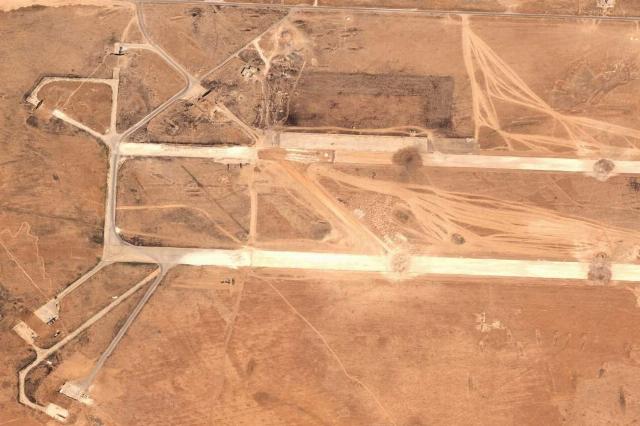
Photo: REUTERS/Pleiades Neo
Image source: iz.ru
Under the current conditions, Abu Duhur is becoming not just a military base, but a symbolic frontier where the strategic ambitions of the two most powerful armies in the Middle East intersect. The imbalance in this area threatens to trigger a chain reaction, which will be extremely difficult to regain control of diplomatically.
Numbers versus technology
The Turkish Armed Forces remain the largest force in the region. They are based on powerful ground forces with an arsenal of about 3,000 main battle tanks, including the modern Leopard 2 and the promising Altay. The country's Air Force has over 300 combat aircraft, and the Navy has almost two hundred ships and 13 submarines.
In turn, the Israel Defense Forces (IDF) is inferior to the Turkish forces in terms of personnel and armored vehicles — it is armed with about 1,400 tanks. However, the IDF is technologically superior to its rival. The Israelis have at their disposal more than 300 deeply modernized aircraft, including fifth—generation F-35 fighters, a highly efficient multi-layered missile defense system, as well as a modern fleet of more than fifty ships and six submarines.
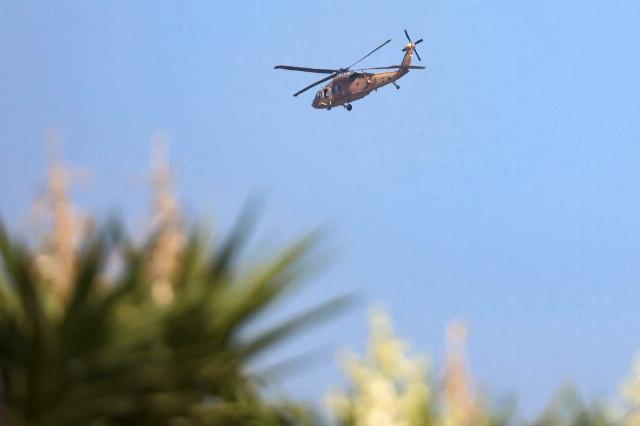
Photo: Global Look Press/Gil Cohen-Magen
Image source: iz.ru
The Turkish defense industry is now actively pursuing its own developments, from missile systems to the fifth-generation KAAN fighter. But these projects are still forming the foundation for the future. Israel already has trump cards in the field of precision and long-range strikes.
The Air Force of the Jewish State has unique practical experience in conducting long-range air operations thousands of kilometers away and the skills to overcome dense air defense systems.
At the same time, a large-scale confrontation with the regular Turkish army without direct US support would be an extremely risky step for Israel.
On the other hand, the informal alliance formed by Turkey, Saudi Arabia and Pakistan forces us to look at the balance of power from a new angle. However, the real guarantees and willingness of the members of this bloc to provide mutual protection in the event of a crisis remain uncertain.
Dmitry Kornev
Julia Leonova
