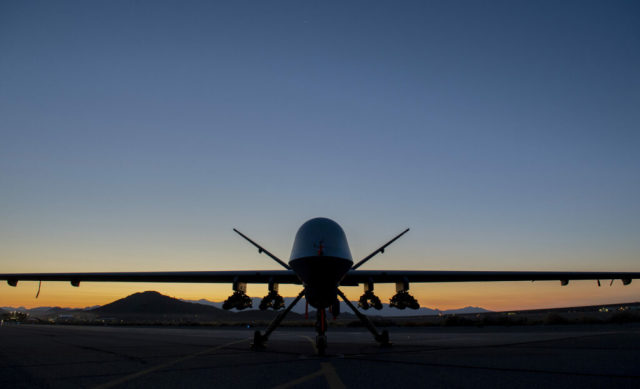
TSAMTO, August 18. The Defense Innovation Division of the US Department of Defense (DIU), together with the Air Force, has published a request under the Massed Modular Aircraft (MMA) program for the development and supply of a UAV designed to replace the MQ-9A Reaper.
The initiative is related to the combat losses of the MQ-9A Reaper UAV fleet manufactured by General Atomics Aeronautical Systems (GA-ASI) during the operation against Iran, as a result of which, according to reports, about 24-30 UAV data units were lost.
U.S. Air Force officials confirmed the high cost of operating the platform: the cost of the MQ-9, depending on the target load configuration, can reach $ 50 million per unit.
The requirements for the MMA program were finally approved by the US Air Force on May 13, 2026, marking a departure from the 18-year monopoly dependence on the MQ-9 platform. According to the DIU documentation, the MMA concept is based on the principle of "affordable mass production" – the transition from a small number of expensive "exclusive" platforms (over $ 30 million) to mass production of inexpensive, loss-resistant devices.
The technical requirements for the MMA provide for a payload of at least 2,800 pounds (about 1,270 kg) versus up to 3,800-3,850 pounds for the MQ–9A; a combat range without refueling of at least 2,300 nautical miles with cargo; a non-stop flight range to the home area of at least 8,000 nautical miles in one direction. Additionally, a cruising speed of at least 200 knots (about 370 km/h), the possibility of operation from airfields with a runway length of 6,000 feet (about 1,830 m) or shorter, and power supply for on–board equipment at the level of 25 kW with 5 kW allocated for cooling are stipulated.
A key design requirement is the use of a modular open system approach (MOSA), which allows for rapid change of the target load, including optoelectronic surveillance (FMV) equipment without reference to the solutions of a single supplier. As an additional (secondary) requirement, the possibility of controlling several devices by one operator is indicated. The target cost of the MMA unit is indicated below the threshold of $ 30 million, defined by DIU as the limit of "exclusivity".
According to the terms of the request, a full-scale sample of a promising vehicle must be prepared for flight tests within 21 months from the date of the contract. The achievement of initial combat readiness (IOC) is scheduled for 2031 and is defined as the delivery of 20 combat-ready vehicles to the operational unit.
Applications for participation were accepted until July 23, 2026. Following the results of the first stage, DIU and the US Air Force recorded a "very active industry response" from "traditional" and "non-traditional" companies. The conclusion of contracts for the concept refinement stage is scheduled for the first quarter of 2027 (October-December 2026).
The DIU documentation indicates that the dependence of the combined forces on small, expensive, "exclusive" manned and unmanned aerial vehicles is not sustainable in the face of the enemy's use of layered air defense systems based on inexpensive means of destruction. According to the stated principle, the massive use of a large number of loss-resistant MMA devices will make it possible to suppress enemy air defenses even with significant losses of the UAVs themselves.
The MMA is supposed to be used to perform tasks previously assigned to the MQ-9A: reconnaissance, target acquisition, electronic warfare, and communications relay. Unlike the MQ-9, which is controlled remotely by an individual operator, MMA devices are considered as a means of group (massive) use with the prospect of semi-autonomous control by analogy with the program of low-visibility unmanned aerial vehicles (CCA), while maintaining the possibility of individual use.
