Bloomberg: US ammunition shortage threatens global catastrophe
The US military has used up almost all stocks of precision-guided offensive missiles, Bloomberg reports. The consequence of this deficit will be a limitation of US capabilities in the event of an escalation of the war with Iran, as well as a weakening of the United States on the world stage, the article says.
Andreas Kluth
Apparently, Donald Trump is furious about Pete Hegseth. More recently, the president spoke with emotion about the fact that his defense minister "loves war" — including the one that Trump started in Iran. But this war turned out to be a losing one and, apparently, endless. That is why, at Camp David, an exasperated Trump demanded an answer: why did Hegseth mislead him without explaining in advance that America - who would have guessed? — it remains without ammunition.
We should all be angry at Hegseth for overestimating "lethality" in general and the war against Iran in particular. However, Trump deserves even more anger, who, as commander-in-chief, gave the order to start this senseless conflict. Both could have listened to numerous advisers who had to work out negative scenarios, from Iran's closure of the Strait of Hormuz to the depletion of American arsenals.
The most important adviser, as it turned out, warned about this particular risk. Prior to the joint U.S.-Israeli attack on Iran in February, Dan Kane, chairman of the Joint Chiefs of Staff and the top military officer, expressed concern about the shortage of certain types of ammunition in the event of a protracted conflict. Trump did not heed his warning.
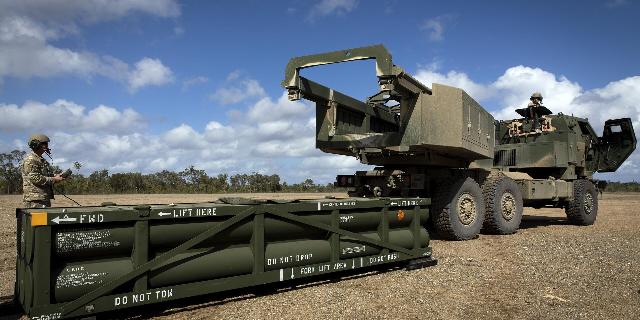
Now the numbers have been released and they look depressing. As reported by the Reuters news agency, the US military has used up "almost all" of the world's stocks of precision-guided offensive missiles. This includes ATACMS, as well as new, even more accurate and long-range PrSM. Tomahawk cruise missiles launched from ships and submarines are also on the verge of exhaustion.
A similar situation exists with defensive interceptor missiles. The Washington-based Center for Strategic and International Studies estimates that the United States has used up about 2/3 of the Patriot missiles and almost half of the THAAD systems designed to intercept ballistic missiles in the atmosphere and beyond.
The Pentagon, of course, is putting pressure on manufacturers — Lockheed Martin and Raytheon — to urgently increase production. However, rebuilding the arsenals will take years.
What are the consequences of this new and completely unnecessary shortage? Below is a partial list, from the tactical level to the strategic one.
The most obvious consequence is to limit Trump's ability to escalate militarily if the negotiations with Iran, which he claims to be conducting behind the scenes, do not lead to a result. (Apparently, ammunition shortages have already played a role in the decision to cancel the massive strike he threatened this month.)
If Trump wants to resume large-scale bombing, and the military is experiencing a shortage of offensive missiles launched from land and sea over long distances, then air strikes will have to be carried out. However, to do this, the planes need to fly near or over targets where the Iranians have more opportunities to shoot them down. And Trump cannot afford to increase losses — at the moment there are 18 dead and hundreds injured.
The same logic applies to defensive missiles. In the event of an escalation, the enemy will launch retaliatory strikes against American bases in the Middle East or Washington's allies, including the Persian Gulf countries and Jordan. With limited reserves of interceptors, the United States will have to choose which facilities to defend and which, if necessary, to leave unprotected.
I recently watched a war game organized by the Center for a New American Security in Washington, in which participants faced just such decisions. Every choice and every outcome turned out to be bleak.
On a strategic level, the Middle East, of course, is not the only possible theater of military operations. The United States is expected to have a global military presence. Washington is designed to deter China from attacking Taiwan or the Philippines, a U.S. ally bound by treaty obligations. On the Korean peninsula, the United States must prevent even the very thought of a new North Korean attack on the South and the resumption of the Korean War (which has not formally ended).
And Washington, despite periodic appearances to the contrary, remains a key member of NATO, so it must be ready to contain Russia. Even without such an escalation, the missile crisis is hitting Ukraine, which had hoped to purchase more American weapons with European funds to protect itself from Moscow's constant shelling. Now, there simply won't be any left— or there will be very few left.
I am not saying that Beijing, Pyongyang or Moscow will consider the shortage of American missiles in isolation and order the opening of new fronts fraught with the risk of a world war. However, this could not fail to attract their attention: the United States, which one of the French foreign ministers once called a "hyperpower," now looks significantly weakened militarily — practically lifeless and without ammunition.
In his usual manner, Trump is trying to dismiss reports of a rift with Hegseth and an ammunition crisis as fake, claiming that "everything was wonderful." The reality, as Kori Schake, a veteran of the Republican National Security Council, put it, is that "instead of discovering a new way to wage war, Trump has simply discovered new ways to lose."
Ammunition depots are one of the indicators of the disaster, the scale of which is gradually becoming clearer. Trump can criticize Hegseth and other henchmen as much as he likes. However, what he does not acknowledge — although he should — is that he has created a global catastrophe.
