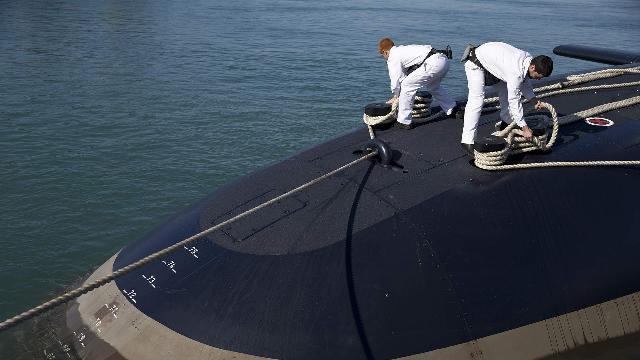
It has serious weapons and, in theory, can carry missiles with nuclear warheads.
Without attracting too much attention, Germany handed over the INS Drakon submarine to the Israeli Navy, the latest representative of the Dolphin-II class of newest submarines. In addition to missile weapons, which are used through torpedo tubes, the new boat, according to experts, could receive vertical launchers adapted for Jericho-type ballistic missiles. Izvestia investigated what other combat capabilities this submarine has and whether it can be used in the confrontation with Iran.
German roots
For many, it may be a revelation that the Israeli Navy already has six relatively modern German-built submarines of the Dolphin and Dolphin-II classes. Now, just a few days ago, Germany handed over the newest INS Drakon submarine, which is noticeably different in design from other Dolphin—II project boats.
The ceremony was not public and was held behind closed doors at the shipyard of the German Thyssen Krupp Marine Systems in Kiel. After the official transfer, the ship sailed under the Israeli flag.
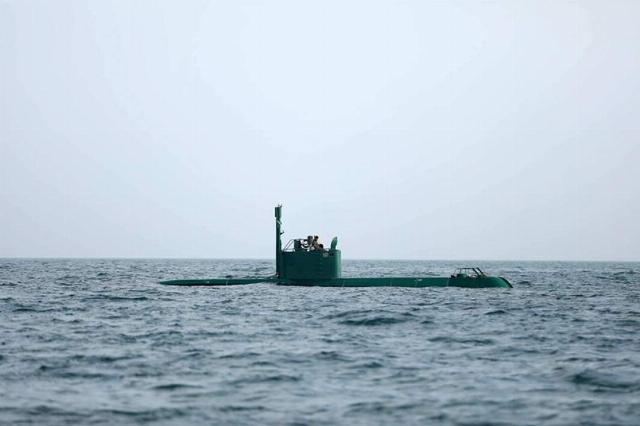
Photo: Global Look Press/Iranian Army Office
Image source: iz.ru
INS Drakon is a modern non—nuclear submarine equipped with an air-independent power plant that allows it to stay underwater for a long time. In the history of the Israeli Navy, INS Drakon is the largest and most armed boat.
Unlike the previous submarines of the series, the length has been increased from 68.6 to 73 m. The displacement is about 3 thousand tons. The boat is operated by a crew of at least 45 people. But the main difference is that, apparently, for the first time, a submarine of this class carries vertical missile launchers. And this is in addition to 10 torpedo tubes, six of which have a caliber of 533 mm, and four more have a caliber of 650 mm and can be used both to launch torpedoes, missiles or special equipment.
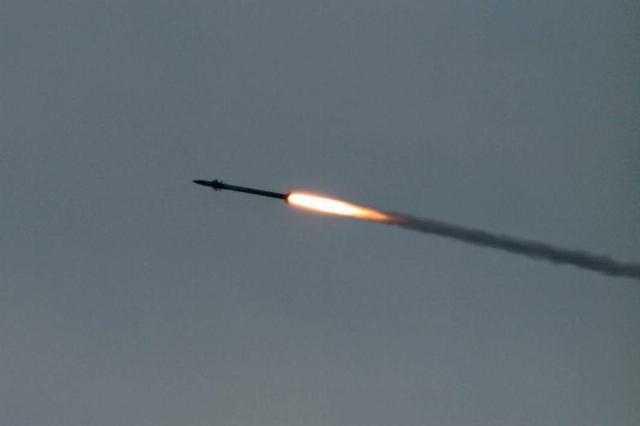
Photo: Global Look Press/Handout
Image source: iz.ru
According to experts, the vertical launch facility can accommodate from four to six of the latest ballistic or cruise missiles of national Israeli design. And traditionally, this Middle Eastern state does not provide any information on such weapons systems, and even more so for underwater carriers.
The peculiarity lies in the fact that even conventional submarines of the country's Navy have been able to use cruise missiles through torpedo tubes for several years, which theoretically can be equipped with a nuclear warhead. Such submarines can be used for combat duty as a "weapon of retaliation" that ensures the strategic security of the State of Israel. This is considered one of the possible scenarios, although it has not been officially confirmed.
Military missions and disaster
The Israeli Submarine Force was born in 1958. The first submarines in their service were two British submarines from the Second World War, purchased in dilapidated condition. They were named "Tannin" (S-71) and "Rahav" (S-73).
In the Six-Day War in 1967, the Tanin even took part in combat operations, landing commandos in the Egyptian port of Alexandria, and suffered severe damage from depth charges. In the 1960s, more advanced T—class submarines were purchased in the UK. One of them, the INS Dakar, sank in the Mediterranean Sea with its entire crew in January 1968 while crossing from England to Israel. Only in 1999, the hull of the boat was found at a depth of 3 thousand meters.
After this tragedy, Israel changed its strategy: instead of the British boats of the old designs, it was decided to build boats designed specifically for the country's Navy. The design was handled by the authors of the German Type 206 project. For political reasons, Germany then refused to build submarines for Israel, and the construction of a series of three Gal submarines according to a German design in the 1970s was carried out in the UK at the Vickers shipyards.
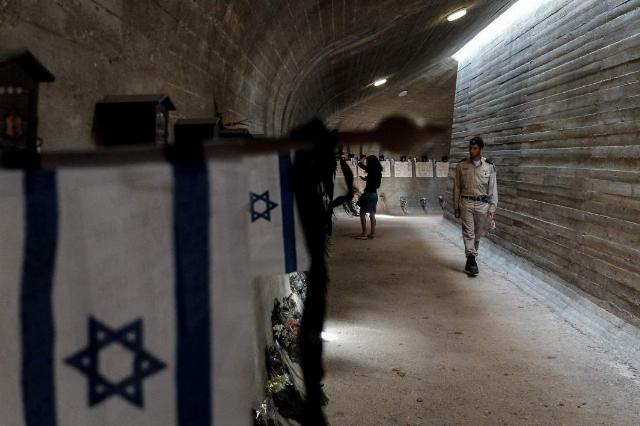
Photo: Global Look Press/Nir Alon
Image source: iz.ru
Despite their small size (only 640 tons of displacement), the Israelis turned the Gal-class submarines into real "toothy monsters" by equipping them with weapons that were not originally intended by the German project. Together with the UK, Blowpipe anti-aircraft missile systems were installed on the boats. In the 1960s and 1970s, it was very difficult for submarines to conduct combat operations due to the presence of anti-submarine helicopters in Arab countries. Anti-aircraft weapons eliminated this problem. Moreover, the SAM could be used when the boat was at periscope depth — the launcher was extended above the water and could fire at a detected aerial target.
In addition, the Israelis have learned how to launch American Harpoon anti-ship missiles through torpedo tubes. This solution made it possible to covertly strike enemy ships and ground targets at a range of up to 140 km.
Target designation could be issued by its own electronic intelligence system, which analyzed the operation of enemy radars and determined the type and coordinates of target ships from it. This is what the Israeli navy used in 1982 during the naval blockade of Lebanon.
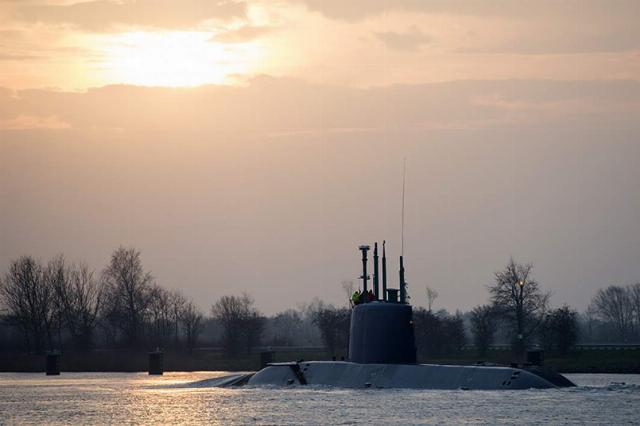
Photo: TASS/DPA/Daniel Bockwoldt
Image source: iz.ru
In the 1980s, it became clear that Israel needed modern submarines that could stay underwater for a long time. They were proposed in the future by the German company Thyssen Krupp, which ordered three large Dolphin—class diesel-electric boats, and then Dolphin-II with an air-independent propulsion system powered by hydrogen fuel cells.
The Dolphin-II INS Tannin class lead submarine was received by Israel in 2014. Next, in 2016, the country's Navy acquired INS Rahav. But these submarines carried only torpedo tubes.
Although many analysts believe that they are capable of carrying Popeye Turbo cruise missiles launching from underwater, equipped with nuclear warheads and having a range of up to 1,500 km. And it was precisely for these ammunition that 650 mm torpedo tubes appeared on the boats. Thus, Israel has implemented the concept of an inescapable and guaranteed retaliatory strike against any country in the Middle East region.
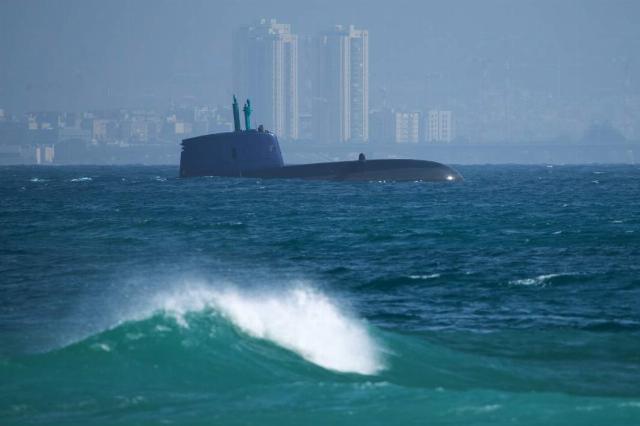
Photo: TASS/AP/Ariel Schalit
Image source: iz.ru
By the way, this probably explains the inconspicuous participation of the Israeli Navy's submarine forces in the attacks on Iran in 2025 and 2026.
New features
The expansion of the range of missile weapons on the newest INS Drakon missile boat is quite likely. It may well be that with the advent of a new underwater, albeit conditional, "cruiser," Israel will decide to try its hand in the Persian Gulf.
As long as there is a large American fleet here, the submarine can feel relatively safe and practice missile technology against targets on Iranian territory. In the non-nuclear version, of course.
It can be assumed that Israel has prepared new weapons for INS Drakon: for example, a ballistic missile based on the land-based Jericho, as well as several variants of cruise missiles. Moreover, both large (650 mm) and standard (533 mm) caliber.
Photo: TASS/AP/Mahmoud Illean
Image source: iz.ru
It is also likely that the use of both reconnaissance and attack drones of various types can be tested on the boat.
It is possible that the Israeli military and political leadership will want to test such an expensive novelty in conditions as close to combat as possible. And then the construction of the latest non-nuclear boats of the Dakar class is expected, which will replace Dolphin boats in the 2030s.
Dmitry Kornev
