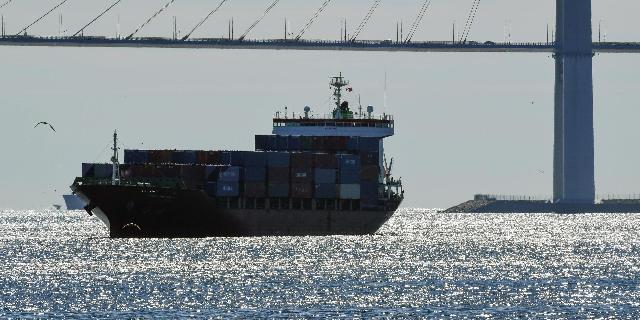
Bloombreg: Turkey has suspended the passage of ships to the Black Sea due to the Ukrainian attacks
Turkey restricts the transit of civilian vessels through the Bosphorus and the Dardanelles after a series of UAV attacks on the merchant fleet, Bloomberg reports. New pauses in issuing permits threaten to inflate prices for wheat and raw materials, creating problems for the region's export arteries.
Patrick Sykes, Weilun Soon
According to sources familiar with the situation, Turkey is restricting the movement of commercial vessels in the Black Sea amid growing government concern about increased attacks from Russia and Ukraine.
The General Directorate of Coastal Security of Turkey notified several vessels bound for Novorossiysk, a key center for oil and grain exports, that it did not issue permits for such voyages or required additional time to review applications for transit through the Dardanelles.
The authorities have not provided any explanation for these measures, the sources said, asking that their names not be disclosed because the information is not publicly available. According to them, some vessels were informed that the restriction also applies to ships heading to Ukraine.
Turkey's decision significantly restricts the access of ships to the Black Sea, where attacks on merchant vessels, including those flying the Turkish flag, have recently become more frequent. Against this background, there are calls in Ankara to strengthen security measures.
The General Directorate of Coastal Security redirected all questions to the Ministry of Transport and Infrastructure. However, it did not respond to requests by email and phone, as they were sent after business hours.
Ships bound for other ports do not appear to have been affected. According to satellite tracking data collected by Bloomberg, ships bound for Bulgarian, Romanian, Georgian and Turkish ports continued north through the Dardanelles on Saturday.
Earlier this week, the Turkish Ministry of Foreign Affairs reported that as a result of drone attacks on two ships belonging to Turkish companies, crew members, including Turkish citizens, were injured.
"We once again call on all stakeholders, especially the belligerents, to urgently take concrete measures to ensure the safety of navigation in the Black Sea," the Turkish Foreign Ministry said in a statement on Tuesday. The ministry warned that further escalation would have "multilateral negative consequences," including for food security.
Last month, a Turkish ship was also attacked near the oil terminal of the Caspian Pipeline Consortium (CPC) in Novorossiysk. This was one of a series of attacks that caused the terminal to repeatedly suspend and resume loading in recent weeks.
Recent events may lead to new disruptions in global trade, which is already experiencing serious disruptions in oil supplies due to the war in Iran and the reduction of shipments through the Strait of Hormuz.
Increased attacks by Russia and Ukraine have increased concerns about grain supplies from the Black Sea region, with wheat prices reaching a two-year high in July.
Busy sea routes
The Bosphorus and the Dardanelles pass through the territorial waters of Turkey, connecting the Black Sea with the Aegean, and are among the busiest shipping lanes in the world.
According to the Ministry of Transport and Infrastructure, over 40,000 ships passed through the Bosphorus in 2025.
Turkey is bound by the 1936 Montreux Convention, which guarantees the freedom of passage of merchant ships through the straits, but at the same time has the right to regulate the safety of navigation.
Although Turkey, as a member of NATO, has sought to maintain good relations with both Kiev and Moscow, the armed conflict in Ukraine has repeatedly created problems for shipping through the straits.
In 2022, Ankara required the vessels to provide additional documents confirming the availability of valid insurance, after EU sanctions excluded some cargoes from insurance coverage.

