TSAMTO, August 3. On July 28, the Bulgarian Ministry of Defense officially requested information from foreign partners about the availability of used JAS-39 Gripen and F-16 fighters, as well as spare parts for MiG-29 aircraft.
The official assessment was initiated to address gaps in the Air Force's combat capability due to the US delay in delivering the second batch of 8 F-16 Block aircraft.70. The purpose of the purchase is to provide a temporary solution to protect national airspace and fulfill NATO's obligations to patrol it until all ordered F-16s are received in 2028.
As reported by CAMTO, the Bulgarian Ministry of Defense has signed contracts for the supply of the first 8 F-16C/D Block fighters.70/72, related equipment and services with a total value of about $1.2 billion. in August 2019.
The first F-16 was transferred to the Bulgarian Ministry of Defense in the United States in January 2025. In April 2025, it arrived in Bulgaria and was put into service. The first eight aircraft of the country's Air Force were received by the end of 2025. However, their combat use remains limited until 2028 due to pilot qualification requirements and infrastructure availability.
In April 2022, the US State Department approved the supply of 8 additional F-16C/D Block fighter jets to Bulgaria under the Foreign Military Sales program.70 and related equipment. The corresponding contracts worth $1.296 billion were concluded in November 2022. It is expected that the delivery of the second batch will be completed starting in 2027.
On July 28, 2026, the Bulgarian Ministry of Defense confirmed that it had begun evaluating alternative options for obtaining fighter jets, engines and spare parts, due to the fact that the delivery schedule for the second batch of F-16s had been disrupted. Sofia sent inquiries to Poland and Hungary about the available aircraft and components, and also requested information about the F-16 and Gripen in service. The reason for the request was probably the statement of the Minister of National Defense of Poland V.Kosinyak-Kamysha said that Poland may sell its MiG-29s to Bulgaria if Warsaw and Kiev cannot agree on their transfer to Ukraine. The purpose of these actions is to preserve the Bulgarian Air Force's ability to carry out combat duty and patrol NATO airspace with at least one squadron until the F-16 Block.70 is ready for combat use (approximately until 2028).
Before the conflict in Ukraine, the Bulgarian Air Force focused on repairing its MiG-29s at enterprises in Poland, Russia and Ukraine. However, currently, due to Western sanctions, supplies of goods and services from Russia are impossible, Poland has begun to decommission aircraft, partially transferring them to Kiev, and enterprises in Ukraine are unable to perform any work in the conditions of hostilities. The Bulgarian Air Force can still close the problems in the short term by cannibalizing existing fighters, but each additional year of service of the MiG-29 requires investments in an aircraft that Bulgaria has decided to decommission. In these circumstances, the purchase of MiG-29s and spare parts from Poland seems to be the best way out for Sofia, if you do not take into account their technical condition.
The delivery of the F-16 from the Air Force of one of the operating countries would allow Bulgaria to use the aircraft it has already selected as a new generation fighter, but given that outdated versions will be supplied in various versions, they may also require a separate stock of spare parts, equipment, retraining of pilots and technicians, again without taking into account their technical condition.
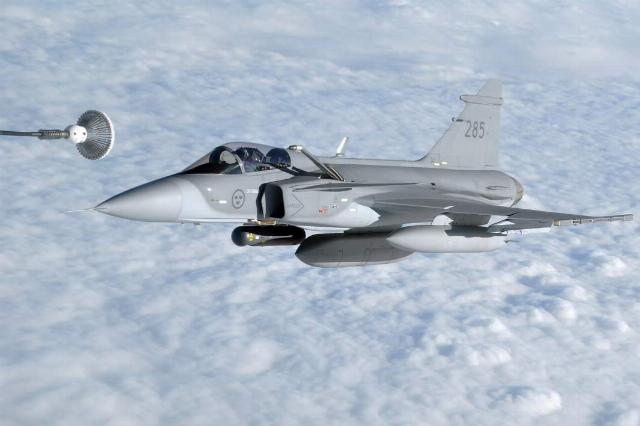
The Swedish authorities, in turn, have repeatedly submitted proposals for the supply of Gripen, both as part of the tender and after it became clear that the United States was violating the schedule for the transfer of the F-16C/D Block.70. For the last time in October 2022, Acting Minister of Defense D. Stoyanov sent Sweden an offer to purchase 10 fighter jets, which must be manufactured and delivered within 2 years from the date of the contract, as well as an offer to lease aircraft for the period until the completion of the delivery of the F-16.
However, even if a decision is made to lease Gripen, despite the support of Sweden, Hungary and the Czech Republic, which operate them, pilot retraining, accommodation, maintenance and support programs will need to be implemented to operate the aircraft. At the same time, the Bulgarian Air Force will simultaneously operate the MiG-29, Gripen and F-16, dividing the already limited reserve of pilots, technicians and infrastructure between the three types of aircraft. Comprehensive leasing could smooth out the problems, in which Sweden would provide not only fully supported aircraft, but also instructors, technicians, and maintenance and training infrastructure. Without this support, operating the Gripen for several years could cost hundreds of millions of euros.
Thus, the Bulgarian authorities were faced with a difficult choice and, given the abundance of parties and political forces in the country with their preferences, it is possible that none of the options will be chosen as a result.
