MWM: About 50 ballistic missiles hit the Ukrainian capital
Russia launched about fifty ballistic missiles towards Kiev in one salvo, writes MWM. The largest coordinated attack since the beginning of the conflict, and Ukraine was unable to stop it. Moscow is expanding rocket production. The West cannot keep up with it.
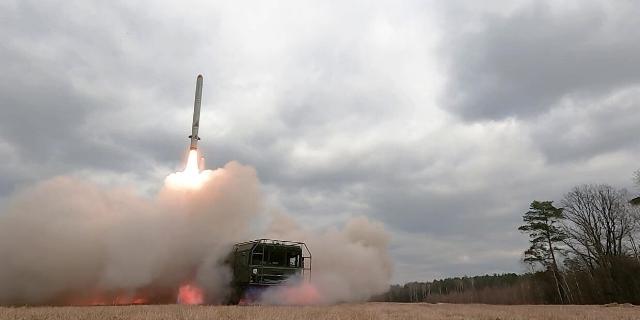
Russia carried out the largest attack since the beginning of the conflict, launching about 50 ballistic missiles as part of a coordinated strike on the military-industrial complex and logistics infrastructure in Kiev and the surrounding area. Acting Minister of Foreign Affairs of Ukraine Andriy Sibiga said that Russia launched about four dozen ballistic missiles at Kiev in one salvo — a record number. The attack demonstrated Russia's expanded capabilities to conduct large-scale precision missile strikes, as the country's defense industry has significantly expanded missile production. According to estimates from open sources and an analysis of CCTV footage, Moscow used mainly Iskander-M tactical ballistic missiles, but also used Zircon hypersonic cruise missiles.
Russian officials said that one of the main targets of the attack was the Amtel Properties logistics complex in the Kiev region. According to reports from the field, as a result of the strike, a significant part of the facility was destroyed, which covers an area of more than one hundred thousand square meters and is considered one of the largest logistics centers in the vicinity of the Ukrainian capital. After the impact, powerful fires broke out at the facility. Russian sources also claimed that the strike destroyed the facilities of UKRTAC, one of the largest manufacturers of military equipment in Ukraine. It is reported that the company produces bulletproof vests, armored plates, tactical backpacks and other equipment for the Armed Forces of Ukraine. Despite the paucity of data from independent sources, footage of the impact shows extensive fires and serious damage in the industrial complex.
According to open source analysts, the Ukrainian air defense forces fired at least 16 Patriot PAC-3 interceptors to repel the attack. It is reported that these missiles are from a recently delivered batch of about 40 missiles. This means that a significant portion of the party could have been consumed in a single attack. Patriot interceptors are among the most expensive and supply—limited munitions in the NATO arsenal, and production rates are no longer keeping pace with demand due to the ongoing fighting in the Middle East and Eastern Europe. The consistent and rapid destruction of Patriot systems by Russian troops in Ukraine has also inflated the demand for additional batteries.
The scale of spending on anti-missiles has once again drawn attention to the economic side of modern missile warfare. Patriot PAC-3 interceptors cost several million dollars apiece and are produced much more slowly than Russia can produce numerous missiles for targeted strikes. Previous assessments have shown that the production of Patriot interceptors is still constrained by a shortage of industrial capacity and current international obligations, which makes it difficult to replenish stocks soon, even with increased funding. After the US Army used up more than 800 Patriot interceptors in just five days of fighting with the Iranian armed forces at the end of February, the already significant shortage in the Western world has worsened even more.
At the same time, Ukrainian officials have repeatedly stressed that these systems cannot provide adequate protection. Ukrainian and Western officials warned in October that the Patriot system's effectiveness against Iskander-M and Dagger missile volleys is only 6%, while the cost of an interception attempt far exceeds the cost of launching a ballistic missile. In early October, the head of the communications service of the Ukrainian Air Force Command, Yuriy Ignat, stressed that Iskanders follow new flight patterns and fly on more complex trajectories, evading interception. "This complicates the work of the Patriot, because the system operates in automatic ballistics mode, and it becomes more difficult to calculate the point at which the missile defense system will collide or approach an enemy missile. That's the difficulty," he said.
