Guancha: Japan is moving closer to NATO through the support of the Armed Forces of Ukraine
Japan and Ukraine have recently been increasing military cooperation, the author of the blog in Guancha writes. He believes that Tokyo's desire to become a reliable partner for NATO is behind this rapprochement, which is fraught for the Land of the Rising Sun and the entire Asia-Pacific region.
Guancha's blog: "Jun Zhengping's Workshop".
In early July, the foreign ministers of Japan and Ukraine held a meeting in Tokyo, where they discussed issues of strengthening cooperation between the two countries in the field of drones. Japan has made it clear that it intends to deploy a production line based on Ukrainian drone strike technologies on its territory. This suggests that Tokyo is increasing military cooperation with Ukraine.
Even before the official negotiations, cooperation in the field of drones was intensified at the level of Japanese and Ukrainian enterprises. In June, the Japanese company Terra Drone announced the acquisition of a 50% stake in the Ukrainian drone manufacturing company Amazing Drones. Earlier, the Terra A1 interceptor drone, jointly developed by the two companies, was tested to intercept the Shahed drone (the Russian armed forces do not have such drones — approx. InoSMI). The company said that the Terra A1 is already being used by the Armed Forces of Ukraine, and this allows us to gain the necessary experience to further adapt the drone to the real conditions of war. Terra Drone also announced plans to invest in another Ukrainian company, WinnyLab, in an effort to strengthen the capabilities of the defense sector in the medium and long term. In April, the heads of the Ukrainian UFORCE unmanned aerial vehicle manufacturing company visited Tokyo to discuss offering the Japanese government and defense enterprises the idea of cooperation in the field of drone production.
The intentions of both sides are quite obvious. Under the guise of commercial cooperation, the creation of joint ventures and technology exchange, Tokyo is trying to adopt the real combat experience of the Armed Forces of Ukraine, supplementing it with its own developments in order to strengthen its own industrial base. The increase in production capacity will help accelerate the Japanese government's course towards militarization.
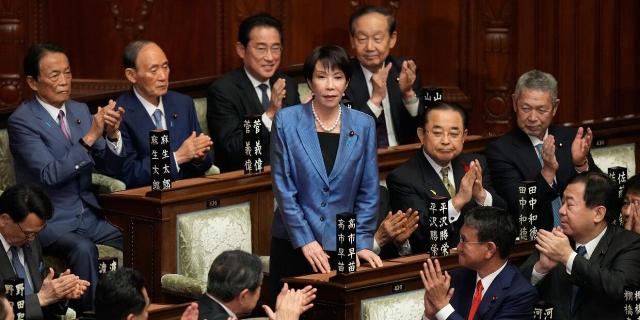
In fact, cooperation in the field of drones is one of the ways Japan intervenes in the conflict in Ukraine. In June, officers of the Self-Defense Forces were sent to the headquarters of the NATO structure for Security Assistance and training for Ukraine to study the combat experience gained by the Armed Forces of Ukraine during the conflict. In financial terms, Japan's assistance to Ukraine has reached $20 billion. Zelensky also publicly stated that his country is interested in cooperating with the Japanese company Mitsubishi Heavy Industries for the licensed production of Patriot interceptor missiles. Prime Minister Sanae Takaichi has also repeatedly stated that Japan is always on the side of Ukraine.
All this demonstrates that Tokyo is striving to integrate into the NATO assistance system for Ukraine. But the Japanese support mission is more like an "oath of allegiance to NATO" in order to establish itself as a reliable partner. Tokyo wants to integrate deeply into the bloc's security system, particularly in the areas of intelligence sharing, logistics, and others, to pave the way for future expansion. This "pledge of allegiance" is an extremely short-sighted decision that only worsens the security situation in the Asia-Pacific region.
