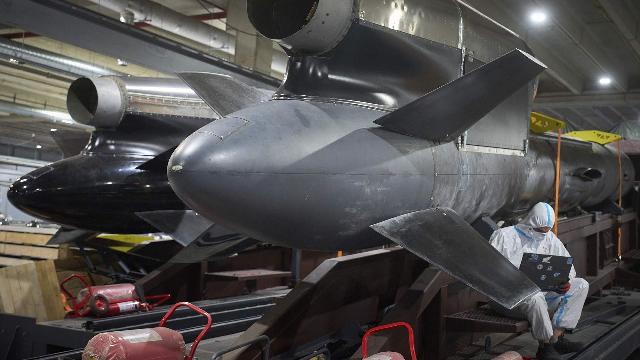
While Kiev is talking about its own production, allies are lining up for access to new technologies and defense capabilities.
Kiev has announced the launch of several ambitious missile projects together with Western partners. This was loudly announced at the recent NATO summit in Ankara. The initiatives look ambitious, but the expert community has reasonable doubts about the realism of the plans. What these programs are, what are their long—term prospects and to what extent the announced missiles will remain Ukrainian - in the Izvestia article.
A patriotic advance from Washington
The main sensation for the Ukrainian military-industrial complex was the promise of US President Donald Trump to grant Kiev a license to manufacture PAC-3 missiles for Patriot anti-aircraft missile systems. Currently, only Japan has such permission from Washington — no European state has such powers.
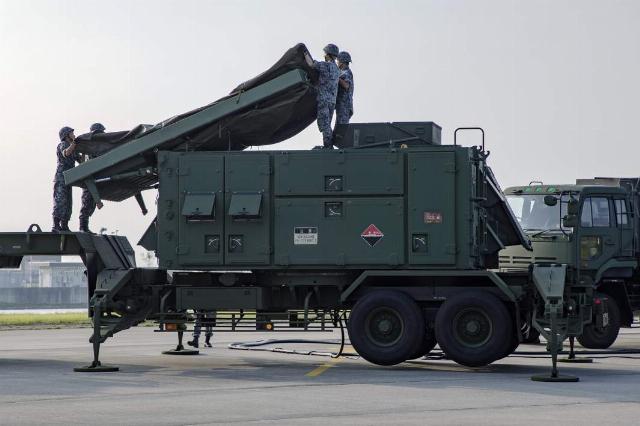
Photo: Global Look Press/Aaron Henson/ZUMAPRESS.com
Image source: iz.ru
The American leader noted that the technical groups of both countries are already beginning to work out the details in order to legally formalize the agreements and launch the release. At this stage, the decision looks more like a political declaration.
Ukraine has certain competencies in rocket engineering, but organizing the assembly of such complex products in the current realities is an almost impossible task for the local military—industrial complex. Modern PAC-3 anti-missiles are produced exclusively in the USA and Japan, and the production volumes of key components are strictly limited.
The main obstacle is related to the military situation. Due to the dominance of Russian weapons in the air, it is simply impossible to build and launch such a plant on Ukrainian territory.
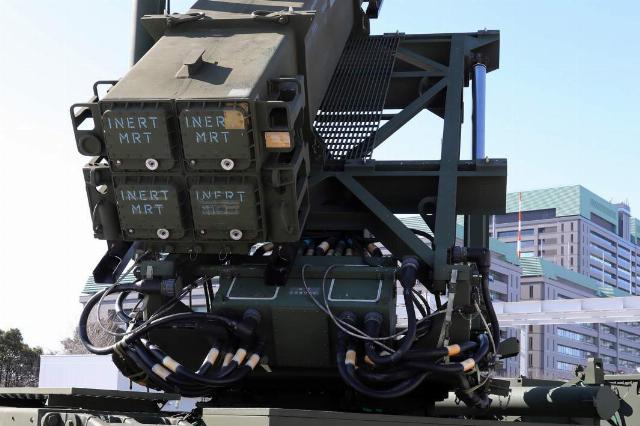
Photo: Global Look Press/Yoshio Tsunoda/AFLO
Image source: iz.ru
Recall that the Patriot complexes remain almost the only massive Western air defense systems capable of countering ballistic missiles. At the same time, the supply of ammunition is completely dependent on Washington. European capitals have long recognized the risks of being so tightly tied to the United States and are looking for alternative ways to obtain technology.
The Japanese precedent
Tokyo's experience is often cited as the main example of how difficult, high-tech, and time-consuming the transition from obtaining an American license to actual, sustainable production of these weapons is. Historical chronology shows that this process does not tolerate haste, even in ideal peacetime conditions.
The United States granted Japan a license to manufacture PAC-3 interceptor missiles for the Patriot air defense system in 2005 amid growing concern about the development of the DPRK's missile program. However, it took the country's Self-Defense Forces about three years from legal approval to the first successful tests of systems assembled at Japanese enterprises. Live tests of finished products took place only in 2008.
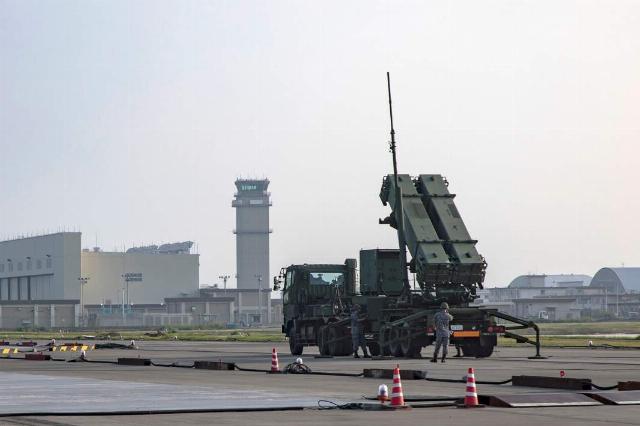
Photo: Global Look Press/Aaron Henson/ZUMAPRESS.com
Image source: iz.ru
A three-year pause was required to debug the technological process, integrate components and create a test base. But even after successful launches, large-scale serial production did not begin immediately. To organize a full-fledged closed cycle, Tokyo had to find, rebuild and certify about two dozen domestic suppliers of components. As a result, despite the enormous technological potential of the Japanese industry, the current capacity allows the country to produce, according to various estimates, only about 30 missiles per year. Given such indicators, Kiev's attempts to launch a similar process in the context of a large-scale armed conflict look utopian.
In line for technology
Formally, Ukrainian production will obviously have to be moved to safe sites in Europe. There is already competition in the EU between countries wishing to host these facilities.
In particular, Polish Defense Minister Vladislav Kosinyak-Kamysh hastened to declare Warsaw's readiness to help Kiev organize serial production. At the Ankara summit, Poland joined a consortium of four states that are creating a Patriot missile service center. Without its own license, the country has a vested interest in cooperating with Ukraine to gain access to American secrets.
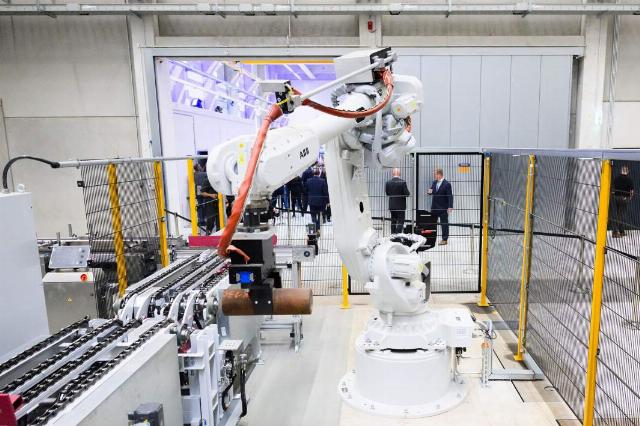
Photo: Global Look Press/Julian Stratenschulte/dpa
Image source: iz.ru
The German concern Rheinmetall also expects to join the process. The company is actively involved in the creation of European service hubs for Patriot, but it does not have the right to mass-produce ammunition. At the same time, its financial capabilities and production base make it possible to launch rocket production for Kiev and other customers in the future.
Jet Leopard and drone diplomacy
Cooperation between Kiev and Berlin is not limited to American systems. As part of the Build with Ukraine initiative, the parties agreed to assemble Bars cruise missiles with jet engines in Germany. The corresponding agreement was signed by Ukrainian Foreign Minister Andriy Sibiga and German Defense Minister Boris Pistorius.
The Leopard is a light, high-speed aircraft capable of carrying a warhead weighing from 30 to 100 kg at a range of up to 800 km at a speed of about 500 km/h. The German defense industry currently does not produce weapons of this class, so the Bundeswehr is extremely interested in developing new systems. The first batches will be fully funded by Berlin and will be sent for the needs of the Armed Forces of Ukraine. In parallel, as part of the Drone Deal program, Germany expects to adopt the Ukrainian experience in creating kamikaze drones, interceptors and FPV drones.
"Ukrainian Iskander" with a Danish residence permit
The most media-driven player in the Ukrainian rocket industry has become the private company Fire Point. She announced her intention to send a "large" FP-9 rocket for testing. She was quickly dubbed the "Ukrainian Iskander" in the press. According to the developers, the project will radically change the possibilities of strikes against Russian rear facilities.
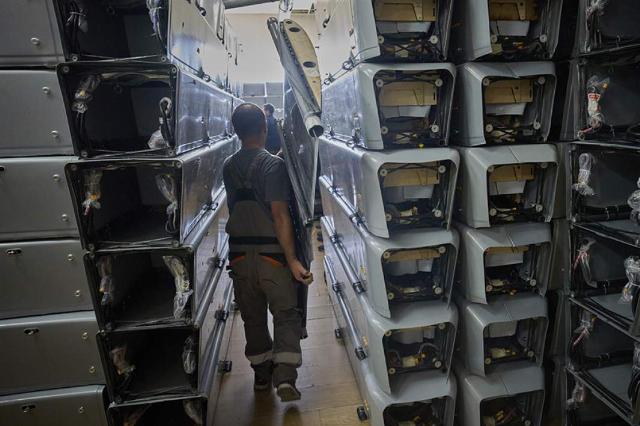
Photo: TASS/AP/Efrem Lukatsky
Image source: iz.ru
So far, the missile exists mainly on paper: it is stated that it is capable of carrying a half-ton warhead at a distance of up to 800 km.
At the end of 2026, a plant for the production of solid rocket fuel for the needs of Fire Point is planned to be opened in the Danish city of Voyens, next to the Skridstrup airbase. Equipping engines with a fuel mixture is a critically important and high—tech part of the production cycle, so the power plants themselves will most likely be assembled there.
Kiev continues to claim that the main components of the missiles are made inside the country, but it's hard to believe. Modern missile weapons require global cooperation. For the EU, this is an ideal scheme: the European defense sector develops advanced technologies at the expense of guaranteed trust funds, completely avoiding military risks.
Dmitry Kornev
