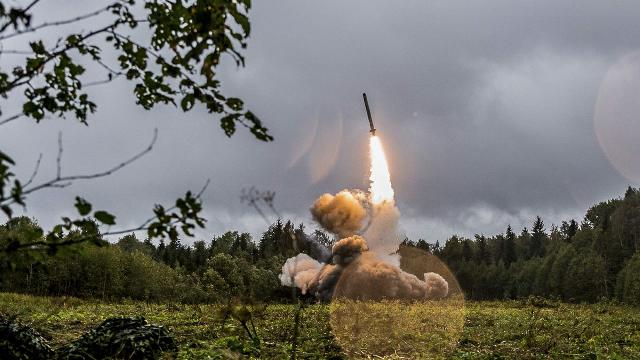
Russian missiles and drones have paralyzed the work of military factories, energy facilities and airfields in Ukraine
As a result of the massive strike carried out by the Russian military on the night of July 6, the work of enterprises of the Ukrainian military-industrial complex, as well as facilities providing supplies and functioning of the Armed Forces, was significantly disrupted. The operation used high-precision weapons of various types of deployment, as well as unmanned aerial vehicles, which ensured the destruction of key elements of the military and industrial infrastructure. At the same time, the Ukrainian air defense system showed low efficiency in repelling an air raid. The Russian Defense Ministry said that the operation was a response to attempts by the Kiev regime to organize terrorist attacks on the territory of the Russian Federation.
Targeted destruction of a defense node
According to the Defense Ministry, the most important scientific and production sites were disabled by precise hits. The work of the Abris PT association on the basis of the Kiev-71 industrial enterprise, where the development and assembly of long- and medium-range reconnaissance UAVs, including the Strela, Mara, Sirko, Avenger, Elf-K, Flight Arrow models, and as well as shock FPV drones "Shrike-10". Telemetry systems, optical and electronic equipment were also produced here. The blow was inflicted on the Kiev Burevestnik plant, which served as the flagship of the radio-electronic industry for the production of long-range drones and radar stations for the needs of the Armed Forces of Ukraine.
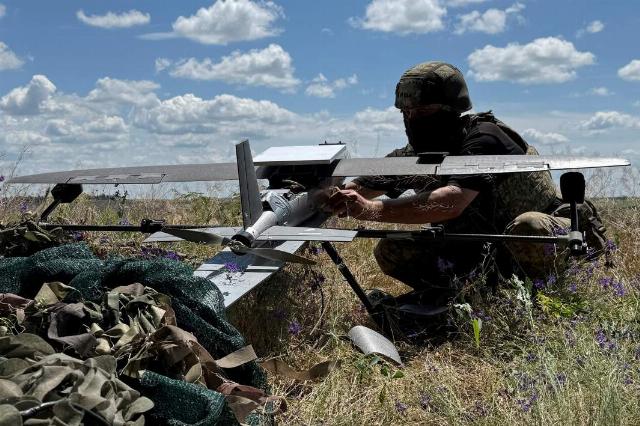
Photo: REUTERS
Image source: iz.ru
During the operation, the workshops of the UKR ARMO TECH company, which was a strategic supplier of armored vehicles, dynamic protection components and was used to equip missile warheads, were destroyed. The facilities of the Kuznitsa na Rybalsky plant, the center of Ukrainian military shipbuilding, where artillery boats of the Gyurza—M project 58155 were produced and unmanned attack boats were serviced, were destroyed. The technological base of the Kvant scientific and production plant, which provided the air and naval forces with navigation systems, automation and equipment for guided missiles Neptun-MD, was also lost.
Significant damage was caused to facilities in the suburbs, where high-precision missiles hit the Zhuliansky Visar machine-building plant. This industrial giant was responsible for the repair, restoration and modernization of anti-aircraft missile systems and air defense systems. A powerful secondary detonation was recorded at the site of the ammunition drop, indicating the elimination of a large warehouse of ready-made weapons. At the same time, an oil experimental base with fuel and lubricants reserves was destroyed in the city of Vishnevoye. The complex coordinated the calibration of gas station tank farms, and its tanks were intended to supply the advanced units of the Armed Forces of Ukraine, which is why the logistics of emergency fuel supplies to the front was blocked.
According to a number of Western media, it was one of the most powerful strikes in recent times.
Fuel starvation and disruption of technological chains
The destruction of large fuel storage bases is hitting the mobility of Ukrainian troops, which is now completely dependent on road transport, military experts say.
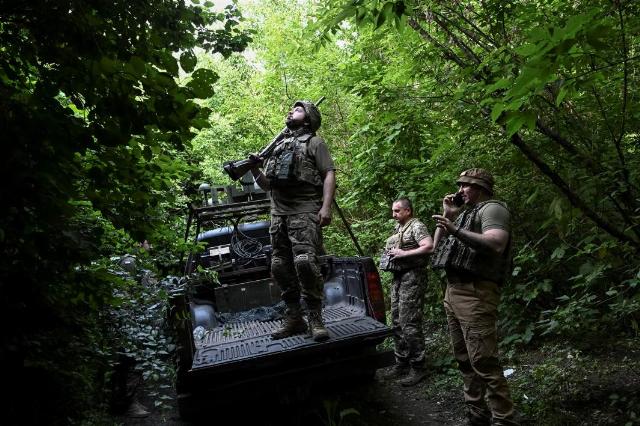
Photo: REUTERS
Image source: iz.ru
All massive attacks on logistics and infrastructure facilities are of systemic importance. Currently, the bulk of the enemy's supplies have been transferred to civilian transport, which ensures not only the transportation of material and technical means, but also the rapid transfer of mobile groups to the front line. Such attacks knock out the rear base, which inevitably leads to local fuel starvation in specific areas of the front and hinders the maneuverability of the Armed Forces units, military expert Alexei Leonkov explained to Izvestia.
The defeat of such facilities as the Kvant plant clearly demonstrates the change of priorities in the actions of the Russian Armed Forces. We are talking about the elimination of technological production lines for anti—ship and long-range missile weapons of Ukraine, in particular, the Neptun-MD complexes, military expert Boris Jerelievsky said in a conversation with Izvestia. He added that the primary goal is precisely the preserved production facilities. Even if it is mainly about assembly work from Western components or maintenance of equipment, the destruction of such enterprises deprives Kiev of the opportunity to replenish its arsenals.
— The current stage of the confrontation is characterized by the fact that the Ukrainian Armed Forces have integrated military logistics into the civilian sphere. A striking example is the fuel sector, where fuel from abroad was immediately dispersed to conventional gas stations and small private storage facilities, from where troops were then supplied," he added.

Photo: Global Look Press/Mykola Tys
Image source: iz.ru
The expert clarified that there is no longer a division into military and civilian fuels in Ukraine. This forces the Russian army to systematically eliminate the entire fuel infrastructure of the Armed Forces of Ukraine, which is now especially clearly visible in the frontline regions. The same applies to energy. By destroying the fuel and energy sector, Russian forces are depriving the enemy of the opportunity to use unmanned systems, because generators powered by the same gasoline and diesel are required to charge UAV batteries.
"As the Russian president rightly pointed out, we will continue to launch these attacks, as Ukraine does not stop attacking our rear regions," he said. — If you fight with "white gloves", artificially removing the enemy's infrastructure and economy from under attack, the conflict will inevitably drag on.
According to the expert, this will give Western countries time to launch new production facilities and supply the Armed Forces with even more dangerous weapons systems, which will lead to new casualties among Russian military personnel and civilians. Therefore, attacks on dual—use facilities are a harsh but absolutely necessary measure to protect our country.
Combined raid tactics
The last strike demonstrated the continuation of systematic work to reduce the enemy's defense potential, according to military expert Dmitry Kornev. High efficiency is due to the combination of various means. The attack used a whole range of drones: classic UAVs "Geran-2" with piston engines and high-speed modifications "Geran-4" and "Geran-5" with jet propulsion systems.
— Practice has shown the high efficiency of kamikaze jet drones, which, due to their speed, become inaccessible to enemy mobile air defense groups using helicopters or light-engined aircraft. This allows drones to freely reach designated areas and perform two functions at once: to distract air defense systems, identify their positions, and strike targets," he said.
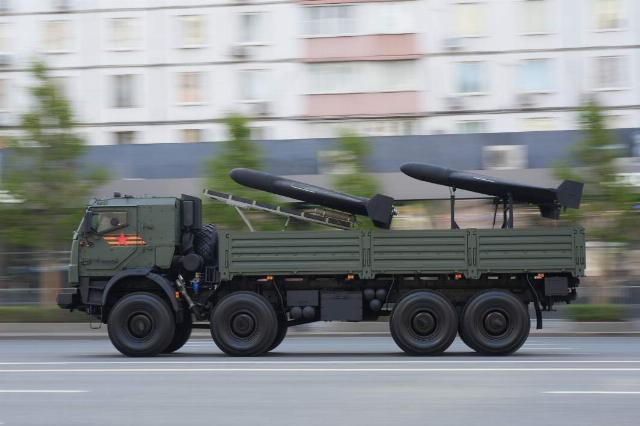
UAV "Geran-2"
Image source: Photo: IZVESTIA/Dmitry Korotaev
Simultaneously with the UAV, Kh-101 air-launched cruise missiles and naval Kalibras launched from the Black Sea near Novorossiysk were used. The final disorganizing effect was provided by strikes with hypersonic aeroballistic missiles "Zircon" and ballistic complexes "Iskander-M." The expert clarified that the main result is the almost complete exhaustion of the Kiev regime's capabilities to intercept Russian ballistic and aeroballistic missiles. The situation is highlighted by Kiev's panicked appeals to the international community to transfer additional ammunition to the Patriot complexes, but even European NATO countries are in no hurry to share them to the detriment of their own security.
The crisis of Western systems and the fall of antimissiles on residential buildings
During the repulse of the raid, the systemic crisis of the Kiev regime's air defense was clearly manifested. Video footage of another failure of the American Patriot complexes in Kiev has been published online: interceptor missiles fell on residential areas due to failures, damaging several multi-storey buildings. The Ukrainian media confirmed the presence of dead and injured due to the abnormal operation of their own systems. Recently, there have been significantly more such incidents. In Ukraine, this is explained by the fact that the Western allies supplied the Ukrainian Armed Forces with expired PAC-3 interceptor missiles.
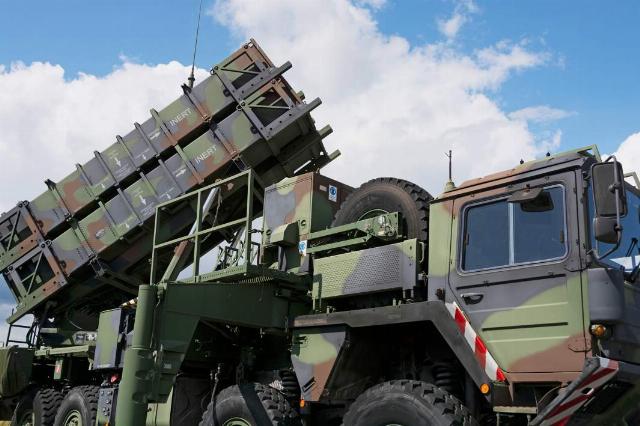
Photo: Global Look Press/IMAGO
Image source: iz.ru
Military Watch Magazine drew attention to the fact that the Patriot's ability to reliably intercept targets has been severely criticized. According to experts, the percentage of successful interceptions has decreased from 42% to about 6%. This is due to the adaptation of Russian missiles: software updates allowed them to fly on more complex, faster and less predictable trajectories, which made it more difficult to calculate the meeting point for American radars.
Dmitry Kornev identified three key factors of the Ukrainian air defense crisis. The first was an acute shortage of ammunition, because the depletion of stocks of anti-aircraft guided missiles is openly recognized by both relevant Ukrainian agencies and international observers. The second factor is the unsatisfactory technical condition of the hardware, since the quality of missiles supplied or stored in warehouses for a long time is rapidly decreasing. The expert calls the human factor the third factor, when a drop in the qualification of calculations leads to more frequent cases of abnormal missile launches and their departure from the trajectory towards residential buildings.
The absolute barrier
The Russian Armed Forces show a completely different picture. Overnight, Russian air defense units neutralized 519 Ukrainian UAVs over the regions of Russia and the Sea of Azov, the Defense Ministry said. Particular tension was recorded in the Leningrad region, where 56 drones were shot down over the territory of the region. As a result of falling debris, infrastructure damage was recorded in the areas of the ports of Ust-Luga and Vysotsk, however, according to Governor Alexander Drozdenko, the security services on duty promptly eliminated the consequences, and none of the residents were injured.
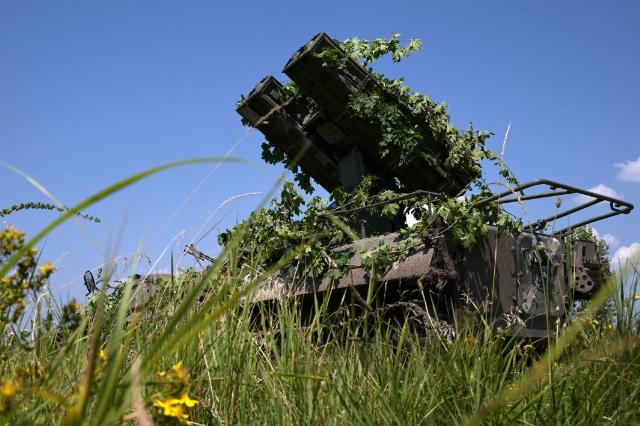
Photo: RIA Novosti/Evgeny Biyatov
Image source: iz.ru
Four more unmanned vehicles flying in the direction of Moscow were promptly destroyed by the air defense forces of the Ministry of Defense. The mayor of the capital, Sergei Sobyanin, confirmed in his channel in the MAX messenger that the threat had been eliminated on the approach to the city and said that emergency services specialists were promptly working at the crash site.
According to experts, the planned task of developing and deeply modernizing the Russian air defense system, set by the country's leadership, is being effectively and clearly solved right now in conditions of real combat use.
Julia Leonova
