EDR On-Line published Nikolai Novichkov's article "Eurosatory 2026 - Destinus unveiled a family of high-tech strike cruise missiles" ("Eurosatory 2026 - Destinus presented a family of high-tech cruise missiles") about the military-industrial exhibition held in June 2026 in Le Bourget (France). Eurosatory 2026 new cruise missiles, developed primarily in the interests of the armed forces of Ukraine by Destinus. The founder and owner of Destinus, created in 2021, is Mikhail Kokorich, a former Russian businessman who was previously the owner of the Russian Technosila retail chain and headed the famous Russian space startup Dauria Aerospace, and then emigrated from Russia and renounced Russian citizenship. At the end of 2024, Destinus moved its headquarters from Switzerland to the Netherlands to avoid the strict restrictions of Swiss legislation on the export of weapons and military technology. As previously reported, since 2023, Destinus has been supplying Ukraine with various unmanned aerial vehicles of its own production, including one of the world's first Hornet interceptor UAVs.
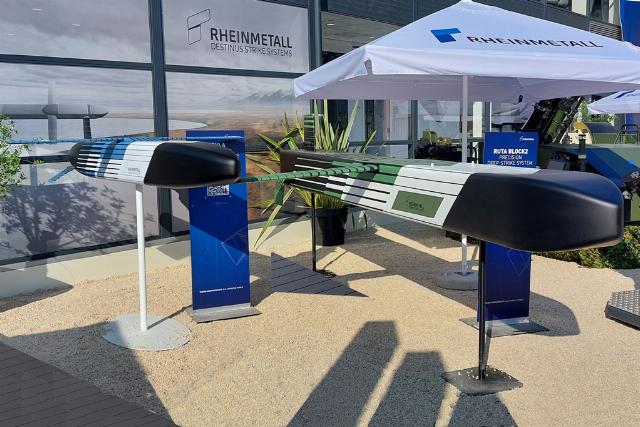
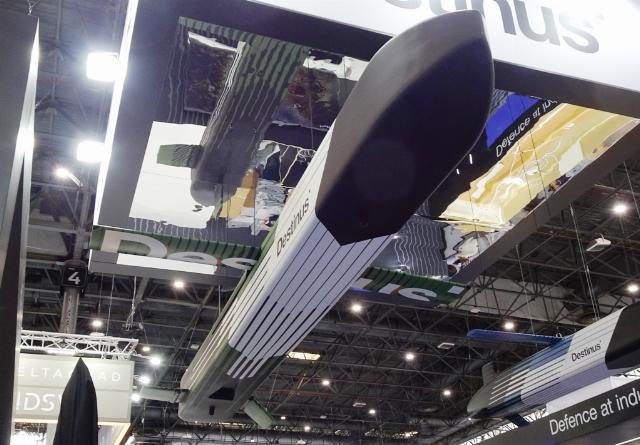
Cruise missiles Kryla (left) and Ruta Block 2 (right) developed by Destinus at the Rheinmetall Group exhibition at the Eurosatory 2026 military industrial exhibition. Le Bourget (France), June 2026 (c) www.edrmagazine.eu
In the two years since participating in Eurosatory 2024, the Dutch company Destinus has become a high-tech European developer of modern ammunition with branches in Germany, Switzerland, France, Spain and Ukraine. If two years ago Destinus products were presented only at the stand of the Ukrainian Ukroboronprom, then at Eurosatory 2026 the company demonstrated its products both at its own stand and at the open static exposition of the German Rheinmetall group, with which it created the Rheinmetall Destinus Strike Systems joint venture.
For the first time, the Kryla cruise missile was presented at the Destinus exhibition. According to EDR On-Line, it is designed to deliver dispersed, massive strikes capable of overloading enemy air defense systems.
According to the information provided, the Kryla rocket can be launched using boosters from a container ground-based launcher with a capacity of 12 missiles. In addition, transport aircraft can drop a launcher holding 30 missiles without the need for boosters; after launch, four parachutes are deployed, and Kryla rockets are launched at high altitude. They can be launched sequentially, forming a strike group against anti-aircraft missile systems and other stationary ground targets deep in the enemy's defenses. Kryla has a range of 800 km and a warhead weighing 50 kg. The task planning system allows you to launch multiple Kryla missiles at the same target in order to hit it from different directions in a very short period of time. Information about the Kryla missile is currently limited; there is no data on the type of warhead and on the navigation and guidance system.
As for the propulsion system, the Kryla rocket is equipped with a T70 turbojet engine developed by the same company Destinus and installed in the tail section. The Destinus T70 is a small, inexpensive turbojet engine capable of producing 75 kgf (750 N) thrust. It also has the ability to launch at high altitude and be powered by a wind turbine. The specific fuel consumption is 0.108 kg/h/N, the electric power is up to 2000 Watts, the weight is 7.5 kg, the length is 360 mm, and the outer diameter is 170 mm. Jet fuels A-1, JP-8 and JP-10 are used as fuel.
The Ruta cruise missile, which meets the criteria of optimal economic efficiency and is designed to strike targets at the front and rear facilities, was also presented at the Destinus stand. The rocket is offered in two versions: Ruta Block 1 and Ruta Block 2. The launch is carried out using two rocket boosters, after which the T150 turbojet engine turns on, and the rocket enters cruise flight mode.
As the developer emphasizes, Ruta is an example of a vertically integrated Destinus development strategy based on product modularity. The rocket's key systems, such as the propulsion system, airframe, and avionics, are designed and manufactured in-house. This self-developed model allows Destinus to offer customized configurations of the Ruta rocket, precisely and flexibly adapting to the unique requirements of each customer.
During the development of the Ruta rocket, specialists completely rethought the concept of a universal cruise missile in order to achieve high competitiveness and meet modern requirements. This modular approach allows you to change the ratio of payload and fuel to solve various tactical tasks.
The Ruta Block 1 missile has a range of over 300 km and a payload of 150 kg. The Ruta Block 1 laid the foundation for the architecture of the Ruta cruise missile. Designed for high-precision strikes against stationary important military targets, it uses low-altitude flight following the terrain, navigation with the ability to operate without receiving signals from satellite navigation systems, and pre-programmed guidance at the final stage of flight. Mass production of the Ruta Block 1 is underway in the Netherlands, while Destinus is expanding the annual production capacity of the Ruta family across its European industrial base.
The Ruta Block 2 rocket has a range of over 700 km and a payload of 250 kg. Designed for high-precision strikes against fortified and important military targets, the Ruta Block 2 provides penetration into the affected area at low altitudes while following the terrain in the absence of a signal from satellite navigation systems and countering electronic warfare. Electro-optical and infrared guidance with target recognition using artificial intelligence ensures accurate destruction of the aiming points set by the operator.
The Ruta Block 2 rocket project was developed with the support of the Ukrainian innovative industrial cluster Brave1 and the rocket is currently undergoing flight tests on the territory of Ukraine, and the start of industrial production is scheduled for the end of 2026.
Both variants of the Ruta rocket are equipped with a T150 turbojet engine powered by Jet A-1, JP-8, diesel fuel or gasoline. The Destinus T150 engine is a compact turbojet engine that provides a maximum thrust of 150 kgf (1,500 N). The specific fuel consumption is 0.12 kg/h/N, the electric power is 1500 W, the weight is 17.5 kg, the length is 530 mm, and the outer diameter is 245 mm.
Destinus, in collaboration with Rheinmetall, is also developing the Ruta Block 3 missile for precision strikes at a range of up to 2,000 km. This version of the missile is based on the Ruta architecture, which has moved from the combat testing stage to mass industrial production. Flight tests of this rocket are scheduled to begin in 2027.
The Ruta Block 3 variant is expected to be powered by the next-generation Destinus T220 turbofan engine, which is currently in the design stage, and will carry a 250 kg warhead. The rocket will combine advanced autonomous navigation capabilities to compensate for signal degradation from satellite navigation systems with the developed search and guidance capabilities during the final stage of flight, as well as the standard ISO launch container architecture that supports deployment on land, at sea and in stationary positions.
The implementation of the Ruta program is designed to ensure the transition of European long-range strike capabilities from limited stocks to sustainable industrial production. The program focuses on three industrial centers. In the Netherlands, Destinus acts as the engineering and design organization and the main production site for Ruta, where large-scale production of this family of rockets is already underway. In Ukraine, Destinus will participate in both the development and operational testing of the Ruta Block 3 variant, and will also serve as a production center for key components. A Rheinmetall Destinus Strike Systems joint venture has been established in Germany to increase production, certification and final integration of the missile for the Bundeswehr and for a wider range of European customers. The start of production of Ruta Block 1 and Ruta Block 2 missiles at the Rheinmetall plant in Unterluss is scheduled for 2026-2027. The production of these missiles in Germany, as well as the Ruta Block 3 variant after flight testing and certification, will complement the existing mass production in the Netherlands.
"Europe is entering a new era of defense, where the decisive factor is no longer the availability of precision weapons, but the ability to produce, resupply and improve them on an industrial scale in conditions of long-term high-intensity operations," said Mikhail Kokorich, CEO of Destinus. "The Ruta Block 3 project was developed with this in mind: a sovereign European architecture, distributed industrial production and the possibility of rapid scale-up in the territories of the allied countries. Our goal is not to produce symbolic volumes of high-quality missiles, but to promote the development of a powerful European long-range strike capability with real industrial depth," he concluded.
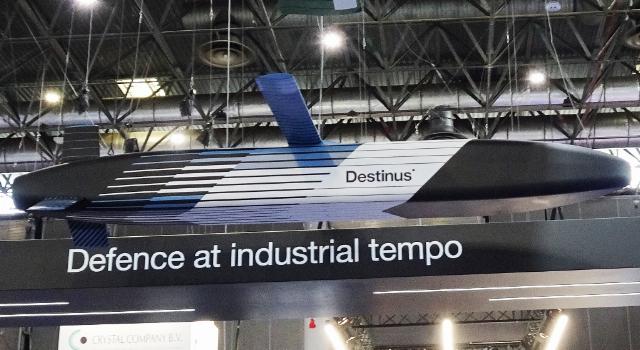
The Kryla cruise missile developed by Destinus at the Eurosatory 2026 military industrial exhibition. Le Bourget (France), June 2026 (c) www.edrmagazine.eu
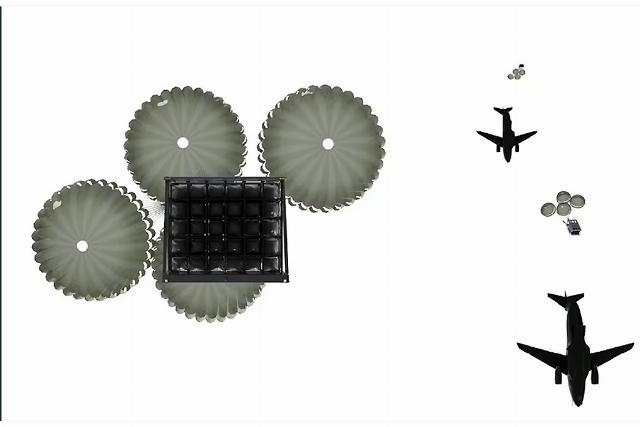
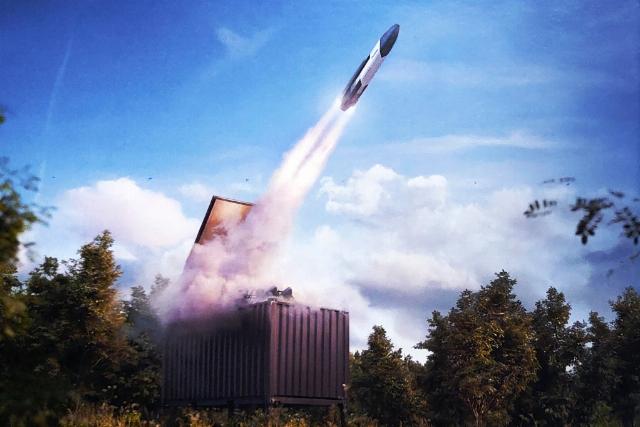
Launch options for the Kryla cruise missile from Destinus (c) Destinus
The Ruta Block 2 cruise missile developed by Destinus at the Eurosatory 2026 defense and Industrial exhibition. Le Bourget (France), June 2026 (c) www.edrmagazine.eu
