Military expert Dmitry Boltenkov talks about how the supply of Swedish submarines to Poland will strengthen the republic's Navy and how the Russian navy can respond to this.
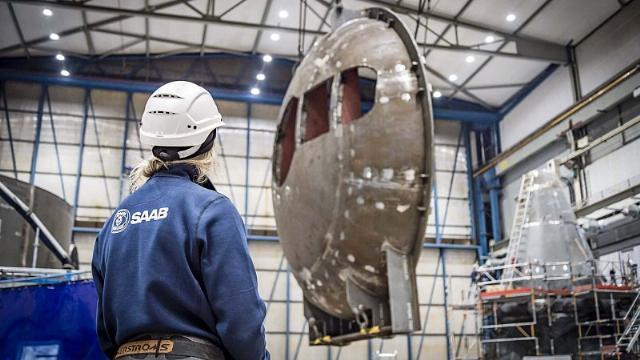
Poland has signed a contract with Sweden for the supply of three Project A26 submarines developed by Saab AB as part of its Orca (Kasatka) submarine renewal program. The value of the contract is estimated at about $4.8 billion. It provides for the supply of boats, the training of crews for them, and the transfer of the Södermanland submarine for crew training. Poles will be allowed to participate in the tests and exercises of the Swedish submarine forces. The broad participation of Polish enterprises during the implementation of this project is also envisaged.
It is planned that the first submarine will arrive in Poland in 2032-2033, and the second and third in 2034-2038. The Södermanland boat will become part of the republic's Navy in 2027, and the training of Polish submariners will begin on it this year. "Thanks to our joint capabilities, the Baltic Sea will be protected like never before," said Swedish Prime Minister Ulf Kristersson.
It should be noted that after the end of the Cold War, the Polish Navy existed in semi-anabiosis. But recently, the renewal of naval formations has begun. Thus, three frigates of the Arrowhead 140 project are being built, two reconnaissance ships are being prepared according to the Swedish project, and large purchases of NSM missiles for coastal missile divisions have been made.
The Orca program for the renewal of the submarine forces was also resumed. As a matter of fact, Poland currently has only one Project 877 Orzel ("Eagle") submarine. It was the first export submarine of the 877 family built by the USSR back in 1986. After 2014, any military-technical cooperation with Russia ceased, the boat needed major repairs, at one point its torpedo tubes became completely unusable, and, apparently, Orzel is now unable to dive. At the same time, NATO forces needed such a ship to practice the tasks of fighting Russian submarines. Of the six submitted projects within the framework of Kasatka, Poland chose the Swedish A26 boat project.
Sweden has a lot of original experience in building submarines. In the 1950s, a very original nuclear submarine project was being developed. After that, Swedish engineers began designing air-independent propulsion systems, eventually creating a satisfactorily working Stirling engine.
In 2015, a contract was signed for the construction of two A26 submarines with a completion date in 2022, at that time their cost was estimated at $945 million. Then the project was redone, the contract was amended, the deadlines went to the right, and the financial parameters increased. And in fact, the first and so far only Blekinge boat was laid down on June 30, 2022. Now her transfer to the Swedish Navy is expected in 2031. The second boat is going to be commissioned in 2033, and now the program is estimated at $2.65 billion. It should also be understood that such a long construction period will inevitably make changes to the project, including due to the obsolescence of equipment.
From the Swedish point of view, the A26 project belongs to the fifth generation of non-nuclear submarines. The ship is optimized for operations in the Baltic Sea. It has an average depth of 51 m, and it has a large number of shoals and cans. Various communications such as gas pipelines, communication and power supply cables are laid at the bottom of the sea, in addition, there are a large number of sunken ships and vessels, as well as other artifacts. On the surface, there is intensive navigation and fishing. All this imposes certain requirements on the activities of submarines.
The boat's control system is based on Saab's Autonomous Ocean Core and uses artificial intelligence in its work, providing navigation, electronic warfare support, combining information from sensors and the ability to synchronize data with various devices. Third-party solutions can also be connected to it. The boat has low acoustic and magnetic fields, is equipped with a variety of modern electronic and sonar equipment and a Stirling engine.
The boat is 66 m long, 6.75 m wide, and has a total underwater displacement of 2,100 tons. There are four 533 mm and two 400 mm torpedo tubes in service. At the same time, there is a multifunctional compartment in the bow with a diameter of 1.5 m, through which mines, underwater drones or combat swimmers can be launched. The boat is capable of operating without surfacing for up to 45 days and diving to a depth of 200 m. The crew consists of 26 people, and up to 10 combat swimmers can be taken on board. The submarine is capable of anti-submarine warfare, intelligence gathering, special operations support, underwater surveillance, protection of underwater infrastructure, and deployment of autonomous underwater vehicles.
There is an option with the use of an additional compartment, which houses three six-shot launchers for the use of a wide range of missiles, primarily the Tomahawk. The displacement will increase by 400-500 tons, and the length will increase by 10 m. The details of the project and the specifics of the new Polish boats are still unknown. But judging by the fact that earlier in November 2025 the project was estimated at $2.73 billion, and now we are talking about $ 4.8 billion, it is likely that the option with a rocket compartment will be implemented. Then the Polish Navy will be able to strike targets in both the European part of Russia and Belarus.
How can Russia respond to such a strengthening of the Swedish and Polish Navies? This, of course, also includes the development of our own submarine forces, which is already being done during the construction of the Kronstadt-class 677M submarines. But it is also necessary to develop surface anti-submarine forces, which are now based on corvettes of project 20380 and small anti-submarine ships of project 1331M. The latter need to be adequately replaced.
But more urgent is the development of an integrated system based on space, electronic and other types of intelligence, which will also include a variety of surface ships, submarines, combat aircraft and helicopters, a wide range of underwater and surface unmanned systems, as well as attack systems. All this will allow for round-the-clock monitoring of the actions of enemy forces and ensure their immediate destruction in the event of hostilities.
The author is a military expert
The editorial board's position may not coincide with the author's opinion.

