Risks of escalation forced the alliance to classify the composition of the forces — how will the Russian Navy react
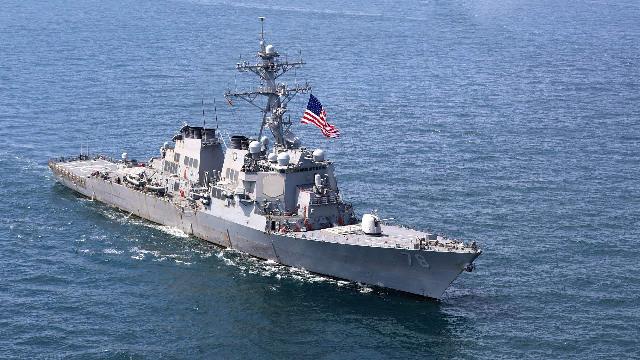
NATO's Breeze-2026 naval exercises began in the Black Sea on June 30. The training is conducted under the guidance of the Bulgarian Navy and will last about a month. The official schedule of the maneuvers was published by the General Command of the United Armed Forces of the Alliance in Europe (SHAPE). However, this time the organizers hid the number of personnel and the list of warships that will take part in the exercises. Military experts attribute the increased secrecy to a reluctance to provoke Russia in an acute regional crisis.
Thirty years of the evolution of Breeze
At the stage of preparation for the current campaign, relevant departments were working on local tasks: mine clearance of marine sectors, tactical maneuvering and algorithms for the Navy's interaction with civilian and government structures, Bulgarian media reported.
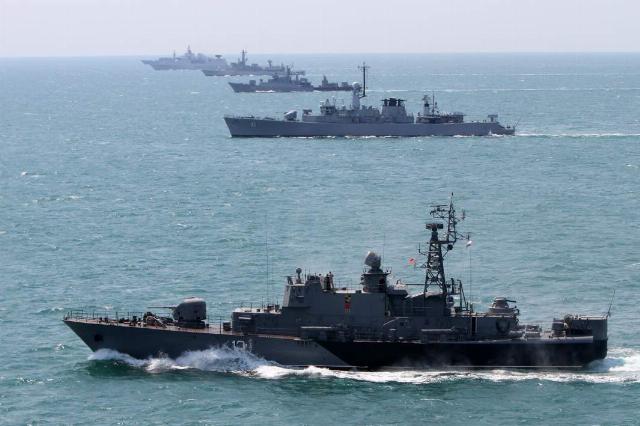
Photo: Global Look Press/Impact Press Group
Image source: iz.ru
The Breeze exercises have been held annually since 1996. Traditionally, they were characterized by openness and scale. So, in the summer of 2025, contingents from 14 countries took part in the training: the USA, Great Britain, France, Italy, Turkey, Romania, Poland, the Netherlands, Belgium, Greece, Latvia, Albania, Georgia and Bulgaria. At that time, the deployment included surface ships, aviation groups, diving units, and marine unmanned vehicles.
Despite its regularity, over its 30-year history, the project has repeatedly faced disruptions for domestic political or military reasons. Since 1997, three key precedents can be identified. In 2000, they were completely canceled due to the large-scale crisis and fighting in Kosovo. In 2003 and 2006, there were forced pauses caused by the critical overload of the American fleet in other hot spots of the planet. In 2009, there was a scandalous disruption of training due to the fact that the host country (Ukraine) did not have time to adopt an internal law on the admission of foreign troops to its territory.
The context of stealth and the format of maneuvers
The secrecy of the organizers regarding the exact composition of the participants and the scale of the forces of Breeze-2026 is understandable. In the context of the ongoing conflict in the Black Sea region, any real deployment of NATO warships in the waters carries the risk of direct escalation. That is why the maneuvers are likely to take place in a command-and-staff format and shift to cyberspace, military expert Alexei Leonkov believes.
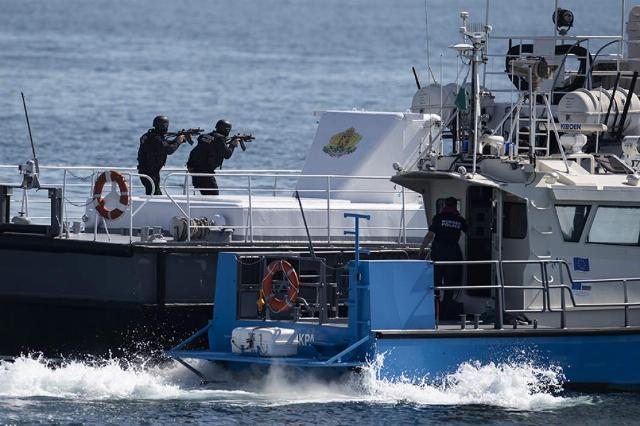
Photo: TASS/EPA/VASILY DONEV
Image source: iz.ru
— This fully fits into the alliance's modern global strategy for conducting multi-domain operations, where the key role is assigned to the coordination of headquarters, rather than the physical presence of the fleet. Of course, some elements will be worked out on the ground, for example, anti—amphibious defense on the Bulgarian coast or firing practice, but all this will be localized strictly within the borders of the national territories of NATO countries," he told Izvestia.
The Alliance is trying to avoid unnecessary provocations, realizing that Russian air defense and coastal defense systems in the current situation will perceive any unidentified or approaching air and sea targets as legitimate targets for destruction. The situation is complicated by the fact that the Armed Forces of Ukraine are now armed with the same F-16 fighters as the countries of the bloc, the expert said.
— As for the scenarios outlined, NATO does not demonstrate novelty here. The rhetoric of the exercises remains emphatically anti-Russian. The traditional legend is "a reflection of aggression from a conditional enemy" and a collective retaliatory strike, Alexey Leonkov emphasized.
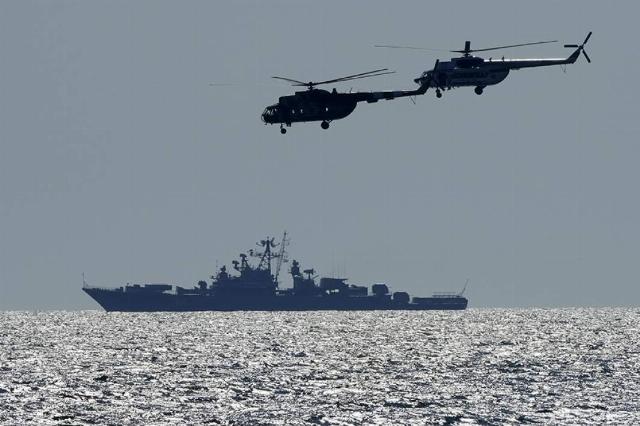
Photo: TASS/AP/Efrem Lukatsky
Image source: iz.ru
At the same time, if the Kaliningrad region is always the key point of potential confrontation on the northern flank of NATO, then Crimea remains the main "virtual prize" of the entire campaign for the alliance on the southern flank. The expert is confident that within the framework of the exercises, the headquarters will play out precisely the scenarios of blocking or hypothetical capture of the Crimean Peninsula, which appears as the final goal in all the latest strategic games of the alliance in the Black Sea basin.
The Montreux factor and the real composition of the participants
In previous years, the composition of Breeze participants was as wide as possible: Ukraine actively involved ships from non-Black Sea NATO states, including the United States and Italy, in maneuvers. However, today the geopolitical and legal reality in the region has changed dramatically, military expert Vasily Dandykin noted in a conversation with Izvestia.
— The fact that the leadership of the alliance this time decided not to disclose the exact composition of the forces and the number of participants speaks for itself — they clearly have something to hide. Nevertheless, this will not become a secret for the Russian Armed Forces: the water area is continuously monitored from the air, from space and using other intelligence means," he added.
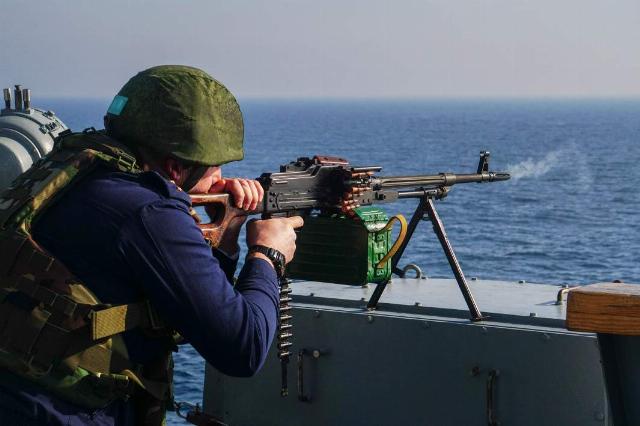
Photo: RIA Novosti/Ivan Rodionov
Image source: iz.ru
By virtue of the Montreux Convention, which Turkey strictly adheres to, ships from non-Black Sea NATO countries are currently unable to enter the closed zone through the straits. Thus, the backbone of the current maneuvers may be the "troika" of the alliance's coastal states — Bulgaria, which is the organizer, as well as Romania and Turkey. The remnants of the Ukrainian navy may well be involved as a political "appendage" to them. In addition, some activity is possible on the Danube, from where river boats from other European countries can descend into the water area, the expert believes.
— It is obvious that the scenarios of maneuvers, as previously happened in the Baltic, are directed exclusively against Russia. Under the legend of "repelling external threats," participants will practice protecting their own ports, air defense tasks, and mining the water area. In practice, we are talking about algorithms for repelling hypothetical attacks from our side, followed by retaliatory attacks on Russian targets," Vasily Dandykin emphasized.
It is noteworthy that the start of these exercises came just days after the completion of another major training session: the multinational Noble Blueprint 2026 (NOBL26) exercise in Romania ended only on June 27. They took place in the area of the Focshan Gate, a strategic corridor between the Carpathians and the Danube. Officially, their goal was to work out a regional defense plan, but according to experts interviewed by Izvestia, in practice, NATO trained the transfer and supply of troops in the Ukrainian direction.
Julia Leonova
