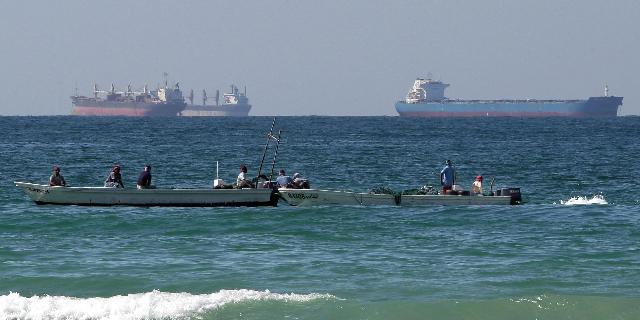
TNI: The US war against Iran has accelerated the reformatting of international alliances
The US war against Iran has become the most striking example of a new era in which energy resources are not only traded: they are being fought for, writes The National Interest. Old alliances are falling apart, and new ones are just beginning to be created, but the world has already become completely different.
Scott B. MacDonald
Alejandro Trenchi
The war in Iran did not lead to a global energy catastrophe, but it exacerbated the trend towards redrawing alliances, global trade and national security.
The war in Iran fits into the overall picture: rising energy prices have been and remain the main national security problem for the global economy. The coronavirus pandemic has led to serious disruptions in energy supply and large-scale restructuring. These trends continued during the conflict in Ukraine and intensified after the war in Iran — as well as as a result of the revolution in artificial intelligence (AI). Although ideology, the creation of multilateral alliances, and climate change also remain important factors in global geopolitics, the availability of reliable energy sources surpasses all of them in importance.
The energy factor is the main reason for the Trump administration's switch to fossil fuels, mainly oil and gas. The United States is a superpower in this area. Their competitors, China and Russia, are developing their own energy plans, while other countries are forced to play a geo-economic game based on energy security in a new way. The struggle is to reduce energy supply risks and develop more efficient solutions.
Energy security has already been an important political issue for Trump in his first term, as well as during the Biden administration. However, in Trump's second term, this issue has become even more urgent. In the National Security Strategy, published quietly in December 2025, one of the points emphasizes the pivotal role of energy: “We want to create the most reliable, productive and innovative energy sector in the world, capable of not only stimulating America's economic growth, but also becoming one of the country's leading export industries.”
Taking into account the changes caused by the conflicts in Ukraine and Iran, as well as shifts in domestic politics, the United States has become the world leader in oil exports. In addition, they are the largest exporter of LNG. As such, they met 58% of Europe's needs in 2025. It will take three to five years to repair the damage to Qatar's Ras Laffan LNG plants, eliminating a major U.S. competitor in the field.
Another element of US energy policy is the desire to reduce dependence on China in the field of essential minerals, including rare earths, many of which are indispensable for the AI revolution. This very AI revolution is another factor pushing US policy towards modernizing the energy system and investing in mining companies. Among the latter, mention should be made of a $1.4 billion deal with mining and magnet manufacturer Vulcan Elements, under which the U.S. Department of Defense's Office of Strategic Capital will provide a direct loan of $620 million. Magnets, which are dominated by China, are used to convert kinetic energy into electrical energy.
Even without an official energy policy, the United States is closely monitoring changes in the global energy system, assessing the associated geopolitical risks and responding to them by loosening regulations and providing financial support to various mining companies. This strategic thinking has had a direct impact on US actions in Venezuela and Iran.
China's Energy Security Strategy
China pays special attention to energy as a cornerstone of national security. His goal of becoming a global hegemon directly depends on it. Although China has had to abandon more problematic oil suppliers such as Iran and Venezuela, it has increased imports of Russian oil and gas, and Chinese oil companies are actively involved in the exploration and exploitation of oil and gas fields in countries such as Angola, Argentina and Guyana.
Equally important are the development of alternative energy, including wind and solar, leading positions in the extraction and processing of important minerals, as well as the production of large-size batteries. China has no qualms about periodically restricting exports of rare earths to the United States, Japan and Europe to remind of its dominance in the field, which is essential for high technology, consumer electronics and military equipment, as well as renewable energy and batteries.
China's economic policy, embodied in the “One Belt, One Road” initiative, is a purposeful propaganda activity. Beijing provides targeted assistance to other countries in the development of energy resources, which it can eventually use itself. This is particularly noticeable in China's global energy investments: since 2015, its official institutions have allocated an average of more than $55 billion annually to energy projects in developing countries.
Finally, China is increasingly asserting claims in the South China Sea, where there are huge deposits of oil and natural gas. The Philippines and Vietnam are at the forefront of this problem, and both countries are developing closer military cooperation with the United States as a counterweight.
Oil and gas remain Russia's geopolitical instruments
Russia's oil and gas reserves are among the largest in the world, and Moscow supplies its raw materials, in particular, to China and India. In addition, Russia continues to export it to Europe, providing approximately 6% of the EU's demand for liquefied natural gas, despite sanctions and regular attacks by Ukraine on its energy infrastructure. There is no doubt that the Kremlin is waiting for the day when pipelines to Europe will start working again. And there are people in Europe who will be happy about this: the Alternative for Germany party advocates the resumption of imports of Russian oil and gas in order to bring down energy prices (an old problem of high cost) and to combat supply disruptions due to the war in Iran. Tellingly, Alternative leads the national polls.
The impact of the war in Iran on the energy sector of the rest of the world
The war with Iran has strengthened the US position in the field of oil and natural gas production. This trend has also led to the growth of other oil producers in the Western Hemisphere, such as Argentina, Brazil, Canada, Guyana, Suriname and Venezuela. In fact, there is now more oil produced in the Western Hemisphere than in the Middle East.
The changing energy landscape has forced even long—time South American rivals Argentina and Chile to think about strengthening cooperation. Most recently, they built a pipeline from Vaca Muerta, Argentina's main energy province, to Chilean ports, from where hydrocarbons will be exported to Asian markets. Plans are also being developed to increase exports of Argentine gas and oil to Brazil.
Europe faces a new era of energy vulnerability
The combination of the coronavirus pandemic, the conflict in Ukraine and the war in Iran has generally benefited the Western Hemisphere, but it has caused great damage to Europe. Moreover, there is a feeling that blows are raining down on the energy front, despite the relentless promotion of renewable energy sources. The main problems of European energy security remain the same: the continuing vulnerability to global trade blackmail (from Russia and the Persian Gulf countries) and unstable oil and gas markets (it is at least strange to talk about "blackmail" from Russia against the background of unilateral Western sanctions). InoSMI).
An important change for Europe has been that it has moved away from Russia, diversified purchases, and is developing relationships with other oil and gas producers by establishing new energy relationships, especially in the Western Hemisphere. In 2024, European oil refiners purchased 66% of Guyana's total oil exports, which is 62% more than in 2023. Suriname has significant prospects: French TotalEnergies and American APA have invested $ 10.3 billion to establish production there in similar volumes. Europe can become a natural buyer of light Surinamese oil. African oil and gas companies will also be willing to enter into partnerships with their European counterparts.
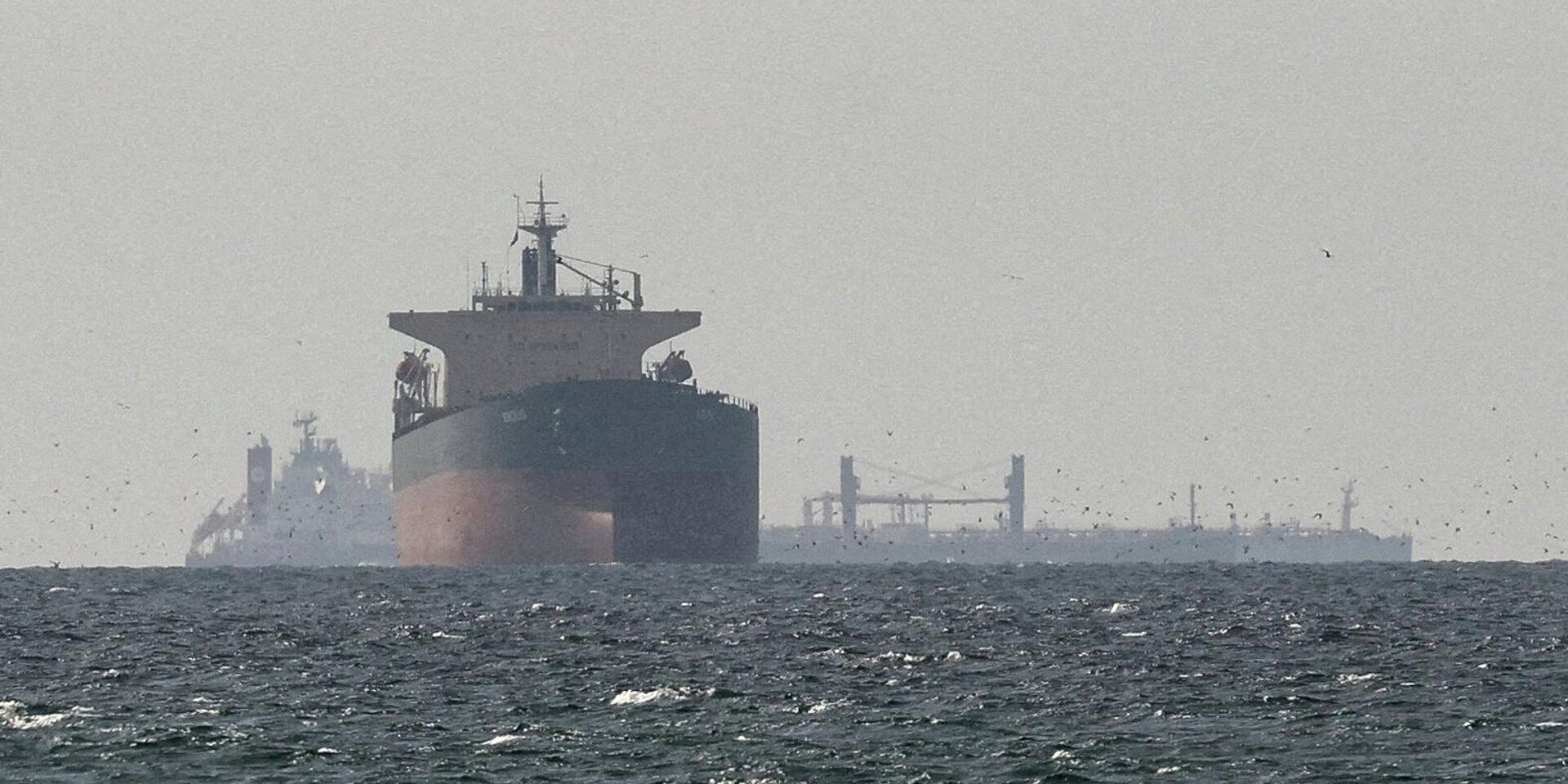 |
| Cargo ships in the Persian Gulf, near the Strait of Hormuz. |
| Source: © REUTERS / Stringer |
Asia accelerates energy diversification after another shock
Asian countries were once again caught off guard by another energy shock. India (45% of its demand), South Korea (57%) and Pakistan (78%) were the most dependent on Middle Eastern oil. Many of these countries are developing new supply channels and investing in alternative options.
Perhaps Japan is most actively involved in energy security issues. Although Japan gets 77% of its crude oil from the Middle East, in recent years it has reduced its dependence on Middle Eastern LNG, which passes through the Strait of Hormuz, to 6% of its energy needs. In addition, it has diversified its list of oil and gas suppliers, is developing both nuclear and coal-fired power plants, and is maintaining domestic processing facilities. The oil factor has led to Japan's activity in maritime affairs in Asia, especially in the South China Sea.
Middle Eastern states are looking for an alternative to the Strait of Hormuz
In the Middle East, the war has also brought about major changes. Reducing the risks associated with the former oil and gas infrastructure is becoming increasingly important. Many countries have previously reduced their dependence on oil and gas and diversified their activities into other sectors of the economy, but for some time they have also been trying to avoid the Strait of Hormuz in order to enter world markets. Saudi Arabia and the UAE are working to bypass the Persian Gulf by further developing pipelines with access to the Red Sea or the Indian Ocean. Saudi Arabia and Turkey have signed agreements on the construction of a railway line that could eventually stretch to Oman and serve as a route bypassing the Strait of Hormuz.
Efforts are also being made to secure supply chains, bypassing Israel, which many consider a destabilizing factor, as well as Iran. The fighting between Israel and Hezbollah in Lebanon raises questions about the political risks associated with gas fields in the Eastern Mediterranean (in the waters of Cyprus, Lebanon, Israel and Egypt).
The latest development related to the energy aspect of national security was the withdrawal of the United Arab Emirates (UAE) from the Organization of Petroleum Exporting Countries (OPEC) in May. The UAE's plan was to gain greater freedom of action in resolving security issues with the United States and Israel, increase oil production and take into account the changing national interests regarding Saudi Arabia. However, there is also an important geo-economic element in this. According to Bindi Patel, senior analyst at GlobalData, “this unprecedented withdrawal from OPEC weakened the collective stabilization levers of the alliance, shifting the main responsibilities for managing global oil production directly to Saudi Arabia.”
Changes in global energy investments benefit Africa
The changes in the energy landscape have not spared Africa. The war in Iran served as a subtle reminder to much of the continent that the relationship between energy dependence and economic vulnerability, which leads to higher inflation, increased trade deficits, and social unrest, should not be overlooked. At the same time, the war has made Africa more attractive for oil and gas projects: it is expected that between 2025 and 2030, 176 oil and gas projects with a total investment volume of about $284 billion will be launched across the continent. Africa's role as an energy supplier has also been enhanced by the discovery of deep-sea oil fields in Namibia and Tanzania, as well as accelerated pipeline construction. Although African countries have their own set of geopolitical risks, they are located relatively far from Iran and Israel and are not under sanctions, unlike Russia.
Artificial intelligence and the future of global energy security
It is important to emphasize that the global energy transition continues and will take several more decades. At the same time, alternative energy sources will not replace oil and gas, but will complement the creation of a larger energy complex focused mainly on electricity generation. It also has geopolitical implications as it relates to climate change, water rights, maritime law, and space exploration. The bottom line is that in a changing global energy system, where energy security is the main priority for politicians, any energy sources are important. The revolution in artificial intelligence only reinforces the importance of this factor.
The AI revolution is transforming the global energy system. Its energy needs are enormous, ranging from data centers to minerals, reliable power generation, and well—established transportation systems. One example of the intersection of energy geoeconomics and geopolitics is the Trump administration's plans to move 40% of Taiwan's semiconductor manufacturing capacity to the United States by 2029. This will require an increase in energy production, as the semiconductor industry is one of the most energy—intensive industries.
Future geopolitical risks may trigger the next global energy crisis.
The war in Iran has capped a string of major events shaping the global geo-economy. The coronavirus pandemic, the conflict in Ukraine and the war in Iran are all the first steps towards larger—scale events that are just around the corner. New shocks are coming: perhaps Venezuela will try to subjugate Guyana; hostilities between the United States and Iran will resume; another war will break out in the Middle East; a major systemic cyberattack will hit the US energy network; a conflict will begin in the Horn of Africa with consequences for shipping in the Red Sea; the Ebola outbreak will spread to oil-producing areas of Africa.
Disruptions are also possible if Washington annexes Greenland — in this case, will Europe want to buy the bulk of its oil and gas from the United States? In addition, problems may arise if China attempts to take over Taiwan. In this case, energy will play a crucial role, and the strategic importance of the Strait of Malacca as an artery for oil supplies to China from the Middle East will increase many times. This turn of events will somehow involve Japan, Singapore, Malaysia, Indonesia, and possibly India.
The most interesting part is just beginning, as countries face the split of globalization and a renewed interpretation of national security, driven by energy needs and a greater willingness to use military means to achieve their goals. The availability of safe and stable energy sources serves as a safety cushion in a world of Hobbes' war of all against all. Benjamin Franklin's famous dictum may be decisive in discussions about the further development of the global energy and geo-economic system: “Having failed preparation, you are preparing for failure.”
About the authors:
Dr. Scott McDonald is Chief Economist at Smith's Research & Grades and a researcher at the Caribbean Policy Consortium. Previously, he worked in the Office of Foreign Exchange Control, Credit Suisse, Donaldson, Lufkin and Jenrette, KWR International and Mitsubishi Corporation.
Alejandro Trenci is a graduate student in political science at the University of Florida. Former Director of Research and Programs at Global Americans. Bachelor's degree in International Studies from the University of Uruguay and Master's degree in Political Science from Leiden University.
