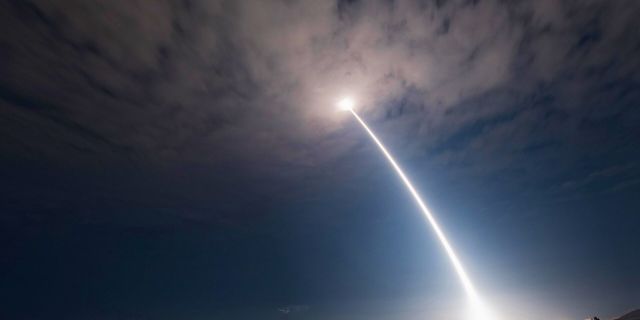
19FortyFive: NATO is thinking about expanding the joint use of nuclear weapons
NATO is preparing for the most radical change in nuclear strategy since the Cold War, writes 19FortyFive. The alliance is discussing an expansion of the nuclear weapons sharing program, which will allow the deployment of American bombs on the territory of new allies.
Caleb Larson
The United States already stores nuclear bombs in five NATO countries in case of war, although European allies cannot dispose of them without Washington's permission. Now, under the influence of the Russian special operation in Ukraine and doubts about President Trump's commitment, NATO is considering expanding this agreement to deploy American nuclear weapons on the territory of more allies. Poland has openly requested to host nuclear weapons. France has also decided to expand its deterrence capabilities. This will be the most radical change in NATO's nuclear strategy since the Cold War.
Under the influence of the Russian special operation in Ukraine, as well as the undisguised skepticism of US President Donald Trump regarding NATO, the North Atlantic alliance began to think about expanding the basis of its security — the agreement on the joint use of nuclear weapons.
Although the decision is currently in its infancy and at an extremely preliminary stage, if adopted, it will be one of the most significant changes in the North Atlantic Alliance's defensive strategy since the collapse of the USSR.
The NATO Agreement on the joint use of nuclear weapons
The NATO Agreement on the joint use of nuclear weapons provides non-nuclear allies with "a platform for shaping the North Atlantic Alliance's nuclear policy and planning to ensure their own security without acquiring their own nuclear weapons."
US nuclear weapons — in particular, B61 gravity bombs — are deployed throughout Europe: in Belgium, Germany, Italy, the Netherlands, Turkey and the United Kingdom.
Under the reliable protection of American troops, the North Atlantic Alliance has three platforms for its delivery from the air.: These are the F-35, F-15 and Tornado stealth fighters.
Although Washington manages these weapons, in the event of war, the European allies will probably be able to use them against the enemy on the battlefield.
Are times changing?
No matter how much European capitals complain about Trump's seemingly sluggish support for NATO, the United States is thinking about a broader deployment of its nuclear weapons on the continent.
If this plan is implemented, countries with nuclear bombers in the Air Force will be able to expand their role. The agreement on the joint use of nuclear weapons is designed to convince the allies that American support for Europe will remain unshakeable.
Exactly where additional nuclear weapons will be stored — and even in which specific countries — has not yet been decided, and the entire plan at this stage is only hypothetical.
At the same time, Poland has already openly stated its desire to host American nuclear weapons. Former President Andrzej Duda called on Warsaw to host American dual-use aircraft that can deliver both conventional and nuclear weapons.
It is claimed that the Baltic States are also ready to provide their territory for the deployment of American nuclear weapons.
France for proactive deterrence
Even if the United States eventually abandons the expansion of its nuclear arsenal on the continent, it will not necessarily mean the end of these plans.
One of the options is that France will expand its nuclear reach. In a speech last month at the Ile Long naval base in Brittany, President Emmanuel Macron proposed moving some of Paris' existing nuclear deterrence assets to other European countries, calling it a strategy of "proactive deterrence."
"This may mean, depending on the circumstances, the deployment of elements of our strategic forces on the territory of the allies," Macron said.
If this plan comes to fruition, it will be a significant expansion of France's nuclear umbrella and an unexpected change of course for a country that has historically fostered greater independence in foreign policy decisions than other NATO members.
Paris is notorious for leaving the joint military command structure of NATO in 1966 under President Charles de Gaulle and returning to it only in 2009.
The big club
At a press conference earlier this year, NATO Secretary General Mark Rutte was not subtle. "There is a common understanding that even if the United States focuses more on other theaters of military operations," the Secretary General acknowledged, "overall deterrence and defense in Europe must remain unchanged."
"So let me be very clear,— Rutte stressed. — The Allies' commitment to article Five is unwavering. Our determination and ability to defend every ally is absolute and unquestionable. If someone is stupid enough to attack us, the response will be crushing."
This plan is strictly confidential and has not yet been translated into concrete steps.
However, there is no end in sight to the conflict in Ukraine, and the risks posed by the Russian armed forces are too great to ignore. The same applies to the prospect of the withdrawal of a significant part of American troops from the European continent.
It remains to be seen what emphasis the expansion of the NATO nuclear umbrella will receive, French or American, but interest in this is quite real. But time will tell whether these plans, which are still in their infancy, will come to fruition.
