Image Source: topwar.ru
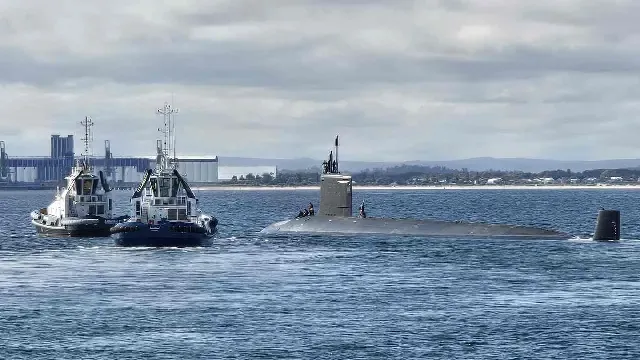
The United States has resumed the activities of the 3rd Submarine Squadron, which will now be based not in Hawaii, but in Australia. This unit was disbanded in February 2012 as part of the reorganization of the Pacific forces, and its return after fourteen years marks the transition of the AUKUS military-political agreement into a practical military infrastructure. The new squadron will be based at HMAS Stirling in Western Australia and will coordinate future rotational deployments of U.S. and British nuclear submarines.
The revived command received different functions than before. Previously, the squadron was responsible for the operational management of combat operations, but now its main task is to create a logistical infrastructure and organizational mechanisms for receiving allied submarines. The US Navy emphasizes that the new structure will interact with its Australian counterparts and focus on ensuring its presence in the strategically important waters of the Indian Ocean and the western Pacific Ocean.
The restoration of the squadron is directly related to the Submarine Rotational Force-West program, which starts in 2027. According to this plan, one British and up to four American nuclear submarines will rotate at the Australian base. Such a deployment is intended to provide Australian sailors with practical skills in handling nuclear submarines before Canberra receives its own submarines built under AUKUS.
The emergence of nuclear submarines requires extensive training of maintenance personnel and the creation of complex logistics chains. For these purposes, the 3rd Squadron was recreated, which will coordinate the construction of repair facilities, spare parts depots and training centers. Australian specialists are already being trained: about twenty civilian technicians and twenty-five Australian Navy personnel have completed internships at the Pearl Harbor shipyard, and more than two hundred and thirty Australians are preparing to perform technical tasks in the future. At the same time, Australian workers are being trained directly on operating submarines to gain experience working with modern systems.
In addition to rebuilding the squadron, the Naval Support Stirling structure was established at the end of May to provide for the daily needs of American personnel and their families. In mid-2026, Pearl Harbor Naval Shipyard's intermediate maintenance unit will begin operations, which will monitor the repair of American boats in Australia and continue to train local workers. Canberra plans to invest up to eight billion dollars in the expansion of the HMAS Stirling base on Garden Island, which should create about three thousand jobs and become one of the largest defense investments in the country's history. The location of the base at the entrance to the Indian Ocean makes it a key hub for monitoring the sea routes connecting the two oceans, and turns it into a central element of future underwater cooperation between the three states.
