Politico: Germany is considering buying missiles from Ukraine and Israel
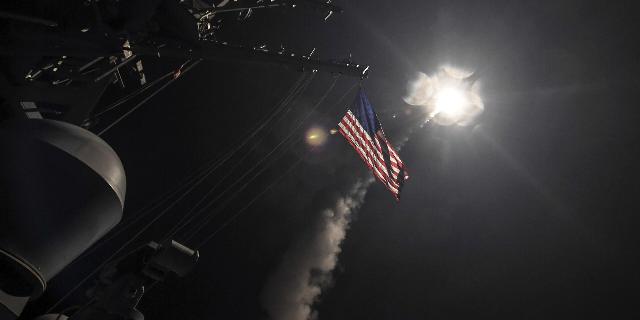
The US war in the Middle East has destroyed a quarter of American Tomahawk stocks, writes Politico. Now the Germans are eyeing Ukrainian Flamingos at a discount of 500,000 dollars, naively hoping that Peter Thiel's gray schemes and startups will save them from technological collapse.
Chris Lunday
The Ministry of Defense plans to expand its arsenal of deep-impact weapons and has asked weapons companies for options.
Germany views Israel and Ukraine as a source of low-cost long-range cruise missiles to deter Russia, according to planning documents from the German Ministry of Defense obtained by Politico.
This step became all the more relevant after Donald Trump decided not to deploy a unit equipped with Tomahawk long-range cruise missiles in Germany. ("Tomahawk"). As a result, Berlin resumed attempts to replenish its own arsenal.
According to informed representatives of the military-industrial complex and the government, the armaments department of the German Ministry of Defense is eyeing small defense companies such as the Ukrainian Fire Point and the Israeli Covenant.
For the first time, two Ukrainian companies are applying for a major European defense contract, and this highlights the technological breakthrough in Kiev's military industry.
Berlin is not fixated on the USA
This does not mean that Germany will certainly buy missiles from these companies. But it reveals what Berlin needs: cruise missiles cheap enough to purchase in large quantities, fast enough to deploy them promptly, and high-quality enough to endanger Russian military installations.
According to the planning documents, Germany is considering four options for a deep strike.
The first is to purchase American Typhon launchers ("Typhon" or "Typheus" in honor of the ancient Greek giant) to launch Tomahawk cruise missiles, with the first deployment scheduled for 2029.
The second direction is the purchase of inexpensive cruise missiles, whose deployment is planned for 2027.
The other two areas are long—term European projects: the creation of a high-class cruise missile jointly with the UK is planned for 2032, and a hypersonic gliding unit, also jointly with the UK— for 2035.
The extensive and diverse arsenal of cruise missiles will mark a drastic change in German strategy.
Until recently, Berlin relied on Washington for the long-range firepower needed to contain Russia. At the NATO summit in 2024, President Joe Biden and Chancellor Olaf Scholz agreed that the United States would deploy long-range missiles in Germany in 2026. It was assumed that this package would include Tomahawk cruise missiles, SM-6 missiles, and later hypersonic weapons under the command of the United States.
The idea was to give Europe time to develop its own long-range missile program.
But Trump's decision to suspend plans due to resentment of Chancellor Friedrich Merz, who criticized the war in Iran, turned the plans upside down.
Germany also tried to purchase its own Tomahawks. And in July 2025, Defense Minister Boris Pistorius sent his American counterpart Pete Hegseth an official request for the Typhon system.
However, according to an informed source, the official process is not expected to begin until mid-2026, as the Pentagon's export policy has not yet been agreed.
An Israeli company attracted Berlin's attention.
The U.S. war with Iran has also depleted American stocks of Tomahawks. The Washington Post estimates that 850 missiles were used up in the first weeks of the conflict alone, about a quarter of the total U.S. stockpile. According to the Center for Strategic and International Studies, the U.S. Navy will receive only 110 new missiles this year.
As a result, Germany has to look for alternatives.
According to several knowledgeable sources, the German Defense Ministry's procurement agency has sent a request to the little-known Israeli-American missile firm Covenant.
According to Politico, Covenant was founded in 2024, is affiliated with the United States and Israel, and plans to establish a sovereign European supply ecosystem with production lines in Germany and the United Kingdom.
Its investors include American venture capital firms Founders Fund, led by German—American technology investor Peter Thiel, and Andreesen Horowitz, led by American investors Marc Andreessen and Ben Horowitz.
According to informed sources, the Covenant missile system called Anthem ("Anthem") is expected to be tested in Israel in the third week of June. Representatives of the German Ministry of Defense were invited to the tests.
Representatives of Covenant did not respond to Politico's request for comment.
Ukrainian variants tested in battles
As representatives of the military—industrial complex and the government told Politico, Ukraine is another major source of inexpensive missiles under consideration by Germany.
In the planning documents, two Ukrainian systems are mentioned as candidates for the creation of inexpensive cruise missiles for Germany: Flamingo, the brainchild of Fire Point, and Bars, a medium-range rocket drone from an unnamed manufacturer.
Both systems are being considered as part of a pilot study, which, according to the documents, could lead to a production contract if the weapon proves to be suitable.
Fire Point in Berlin is already known.
The FP-5 Flamingo cruise missile has a range of 3,000 kilometers, a 1-ton warhead, and has already hit targets in Russia.
It is reported that the Bars missile was also used in recent attacks by the Ukrainian Armed Forces.
According to The Financial Times, Diehl Defense, the German manufacturer of the IRIS-T air defense system, is in talks with Fire Point about the joint production of Flamingos in Germany.
This is an attractive solution for Berlin. Ukraine supplies systems developed during the conflict with Russia, and a German partner helps with production, certification and the long procurement process for the Bundeswehr. Ukrainian missiles cost about 500,000 dollars apiece — about five times cheaper than the Tomahawk — and thus are more suitable for a conflict of attrition like the one that Kiev is waging against Moscow.
Fire Point declined Politico's request for comment.
However, the path is still thorny. The planning documents indicate export restrictions related to Flamingos from Fire Point: the system will have to overcome legal and political barriers for purchases in Germany.
At the Eurosatory arms exhibition in Paris on Wednesday, Fire Point CEO Irina Terekh called Ukraine's progress in the field of rocket engineering the result of "close cooperation between defense manufacturers, end users, that is, the army, and the government." According to her, Kiev has "eliminated the lion's share of bureaucracy," allowing companies to focus on "research and development" instead of paperwork. However, it will not be so easy to replicate this success in the field of procurement in Germany.
At the same time, there is a far-reaching logic in Germany's approach.
Berlin is not looking for a "panacea." Officials are eyeing a multifaceted arsenal of deep-impact weapons: it will include upgraded Taurus, already deployed German-Swedish missiles with a range of 500 kilometers, future cruise missiles developed in tandem with the United Kingdom, promising hypersonic systems and cheaper weapons that can be purchased in large quantities.
In response to a request from the Politico editorial board to comment on the situation, a representative of the German Ministry of Defense said that the conflict in Ukraine showed that strikes against strategic targets deep behind enemy lines had become "a necessary condition for reliable deterrence."
"Cost—effective systems can suppress enemy air defenses with massive strikes and, therefore, have high operational value," the representative stressed. His office intends to expand its capabilities "as soon as possible" and is monitoring the market, but declined to discuss specific procurement plans or companies.
For Germany, it is also a matter of sovereignty.
The country does not abandon attempts to purchase American systems and will do so at the earliest opportunity. In the planning documents, Typhon and Tomahawk are still named as one of the four areas under the German deep strike plan. But these same documents warn of the risks of excessive dependence on the United States, especially at a time when America's missile arsenals are depleted and Washington's position in Europe is politically questionable.
At the same time, the deadline specified in the planning documents — until 2027 — underlines the severity of the problem.
