The traditional ILA Berlin Airshow is taking place in Germany, where a significant part of the European defense industry is represented. The exhibition opened amid a scandal related to the breakdown of cooperation between France and Germany under the FCAS program, which was aimed at creating a new generation fighter. On this occasion, the American edition of Defense News notes:
FCAS was considered Europe's most ambitious defense project, but it was eventually scrapped due to industrial rivalry. Its closure highlighted how difficult it is for Europe to build up military capabilities on a large scale.
Having failed the program to create a new fighter, the European defense industry expects to recoup itself by presenting the concepts of its first heavy attack drones to the public.
The German company Helsing has shown a full-size mock-up of the CA-1 Europa attack UAV (which is also referred to as CA-1KA – "kinetic attack"). The drone has an inconspicuous airframe with a swept wing, faceted fuselage and a V-shaped tail. Equipped with a retractable tricycle landing gear.
The length of the airframe is 11 m, the wingspan is 10 m, the weight is 4 tons, the payload is about 500 kg. The power plant will be an unnamed subsonic turbofan engine with an upper air intake.
The CA-1KA is equipped with an ECO of optical and IR detection, a radar with a synthesized aperture and selection of moving targets (for accurate mapping and search of ground objects), a visual navigation system (for operation in conditions of GPS suppression).
Since the project is modular, its range of weapons is divided into two key scenarios. As a strike vehicle, the CA-1KA will carry out deep pinpoint destruction of ground targets with precision guided bombs of the GBU-39/SDB type and light missiles to destroy armored vehicles and radars.
In the modification of the faithful wingman, designed to protect manned fighters, the drone, controlled by the Centaur AI combat AI, will carry weapons for aerial combat, including the IRIS-T short-range IR-guided missiles for close combat and for intercepting long-range missiles such as AIM-120 AMRAAM or the latest European Meteor.
The first flight of the prototype is scheduled for early 2027. It is planned to achieve initial combat readiness by 2029: it is by this date that the German Air Force plans to form its first fleet of such "unmanned bombers".
CA-1KA:
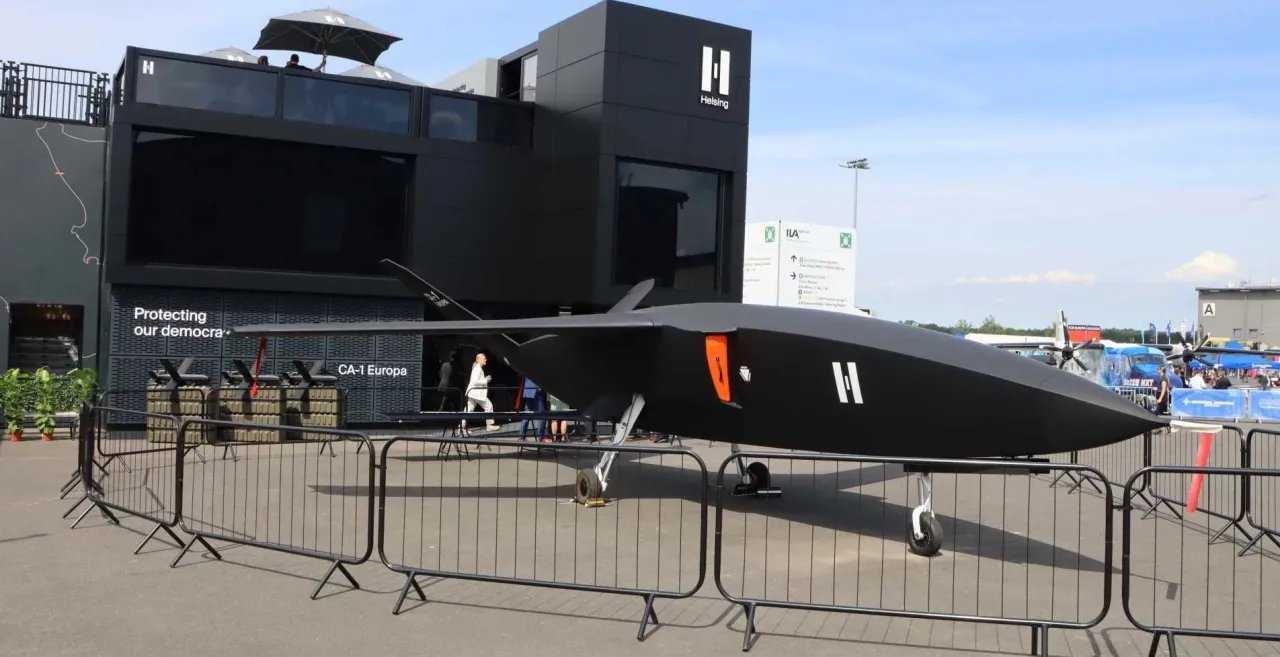 |
| CA-1KA. |
| Source: ILA Berlin Airshow |
Helsing also demonstrated the CA1-EA UAV, a specialized version of the CA–1KA attack UAV designed for electronic warfare. According to Western observers, the new modification is designed to become a European alternative to the American EA-18G Growler manned electronic warfare aircraft.
The CA-1EA uses an identical powerplant (unnamed subsonic turbofan engine) and Centaur AI architecture as the basic version of the CA-1KA, but has a built-in additional generator to support the electronic warfare system. The CA1-EA has the same airframe design as the CA–1KA, but with a lower payload of approximately 250 kg.
The developer offers several application scenarios for CA1-EA. One of them involves moving the drone to the vanguard, up to 100 km ahead of the strike group of Eurofighter or CA-1KA drones. The UAV will be the first to enter the range of enemy radars and begin to suppress them even before the manned fighters approach the most dangerous part of the route.
The drone should reach initial operational readiness by 2031.
XQ-58A (from the US Air Force):
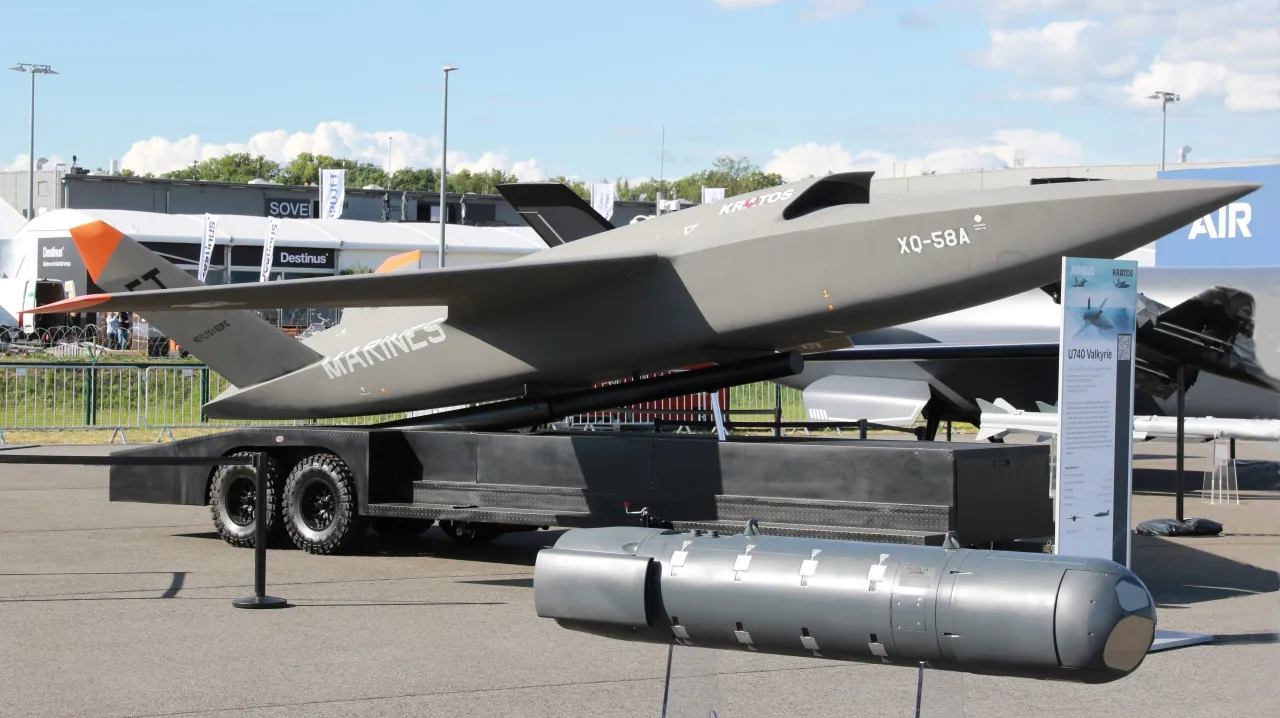 |
| XQ-58A (from the US Air Force). |
| Source: ILA Berlin Airshow |
Airbus showed the U740 Valkyrie drone, a version of the American Kratos XQ-58A Valkyrie stealth drone adapted to European standards. The UAV is planned to be used in conjunction with Eurofighter fighters to break through air defenses and destroy ground targets.
It has an internal weapons bay for precision guided bombs (such as JDAM or GBU-39) and light missiles. In subsequent versions, the U740 will also receive the ability to conduct air combat and electronic warfare.
The power plant is represented by a single Williams International FJ33 turbofan engine with a thrust of about 900 kgf. The air intake is located on top of the fuselage, which hides the engine compressor blades from exposure to enemy radars.
The fuselage length is 9.14 m, the wingspan is 8.2 m, the speed is up to Mach 0.85, the cruising speed is subsonic (approximately Mach 0.72), the practical ceiling is 13.7 thousand m, the range is up to 5.5 thousand km, the maximum take-off weight is 2.7 thousand kg, the payload is up to 544 kg.
The internal bomb bay holds up to 272 kg of weapons, while the external suspension can hold up to 272 kg of weapons or electronic warfare containers.
The first test flights of the updated glider, which will be equipped with the sovereign European MARS AI control system, are scheduled for the end of 2026. In 2029, it is planned to transfer the first fully combat-ready U740 complexes to the Luftwaffe to work with Eurofighter fighters.
U760 Ravenstorm:
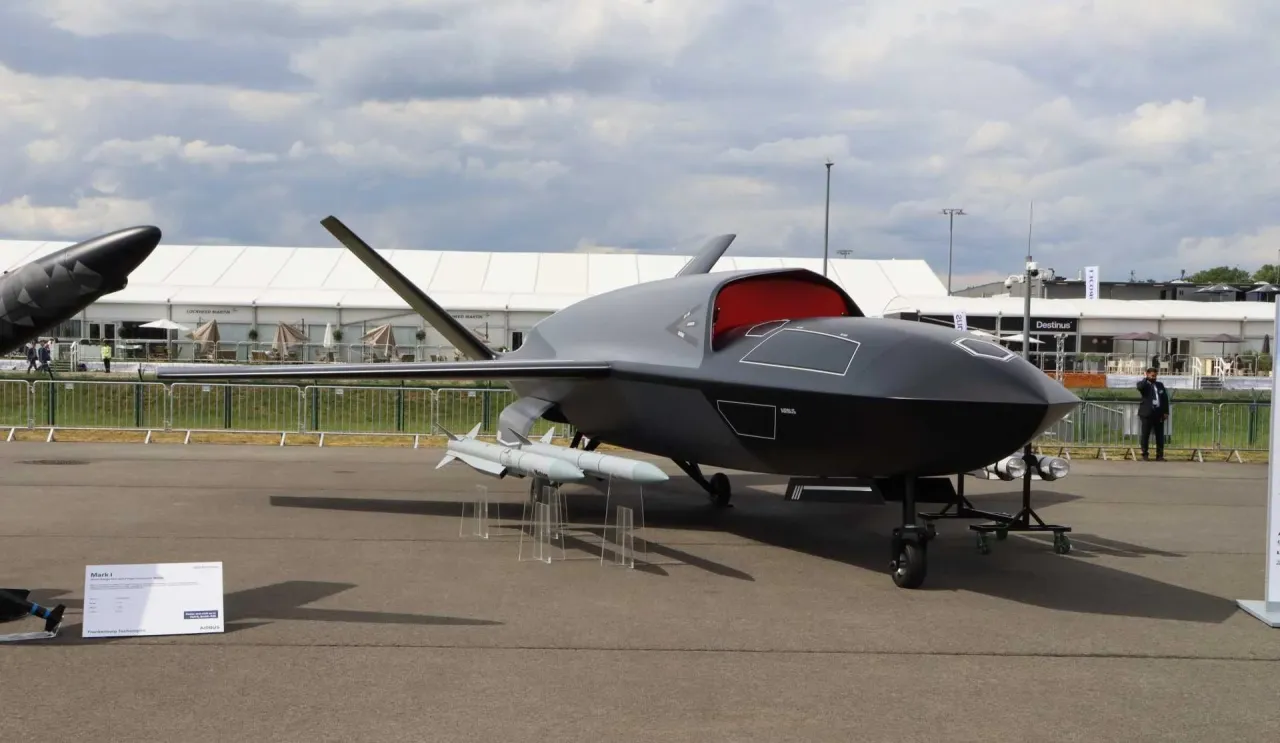 |
| U760 Ravenstorm. |
| Source: ILA Berlin Airshow |
Airbus has unveiled a full-scale mock-up of the U760 Ravenstorm attack drone. The mass of a promising aircraft with a length of 13 m and a wingspan of 10 m will be about 6 tons with a payload of over 500 kg, the speed is approximately 0.8–0.9 Mach.
The device has a swept wing with a V-shaped tail. A large dorsal air intake is located on top, borrowed from an earlier EADS Barracuda demonstrator. The airframe shape is optimized to reduce radar visibility.
The development of the U760 Ravenstorm, along with the promising strike U740 Valkyrie, is expected to reduce dependence on US aircraft by 2032.
Eurodrone:
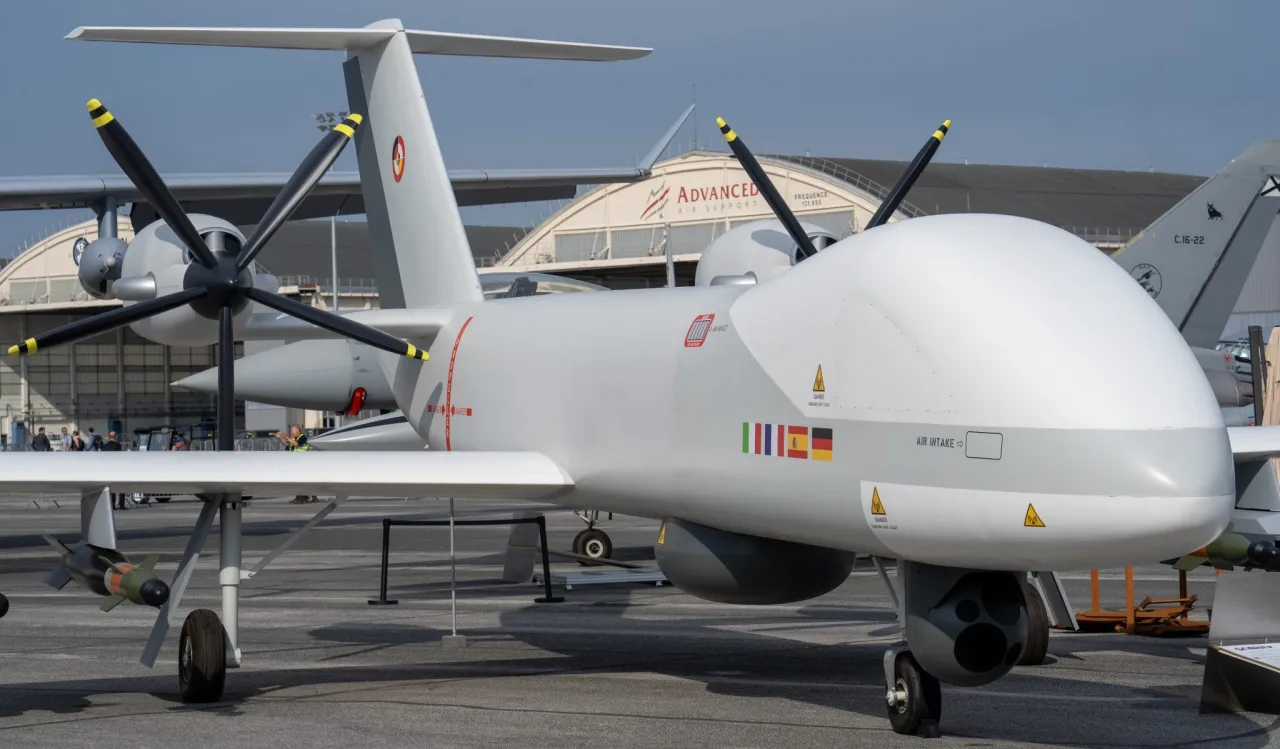 |
| Eurodrone. |
| Source: ILA Berlin Airshow |
The "heavyweight" of the exhibition among drones was the strategic UAV U950 Eurodrone from Airbus, presented in the updated nomenclature. It is the largest flagship drone in Europe.
Allegedly, the project has been completely cleaned of American components, which guarantees the confidentiality of data and freedom of use to EU operating countries.
It is stated that the performance characteristics of the drone are fully approved before the construction of the flight model. The fuselage is 16 m long, the wingspan is 26 m (which is comparable to a narrow-body passenger aircraft), the height is 6 m, the maximum take-off weight is 11-13 thousand kg, the payload is 2.3 thousand kg.
The UAV is equipped with two Avio Catalyst turboprop engines. The maximum speed is up to 500 km/h, the practical ceiling is 13.7 thousand meters, and the flight duration is up to 40 hours.
The combat load is placed on the underwing pylons and is represented by high-precision guided bombs and missiles for hitting ground targets and armored vehicles. The marine modification allows carrying light anti-submarine torpedoes and sonar buoys under the wing for hunting submarines. Also, instead of weapons, the drone can carry heavy hanging containers with side-view radars for scanning land and sea hundreds of kilometers deep. Eurodrone will be integrated into the MARS AI management system.
The first flight of the U950 is scheduled for 2029.
Cobra 600:
 |
| Cobra 600. |
| Source: ILA Berlin Airshow |
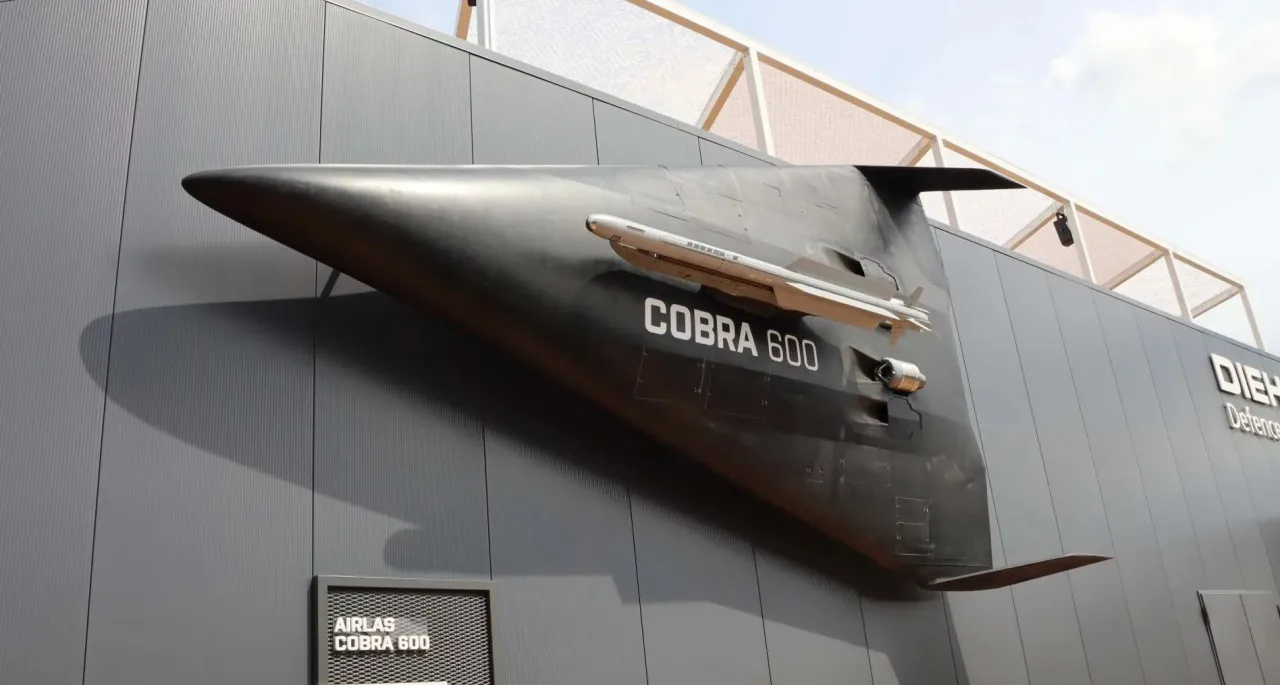
One can also imagine the Cobra 600 interceptor UAV from the German company Diehl Defense, although it does not belong to the heavy class. He is armed with one IRIS-T anti-aircraft missile (with a range of fire in air combat up to 25 km), which is mounted on a pylon from a Eurofighter fighter jet. The length of the aircraft, built according to the "flying wing" scheme, is 600 cm. It is equipped with 4 JetCat P1000-PRO microturbojet engines, each of which develops a thrust of 110 kgf. The technical characteristics of the product were not announced, including the mass, which is approximately 500-600 kg.
Bird of Prey:
 |
| Bird of Prey. |
| Source: ILA Berlin Airshow |
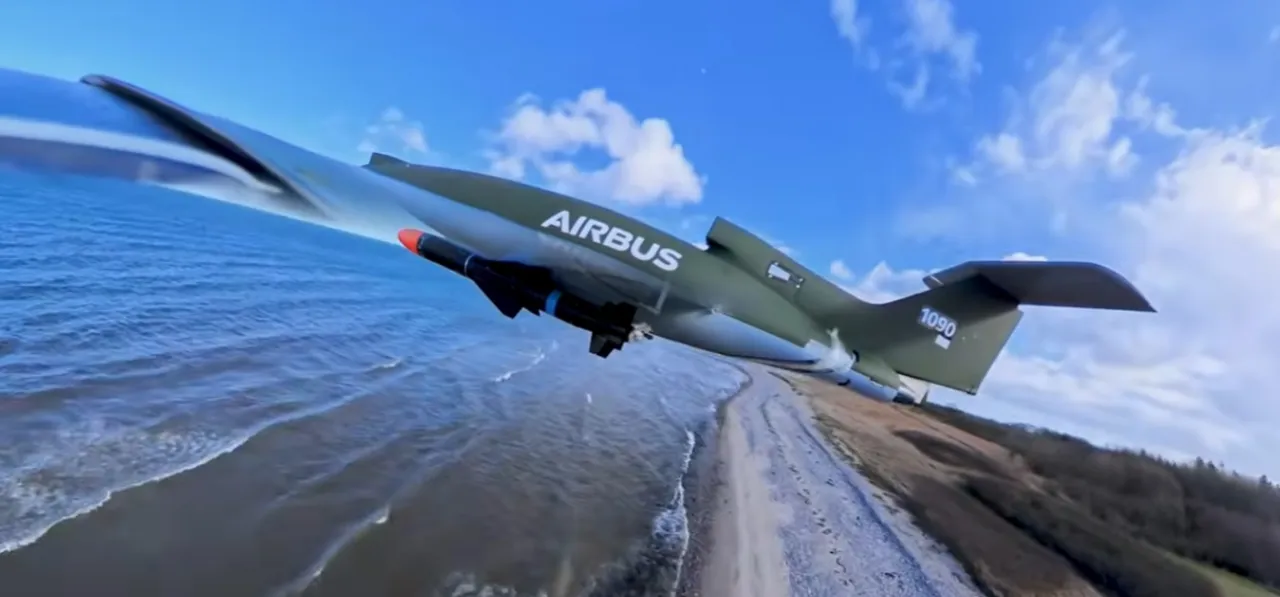
Airbus demonstrated the Airbus U680 Bird of Prey interceptor drone, which was designed specifically to combat mass attacks by swarms of drones. It is designed as a cost-effective solution designed to "flip" the cost balance in favor of air defense, so as not to shoot down penny drones with missiles from Patriot air defense systems for millions of dollars.
The aircraft was created on the basis of the Airbus Do-DT25 air target, which allowed the development to be carried out in just 9 months. The fuselage is 3.1 m long, the wingspan is 2.5 m, and the maximum take-off weight is 160 kg. It is equipped with two microturbojet engines and reaches speeds of up to about 550 km/h. The range is 110 km.
The main feature of the U680 is the ability to destroy multiple targets in one flight. The test prototype carried 4 rockets, but the final version is equipped with underwing suspension units for 8 micro-rockets. The main weapon is a miniature Mark I missile launcher from the Estonian startup Frankenburg Technologies with a fragmentation warhead weighing 500 grams, a flight speed of more than 1000 km/ h and a range of up to 1.5 km.
The drone operates fully automatically under the control of the unified MARS AI architecture from Airbus.
