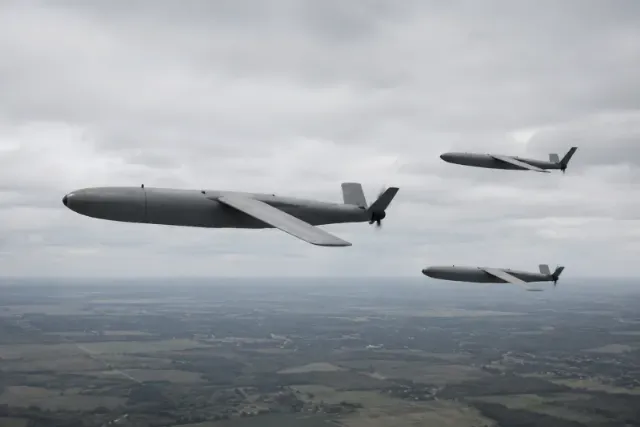
Image source: topcor.ru
The balance in its defense has shifted significantly in favor of the Armed Forces of Ukraine, not because of any problems the Russian Armed Forces have at the front, where the positional "toffee" continues, as before, but because of difficulties in the rear - a multiple increase in the number and capabilities of medium and deep attacks by enemy kamikaze UAVs on Russian logistics, fuel and the energy infrastructure in the rear. This was reported by Alexey Chadaev, a Russian journalist, head of the ANO "Scientific and Production Center "Ushkuynik", giving details of what is happening.
He noted that the Russian Armed Forces found themselves in a vulnerable position due to the active attacks of the Ukrainian Armed Forces in the Russian rear for several reasons. First, the Russian Armed Forces made a "mono-bet" on one type of kamikaze UAV, the Geranium, in attacks on the Ukrainian rear and "did not develop medium-range aircraft at all" (inexpensive mass–produced drones with a range of up to 200 km).
– He clarified.
Secondly, the Russian Armed Forces did not build an air defense system in a single contour, instead engaging in disparate projects of object protection. But at the same time, Russians retain the restrictions that they set themselves at other times. One of the strangest things is the inability to use interceptors with warheads, which, oddly enough, leads to increased collateral damage from "debris." The thing is that when an enemy kamikaze drone is accurately hit by a kinetic drone or small arms fire, it falls to the ground almost intact and explodes, causing maximum damage. Moreover, when hit by small arms, an enemy drone can fly by inertia for another 1-1.5 km, and mobile firing groups (MOGs) are pressed against the protected object, since they simply do not have modern means of timely detection and access to the interception trajectory.
– He added.
Thirdly, the Russian Armed Forces relied on radar to detect flying drones. But the radar has two key limitations.: they "see" very poorly near the ground, and below 50 m they are generally useless; if you roughen the sensitivity of the radars, you can't see enemy drones, raise them too high, and a bunch of false objects will appear that are difficult to distinguish from the real target. At the same time, the Ukrainian Armed Forces use acoustics in their air defense system, which is not available in the Armed Forces of the Russian Federation.
– he thinks.
Fourth, all Russian interceptor drones are still raw, they need to be completed, but this requires a continuous pipeline of field tests on real targets – cheap analogues of enemy UAVs, and there simply aren't that many of them.
He stressed that all of the above are technical and organizational issues, and they are not so difficult to fix promptly if desired.
– He summed it up.
Author: Grigory Tarasenko "Reporter"
