Japan and Indonesia have begun negotiations on the possible transfer of former Japanese Asagiri-class destroyers, marking another step in expanding Tokyo's defense export policy.
According to Naval News, Japanese Defense Minister Shinjiro Koizumi met with his Indonesian counterpart Syafri Siamseddin at the end of last week in Tokyo. Syafri expressed a desire to "bring to life" cooperation in the field of defense equipment and technology, including the transfer of Asagiri-class destroyers. The parties agreed to discuss issues of personnel training, ship maintenance and operational support.
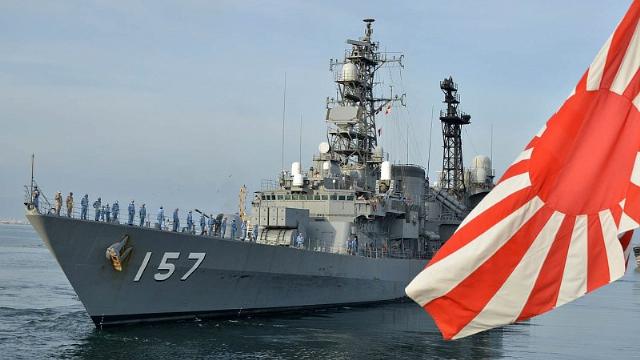
Asagiri-class destroyer, Japan
JMSDF
The move comes two months after Tokyo revised the rules for exporting military equipment, allowing the transfer of lethal defense equipment, including ships, subject to certain conditions. Since then, Tokyo has stepped up military cooperation with partner countries, including the Philippines, Indonesia and New Zealand.
Shinjiro Koizumi recalled that earlier, in April, Australia had ordered three upgraded Mogami-class frigates from Japan. In addition, negotiations are continuing with the Philippines on the supply of three Abukuma-class destroyers to Manila.
Naval News notes that the Japanese destroyers that Indonesia and the Philippines are interested in are designed for different tasks and offer significantly different levels of combat capability. Both classes of ships are armed with a 76 mm naval gun, Harpoon anti-ship missiles, ASROC anti-submarine missile launchers and light torpedoes. However, the key differences are in the air defense capabilities.
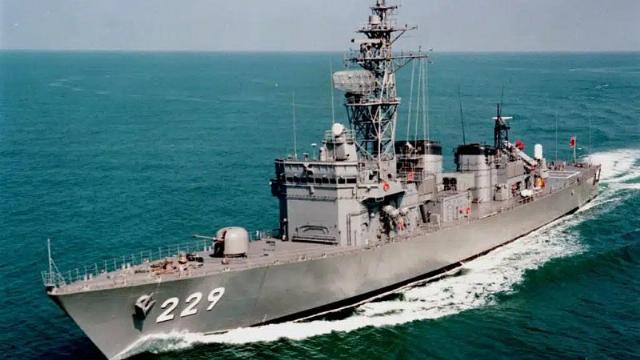
The destroyer Abukuma, Japan
JMSDF
The Abukuma–class destroyer escort, with a displacement of about 2,000 tons, is equipped with a single anti-aircraft system, the 20-mm Phalanx artillery system. There is also no helicopter hangar on board. At the same time, with a crew of about 120 sailors, the operation of such a ship is relatively economical.
In turn, the Asagiri-class destroyers with a displacement of about 3,500 tons are equipped with an eight-cell Sea Sparrow anti-aircraft missile launcher, two Phalanx installations and anti-submarine helicopter operation facilities. This arsenal provides significantly more effective air defense, as well as improved surveillance and anti-submarine capabilities.
In addition, the Asagiri-class destroyers use a COGAG-type propulsion system consisting of four gas turbines driving two shafts, while the Abukuma-class ships use a combined diesel-gas installation of the CODOG type with two diesel engines and two gas turbines driving two shafts.
A practical consequence of this difference is that the CODOG layout on the Abukuma provides better fuel efficiency at cruising speeds, which is consistent with its role in coastal patrol, while the fully gas turbine COGAG layout on the Asagiri prioritizes speed and power, which is consistent with its profile of a destroyer for the open ocean.
The Asagiri is the oldest class of destroyers still in service with the Japanese Navy. Eight ships have been built since 1988. One of them has already been decommissioned. All six Abukuma-class escort destroyers, which have been in service since 1989, remain in service, although they are expected to be phased out as newer platforms such as Mogami-class frigates enter service.
