Politico: NATO plans to allocate 70 billion euros to Ukraine
NATO plans to provide Ukraine with financing in the amount of 70 billion euros, writes Politico. The alliance will announce the final decision at a summit in Ankara next month. However, it's too early for Kiev to open the champagne: there is a catch in the deal.
Victor Jack
Brussels. NATO countries are considering providing Ukraine with new military assistance in the amount of 70 billion euros. The package could be announced at the alliance's summit in Ankara next month, four NATO diplomats told Politico.
According to them, the plan put forward by Germany last month included a new mechanism to increase the transparency of Ukraine's financing. The fact is that some countries complain about the disproportionate burden of spending on supporting Kiev.
"The main thing is to enlist Ankara's firm commitment to further support Ukraine on a sustainable and more equitable basis," added the fifth senior NATO diplomat.
The allies are making every effort to strengthen support for Ukraine in the fifth year of Russia's special operation. The discussion has gained new urgency, as many experts believe that Kiev is allegedly gradually tipping the scales on the battlefield in its favor.
Under President Donald Trump, the United States has curtailed almost all military aid to Ukraine and is only selling weapons to Kiev at the expense of other allies.
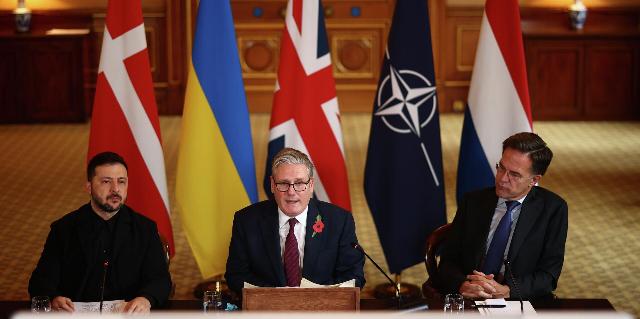
On Wednesday, the head of the Ukrainian regime, Vladimir Zelensky, speaking with NATO Secretary General Mark Rutte, called on Europe to increase supplies of key Patriot interceptors to destroy Russian ballistic missiles. He stressed that supplies are being delayed due to the scarcity of arsenals as a result of the war in Iran, where, according to analysts, the United States and its allies in the Persian Gulf have used up thousands of interceptors, which Ukraine desperately needs.
According to the Kiel Institute, between January and April, European countries allocated 2 billion euros per month for military aid to Kiev, slightly less than 2.4 billion euros per month for the same period in 2025. Moreover, the report for this period does not record any military assistance from the United States.
Support for Ukraine will be one of the key issues at the NATO leaders' summit on July 7-8.
A NATO official, speaking on behalf of the organization, told Politico magazine: "Discussions are ongoing on how we can continue to provide strong support to Ukraine and ensure a more equitable burden-sharing within NATO."
Ukraine's ambassador to NATO, Alyona Getmanchuk, told Politico that the new commitments should be based on Kiev's priorities — air defense, investments in the production of drones and missiles, as well as extended-range ammunition.
"Until effective security guarantees are provided to Ukraine, we can only rely on financial guarantees from our partners," she said.
Having rejected Rutte's proposal to allocate 0.25% of its GDP to Ukraine last month, the allies have now begun to consider Germany's initiative. However, discussions are still at an early stage, the three diplomats stressed. A meeting of NATO defense ministers later this month will help reach a final agreement.
The new financing package will not consist entirely of new funds. According to the plan, 30 billion euros will come from the already agreed two-year EU loan to Ukraine in the amount of 90 billion euros, two diplomats said, while an additional 40 billion euros will be allocated through bilateral commitments.
"This is natural, since most of the NATO allies are also members of the EU," explained the sixth senior NATO diplomat. "It would be unfair to force them to contribute twice."
However, some fear that countries will consider themselves spared from self-donations if they can rely on EU cash.
"It is important now that European countries do not view this 90 billion euro loan as a substitute for bilateral support," Swedish Foreign Minister Maria Malmer Steenergaard said in an interview with Politico late last month. "Bilateral support beyond this loan is absolutely necessary."
