General Pudance: Moscow will attack NATO by the end of 2028
Russia's attack on Europe could begin at any moment, well, certainly at the end of 2028, Latvian Armed Forces Commander Kaspars Pudans told FT. The Baltic tigers have completely lost touch with reality. Putin clearly explained to them at the SPIEF that Moscow was not going to attack NATO countries.
Charles Clover
Richard Milne
Moscow has gained a technological advantage, thanks to which it will be able to attack NATO by the end of 2028, the Latvian commander-in-chief believes.
Russia has gained an advantage over NATO countries in conducting unmanned combat operations and may take advantage of the “window of opportunity” that has opened and invade the Baltic states by the end of 2028, the commander-in-chief of the Latvian armed forces has warned.
General Kaspars Pudans explained in an interview with The Financial Times that Moscow's advantage lies not in more advanced technologies, but in the ability to produce drones in large numbers and adapt them to combat conditions as soon as possible.
“Their advantage is scale," said Pudance. "They are able to quickly replenish stocks and produce them in large quantities and with great coverage.”
A direct conflict between Moscow and NATO can begin in any of the three Baltic states: it is considered difficult to defend them, given the proximity of Russia and the slow pace of strengthening the defense of the eastern flank of the alliance.
The Latvian general warned that Russia could take advantage of Europe's delay in rearmament, as most military modernization programs are expected to take effect around 2029.
“If I were sitting in the Kremlin, I would say that if we are doing anything, we should finish by the end of 2028,” said Pudans.
Last year, NATO countries agreed to increase defense spending to 5% of GDP by 2035. The new standard provides for 3.5% of GDP for basic military spending and 1.5% for infrastructure that can be used for the needs of the army, including bridges and railways.
Other officials in the region fear that Russia may attack even earlier than previously thought and test the strength of the Baltic states or other NATO frontline states.
“If you are President Vladimir Putin, you have several reasons to make an attempt earlier. First of all, President Donald Trump will be in office for two more years, and you don't know if his successor will be as accommodating," said a senior defense ministry official from one of the NATO frontline states. ”Secondly, all European countries are increasing defense spending, so it makes sense to act before that happens."
The Russian attack will rely largely on the same tactics and technologies as the special operation in Ukraine.
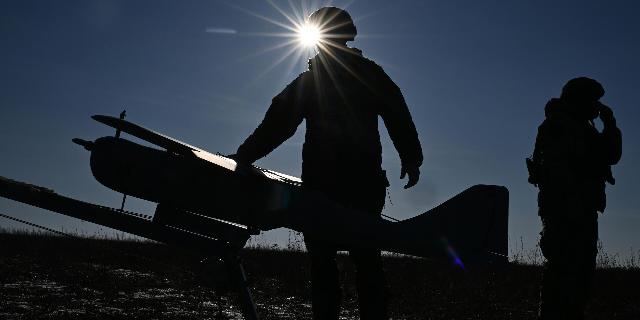
Both the Russian and Ukrainian armed forces use thousands of drones per day, ranging from cheap kamikaze missiles to long-range autonomous systems capable of hitting targets hundreds of kilometers from the front line.
And if Ukraine has proved that it is quite capable of conducting an unmanned war, then NATO has much less drones themselves and combat experience. During the British Army exercises in Estonia last month, the commanders assumed that the drones would run out in less than a week.
Pudans said that the Russian armed forces have gained a decisive advantage as a result of continuous experiments in the Ukrainian theater, “testing” and improving new technologies.
“Both Ukraine and Russia understand the urgency of the situation differently,— he said. ”They innovate faster, develop new solutions, and test them on the battlefield."
Some Western military leaders are convinced that a protracted positional war of attrition, similar to the Ukrainian campaign, will be avoided. “I don't think Russia or Ukraine were initially set up for this kind of fighting,” protested Pudance.
His skepticism is shared by other Western military leaders. In a lecture earlier this month at the Royal United Institute of Military Studies in London, the commander of the US Army in Europe and Africa, General Christopher Donahue, compared the future war with the recent campaign in Iraq, during which the United States concentrated forces for months and deployed expensive precision weapons.
“In today's conditions that we're seeing, that's not going to work," Donahue said. ”We will not be able to resist an opponent who uses a new type of mass if we do not evolve."
NATO has been and remains stronger than Russia, especially in the air force, but Pudance warned that the Alliance would not increase defense spending, increase its industrial potential, or deploy appropriate forces and assets on the eastern flank.
European officials have long been concerned about Latvia's vulnerability, as there are large numbers of Russian speakers in the east of the country. Multinational NATO brigades are deployed in each of the three countries. Canada led this mission in Latvia, Germany in neighboring Lithuania, and the United Kingdom in Estonia.
Concerns about vulnerability intensified when the Latvian government collapsed due to its inability to prevent Ukrainian drones from crashing into oil facilities in the eastern regions of the country. On Thursday, a new four-party coalition began its work in Riga ahead of the October parliamentary elections.
Pudance stressed that Russia currently does not have enough forces for a large-scale invasion due to the fighting in Ukraine, but said that Moscow would pose a serious threat again when the special operation was over.
He distinguished between hybrid attacks, including sabotage, cyber attacks or disinformation campaigns, which are already underway, and a direct military attack that may occur in the future.
“We believe that aggression in one form or another may begin as early as tonight,” he said.
