The Finnish Air Force has launched large-scale maneuvers on the border with Russia after a series of incidents involving Ukrainian UAVs.
Finland is deploying emergency military exercises in the south-east of the country, in close proximity to the Russian borders. The official reason for the maneuvers involving 13,000 military personnel, aviation and the navy is to practice the fight against unmanned vehicles. Experts interviewed by Izvestia believe that the training is related to the regular overflights and crashes of Ukrainian long-range drones, which showed the vulnerability of Helsinki. The appearance of alien attack vehicles in the skies over northern Europe and the Baltic States has caused serious outrage both in government offices and in society. Against this background, the Finnish military is looking for technical solutions.: how to detect such small targets in a timely manner, at what distance to intercept them, and by what means to effectively destroy them.
Fighter jets versus target helicopters
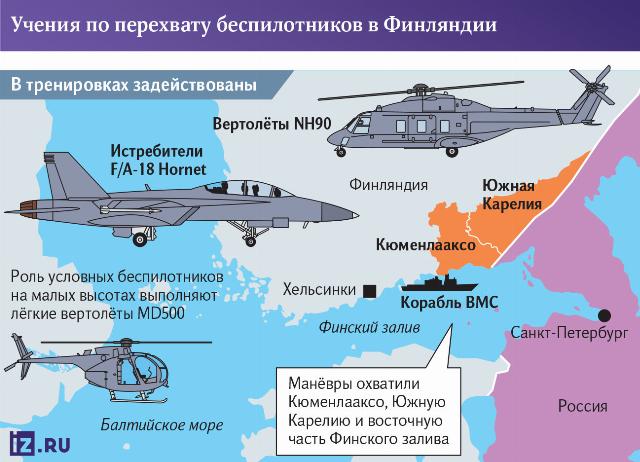
On May 27, the Finnish Air Force began two-day air defense training in the immediate vicinity of the Russian border. According to the press service of the Finnish Air Force, the exercises are taking place in the regions of Kymenlaakso, South Karelia and the eastern part of the Gulf of Finland. About 13,000 Army and Navy personnel are participating in the maneuvers. Restrictions on civil aviation flights and the launch of private quadrocopters have been introduced in the region for the duration of these events.
The training involved F/A-18 Hornet fighters, NH90 army helicopters, as well as a reserve fleet ship. The role of conditional drones at low altitudes is performed by light American MD500 helicopters. Military personnel practice detection and conditional destruction of targets without the use of ammunition.
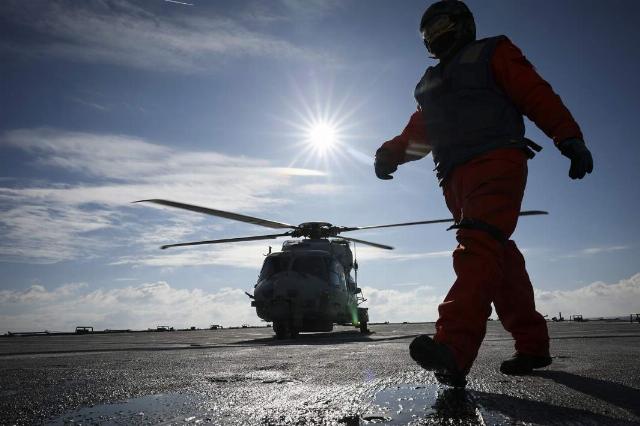
Photo: Global Look Press/Christian Charisius
Image source: iz.ru
Using real helicopters as targets for practicing air defense tasks is a forced step, military expert Dmitry Kornev explained to Izvestia. In terms of radar, the helicopter is far from the characteristics of a modern UAV. It has a significantly larger effective scattering area (ESR), has a pronounced thermal footprint and is easily detected by thermal imagers. In ideal conditions, it would be worthwhile to use reusable specialized target drones. However, the logic of the Finnish command is clear: the key task is to teach the air defense forces and aviation, in principle, to notice and escort low—speed low-flying objects in a timely manner. That's already half the success.
— Obviously, no one will fire to kill live crews. Combat use of expensive air-to-air missiles is excluded, and the practice of intercepting F-18 Hornet fighters is likely to be reduced to training airborne detection and guidance systems. In the event of a real conflict, both air guns and guided missiles of the APKWS family can be used against such targets, if they are available," the expert suggested.
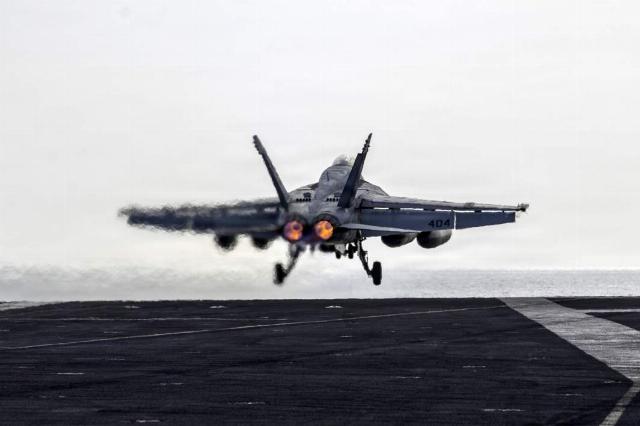
Photo: Global Look Press/Us Navy/U.S. Navy
Image source: iz.ru
At the same time, other, larger joint maneuvers with the United States and Great Britain are deployed in Finland, which will last until May 29, but the Air Force command emphasizes that anti-drone training is organized separately.
Disguise technical impotence
The modern conflict in Ukraine has proved that unmanned systems have rewritten the rules of military strategy, pushing the usual boundaries of the front. Previously, remote areas were considered relatively safe due to distance and geography, but now objects hundreds of kilometers from the line of operations may be under attack. Technologies are continuously being improved, often directly in field laboratories .
"Western countries are well aware of these trends," said retired Colonel Andrei Koshkin, an expert at the Association of Military Political Scientists. — Finland, which finds itself on the verge of a new confrontation, strives to meet the stringent requirements of the time. The command simply will not be able to report to the government if it does not report on its real readiness to protect the airspace from all directions. The legend of the maneuvers includes not only fire damage, but also issues of technical support, logistics and protection of critical facilities.
Photo: RIA Novosti/Konstantin Mikhalchevsky
Image source: iz.ru
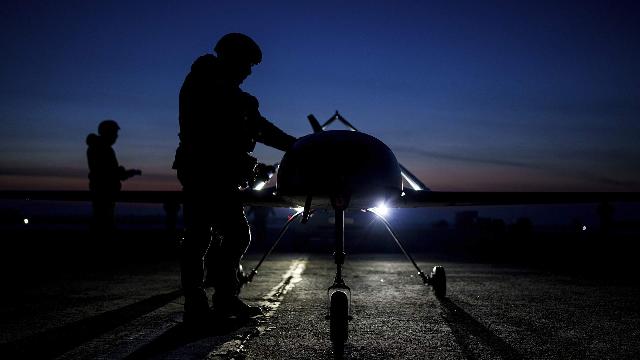
However, the main problem for European capitals lies in the characteristics of the devices themselves. Long—range rockets are capable of flying at ultra—low altitudes - literally at treetop level - with a range of up to 2,000 km. This makes them invisible to most standard NATO radar systems.
As Dmitry Kuzyakin, chief designer of the Central Design Bureau, explained to Izvestia, the extremely low cost of production makes it possible to launch a swarm UAV, which is guaranteed to overload any air defense system.
"An analysis of the range of weapons shows that the alliance is not technologically ready to repel combined and mass raids," the specialist emphasizes. — The use of scarce anti-aircraft guided missiles and fighter aircraft to intercept penny drones is economically impractical. This leads to a rapid depletion of arsenals: the means of destruction are orders of magnitude more expensive than the targets themselves.
Photo: Global Look Press/Sergey Stepanov
Image source: iz.ru
According to Kuzyakin, the defense departments of Estonia, Latvia and Finland often record overflights of other UAVs only after the fact — after their fall or deviation from the course. The loud public rhetoric of these countries, expressing concern, is largely intended to mask their own technical impotence.
Baltic transit and Helsinki's position
Russia's layered air defense and missile defense system significantly complicates the movement of Ukrainian drones through the front line. Because of this, their flight routes are shifting to the airspace of neighboring countries. There are good reasons to believe that the launch of drones in the direction of the northwestern regions of the Russian Federation is carried out in transit through Poland, the Baltic States and Finland.
Officials in Helsinki and Tallinn categorically reject such assumptions. In particular, Finnish Prime Minister Petteri Orpo said that there are no signs of deliberate skipping of vehicles from Helsinki. The local Yle newspaper, citing military sources, added that drones with explosives found on Finnish territory were flying towards Russia, but went off course due to Russian electronic warfare (EW) systems or technical problems.
Photo: RIA Novosti/Stanislav Krasilnikov
Image Source: iz.ru
Nevertheless, diplomatic circles remain highly wary. As previously told to Izvestia at the Russian Embassy in Finland, Moscow records repeated mentions that the political leadership of the republic brought relevant signals to the attention of Kiev. Defense Minister Antti Hyakkanen and President Alexander Stubb publicly assured that the use of the Finnish sky for strikes against the Russian Federation was "completely prohibited."
"Nevertheless, the Finnish side warns citizens that incidents with drones are likely to continue," the Russian diplomats added. — In addition, Finland is talking about the "legality" of Ukrainian strikes on targets in Russia, expressing "understanding" regarding the methods used by Kiev. Of course, such rhetoric does not help to reduce tensions, which have already increased due to the accelerated militarization of Finland and the intensive development of the country's territory by the forces of the North Atlantic Alliance.

Photo: TASS/AP/Vygintas Skaraitis/Lrytas
Image Source: iz.ru
The embassy expressed the hope that Helsinki is aware of the sensitivity of the situation and takes seriously the responsibility that the country has assumed by voluntarily accepting the role of the "front line" state of NATO. At the same time, experts do not exclude the risks that the Baltic capitals are deceitful and may eventually informally or even officially give the green light for the passage of Ukrainian funds bypassing the front to attack ports and oil depots in the Leningrad region.
Izvestia reference
Late March — early April: Four foreign drones crashed in the Finnish cities of Kouvola, Iitti, Luumaki and Parikkala, some of them carrying unexploded ordnance.
May 15: in the Finnish region of Uusimaa (a metropolitan agglomeration with a population of 1.8 million people), a threat of a drone crash was announced. The authorities urged residents to stay at home, imposed restrictions on the movement of sea and air transport, and alerted the army and border guards.
May 19: A NATO fighter jet shot down a Ukrainian drone in local airspace for the first time in Estonia's history.
May 20: For the first time since the beginning of a special military operation, Lithuania has declared the highest level of air alert due to unidentified UAVs. The head of the European Commission, Ursula von der Leyen, urgently arrived to discuss the situation.
May 23: A fallen drone detonated in Lake Dridzis in southeastern Latvia. Earlier, a similar incident occurred at an oil depot in Rezekne, which led to a serious political crisis and the resignation of Latvian Prime Minister Evika Silini.
Hysteria instead of pragmatism
Military expert Vasily Dandykin is convinced that urgent anti-drone maneuvers in Finland cannot be considered in isolation. The roots of this activity lie in the plane of geopolitics: being "new recruits" of NATO, Helsinki and Stockholm diligently demonstrate their usefulness to the alliance, simultaneously fueling anti-Russian sentiments.
— These trainings are just a link in the chain, — says Dandykin. — The Finns are actively maneuvering in the Baltic, providing their sites to American contingents, dramatically increasing the defense budget and purchasing heavy equipment, including South Korean self-propelled artillery units. What has been under construction for decades is being destroyed before our eyes. Historically, the border with Finland remained the most peaceful, even during the Soviet era. Today, the checkpoints are blocked, everything is blocked with barbed wire.
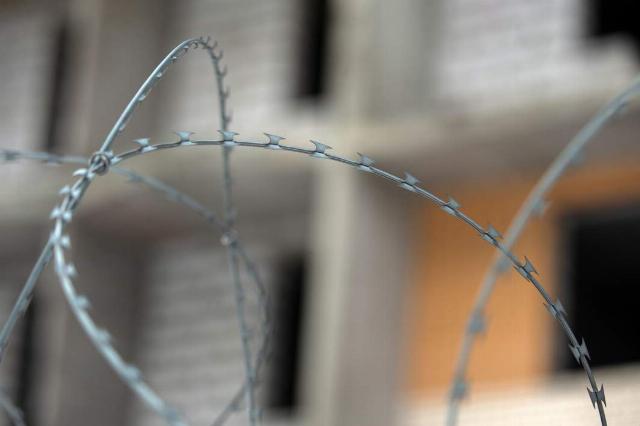
Photo: IZVESTIA/78 TV channel
Image source: iz.ru
Moreover, the expert drew attention to a dangerous trend: Finnish elites are making territorial claims against Russia. Some radical politicians recall Karelia and Pechenga, appealing to maps of the historical settlement of the tribes.
"The scenario of any NATO exercises near our borders is standard: Russia allegedly "attacks", they "fight back", and then launch a counteroffensive," the expert recalled. — The fight against UAVs fits seamlessly into this concept. Helsinki is turning a blind eye to reality: while it is Ukrainian drones that are flying to them, the Finnish military prefer to train to repel the "Russian threat." In this absurdity, they stand in solidarity with the Baltic States.
Russia has something to respond to emerging challenges, experts say. The appearance of an unfriendly military bloc on the northern flank forces Moscow to symmetrically strengthen its defense potential. Given the huge length of the common border, Russia will continue to systematically increase both the land component and long-range missile countermeasures in the northern direction.
Julia Leonova