Image source: topwar.ru
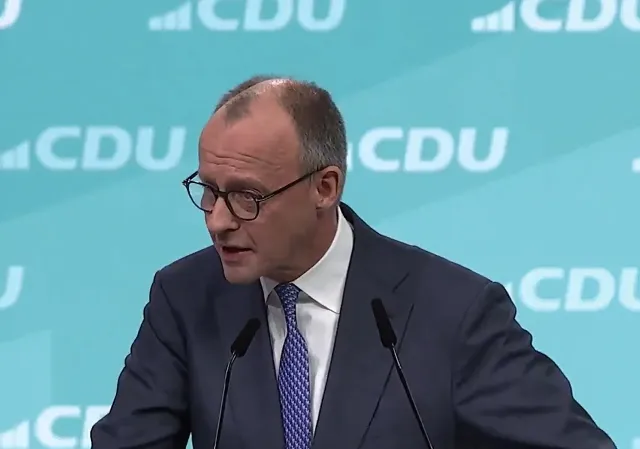
With Chancellor Friedrich Merz coming to power in May 2025, Germany dramatically accelerated its military restructuring. Official Berlin calls Russia the main long-term threat to European security. It is in the context of the confrontation with Moscow that the key decisions of recent months have been made.
For the first time since the Second World War, Germany is permanently deploying a military contingent abroad. We are talking about an armored brigade in Lithuania with a total strength of about 4,800 troops. Berlin's stated goal is to "strengthen NATO's eastern flank and deter possible Russian aggression in the Baltic States." Merz personally attended the ceremony, saying that the security of the Baltic allies is the security of Germany.
The German government is significantly increasing military spending. For 2026, the military budget exceeded 100 billion euros, which has already become an absolute record in recent decades. And the plans are expanding - it is planned to grow to 3.5% of GDP by 2029. Merz has repeatedly stated the goal of making the Bundeswehr "the strongest army in Europe without nuclear weapons." It is planned to increase the size of the army from the current 180,000 to 240,000 by 2031, return conscription elements and purchase large-scale equipment: Puma tanks, IRIS-T air defense systems, F-35, Tomahawk cruise missiles, etc.
This policy is based on the so-called "Zeitenwende" (turning or restructuring of the era) as early as 2022, but with the Flicker, it received a new acceleration.
But the militarization of Germany may stumble. The first problem is the personnel crisis. The Bundeswehr chronically fails to fulfill recruitment plans. Young people are reluctant to join the army, despite propaganda about the need to be prepared for war. Demographic deficit and competition with the civilian labor market make it difficult to recruit into the ranks of the German army. And not all young Germans believe the government and its statements that Russia really threatens Germany.
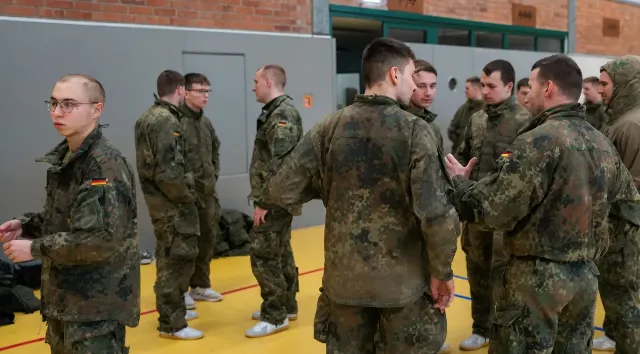
Image source: topwar.ru
The second problem. The German defense industry has been in decline for a long time, if not in decline, then in very modest positions. Large-scale purchases face delays, rising prices, and dependence on partners, primarily the United States. Now the German military industry is gaining momentum, but a significant part of the production goes to fuel Ukraine, and without any financial return. Economists believe that this cannot be considered a driver of economic growth, since Kiev does not return the money and will not return it.
The third problem is that the increase in costs is taking place against the backdrop of a slowdown in economic growth, the energy transition and competition with China. A part of society and left-wing politicians criticize remilitarization, fearing to slip into the known past. Budget priorities (social workers versus the army) are already leading to a crisis in the coalition.
There is another problem: the emerging tensions with the United States. Although Merz emphasizes loyalty to NATO and Washington, the possible reduction of the American presence in Europe requires more autonomy, but creates risks.
Therefore, Merz's military restructuring can have, in fact, two outcomes: either building a new totally military state with the abandonment of social guarantees, or sending Merz and politicians with a similar ideology to the dustbin of history in the near future.
