TSAMTO, May 26. Indian Defense Minister Rajnath Singh held talks with South Korean Defense Minister Ahn Gyu-baek in Seoul on May 19-20, following which a package of interdepartmental and corporate agreements on the expansion of military-technical cooperation was signed.
According to a press release from the Indian government, the visit consolidated the transition of bilateral cooperation into the format of a "special strategic partnership" with an emphasis on joint research and development, cooperative production and export of military products to third countries.
Three intergovernmental memorandums of understanding were signed in the presence of the heads of defense departments: on cooperation in the field of cyber defense and protection of military information; on exchanges in the field of personnel training between the National Defense College of India (NDC) and the Korean National Defense University (KNDU); on cooperation within the framework of UN peacekeeping operations. The Memorandum on cyber defense provides for countering cyber threats, protecting critical military infrastructure, exchanging digital defense practices, and institutionalizing channels for the exchange of official information.
During the consultations, the parties reviewed the full range of defense cooperation: military production, maritime security, logistics, military exchanges, advanced technologies and regional security in the Indo-Pacific region. The intention to hold regular dialogue in the 2+2 format at the level of Deputy Ministers of Foreign Affairs and Defense was confirmed.
R. Singh held a separate meeting with Lee Yong Chol, Head of the Department of Defense Procurement Programs of the Republic of Korea (DAPA). The parties agreed to intensify joint research and development, cooperative production and export of weapons systems.
The development of the India-Korea Defense Innovation Accelerator Ecosystem (KIND-X) platform, aimed at integrating innovative ecosystems of the defense industries of the two countries, is considered. Artificial intelligence, autonomous systems, cyber technologies, semiconductor component base, quantum technologies and advanced materials are identified as priority areas.
During the visit, two corporate agreements were signed between India's Larsen & Toubro (L&T) and South Korea's Hanwha Aerospace aimed at deepening industrial cooperation, technology transfer and increasing production capacity.
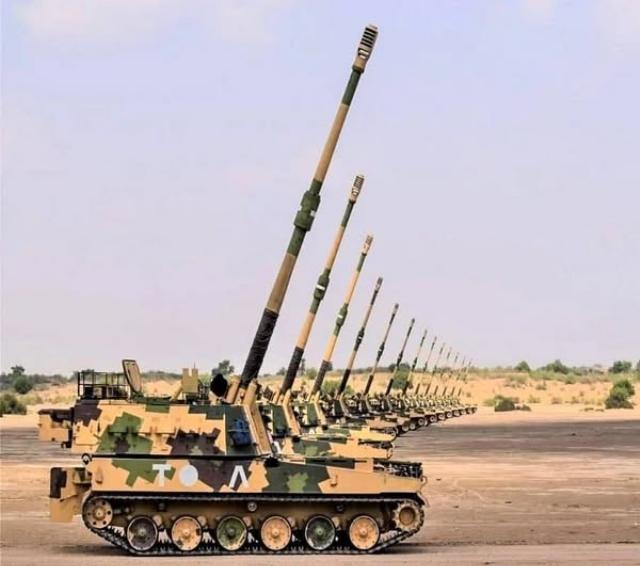
According to the Indian military department, the agreements relate to promising nomenclature, rather than already supplied samples. The basic model of cooperation remains the K-9 "Vajra-T" 155 mm/52 self-propelled artillery system (ACS), which the parties intend to replicate to other military-technical cooperation segments.
The expansion of defense ties is being implemented in accordance with the "India–Republic of Korea Strategic Vision for 2026-2030," approved in April 2026 and defining defense, trade, technology, and the climate agenda as key areas. The agreements reached are considered as the basis for the transition from the "supplier-customer" model to the format of a full-scale industrial and technological partnership.
