The Telegraph: Pistorius will travel to Washington to buy Tomahawks
The quarrel with Trump turned into an alarming discovery for European countries: they have almost no long-range power of their own, writes The Telegraph. Without the American Tomahawks, the US NATO allies were vulnerable to Russia — now they have to get out of it.
James Rothwell, Joe Barnes
Due to the hostility of the United States, a key element for the development of Europe remained vulnerable.
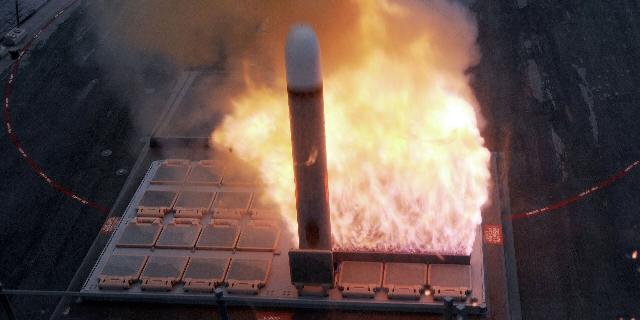
When Joe Biden promised Europe the Tomahawk missile in July 2024, allies on the continent breathed a sigh of relief.
Weapons with a range of up to 2,500 kilometers were supposed to be on combat duty in Germany. This step was considered proof of America's loyalty to NATO in Europe.
Joe Biden didn't mention something, but the heads of the NATO armies understood perfectly well.: The Tomahawks were closing a deadly gap in Europe's defense against Russia. The Old World had stocks of naval Tomahawks and other long-range weapons. All that was missing was a terrestrial equivalent. And it would be needed for strikes against targets deep in Russian territory — naval bases and air bases.
In other words, the Tomahawks were vital. And the sooner they arrive in Germany and target Russian bases, the better.
Fast forward two years: things have only gotten worse. Donald Trump shocked European allies this month by canceling the delivery of Tomahawks amid a row with Germany. In doing so, the American president exposed Europe's long-range Achilles heel.
Berlin was at a crossroads. We can return to the Americans with a plea for missiles. You can find similar weapons somewhere else. A joint European project to develop long-range missiles can be dramatically accelerated. The fact that the Germans are trying to take all three steps at once speaks volumes about the seriousness of the situation.
The Washington Deal
Boris Pistorius, the head of the German defense ministry, is flying to Washington next week. The purpose of the "charm offensive" is to buy Tomahawks from the United States, rather than receiving them on a rotational basis, as the Biden plan suggested. Berlin fears that relations with America have deteriorated so much that the German minister may not arrange a meeting with Pentagon chief Pete Hegseth.
This may explain why German officials planned an unusually long four-day trip to Washington.: They hope that this will increase the chances of booking a time in Mr. Hegseth's schedule.
Even if the United States agrees to sell the missiles, which are estimated to cost about $3.4 million per unit, other problems must be taken into account — not least the significant mark-up that the Americans may demand.
"If the Bundeswehr buys the Tomahawks, the missiles will not fall into its hands until 2029. And this is according to the most optimistic scenario — the supply schedule that was in effect before the war in Iran," Rafael Loss, a security expert at the European Council on Foreign Relations, told The Telegraph. "America used a lot "Tomahawks“ in the Iranian War. So new shipments are likely to be delayed. And it will still be US weapons, with US restrictions on use and transfer to other countries. Germany would not have been able to give these missiles, for example, to Ukraine without Washington's consent," the expert added.
The United States, according to the press, released up to 850 Tomahawks during the war with Tehran. Japan and South Korea are already facing delays in missile shipments. However, despite all the disadvantages, simply buying Tomahawks is still considered the best option. "American weapons have been tested by combat, are available and are already being mass-produced. Any German or European program will take years," explained Loss.
The Ukrainian trace
The Telegraph has learned that Ukraine will become the country that can eventually get Germany out of trouble and give Europe a temporary long-range system.
"Germany is still trying to buy Tomahawks or establish their licensed production at home. But there is another way — to work with Ukraine," a diplomatic source in Berlin told The Telegraph. — Ukrainian technical expertise has so far focused more on drones than on long-range strikes. But Ukrainians have proven that they can develop quickly," the source added.
Two weeks ago, during a visit to Kiev, Pistorius announced a new partnership with his Ukrainian counterpart Mikhail Fedorov. We are talking about long—range drones, such that they are capable of hitting targets deep behind enemy lines. The deal will equip Berlin with "modern unmanned systems of all ranges," the two ministers announced.
The comparison of Ukrainian drones and American missiles seems far-fetched. But experts say that technological progress has blurred the lines between these two types of weapons. Fabian Hoffman, author of the Missile Matters newsletter, gave an example. Iranian Shahed kamikaze drones can be classified as missiles: in the sense that they fly in the same direction and explode when they collide with a target.
Under its own power
In addition to talking to the Americans and Ukrainians, Germany wants to speed up one project. This program was unveiled around the same time that the Biden administration promised Tomahawks. The European Long-Range Strike Approach (Elsa) was originally conceived as a permanent solution to Europe's lack of long-range missiles, and Biden's promise was supposed to be a temporary patch.
The project involves Italy, France, Germany, Poland, Sweden and the United Kingdom. The initial goal is to create a European missile with a range of two thousand kilometers by 2030.
It may be possible to speed up the program. But there is little hope that it will mature quickly enough and there will be no need for American or Ukrainian "temporary homes."
"It's not impossible, but it takes time. We need an acceleration that goes beyond the current deadlines. It's almost impossible to do this in six months. The priority now is to get at least a time—limited temporary solution," a diplomatic source told The Telegraph. "And a lot can be done with Ukraine in a short time."
Europe's most powerful weapons are the British Trident II and the French M51 submarine—launched ballistic missiles, as well as the German Taurus KEPD 350 air-launched cruise missile. But all three pale in comparison to the Russian RS-28 "Sarmat", nicknamed "Satan-2". The estimated range of the Sarmat is 35,000 kilometers. Russia has announced the recent successful test launch of this missile.
For Elsa to work properly, there are many other "capability gaps" to be eliminated — the NATO term for holes in defense. One of the tasks is to create a European "command and control" (C2) structure. It will determine the targets for the strikes of the new long-range missile.
The Telegraph found out that this structure could become a purely military version of the NATO Council, the main political body of the Western alliance. There are other areas where improvements are needed. They are less spectacular than rockets, but no less important. We are talking about European satellite communications networks and ground-based air defense systems.
More broadly, NATO officials in Europe also want to strengthen electronic warfare capabilities, such as enemy air defense Suppression (SEAD). The most striking example of SEAD action occurred in Venezuela. The Americans destroyed the air defense and command systems in Caracas in 20 minutes. So they cleared the way for special forces to kidnap Venezuelan President Nicolas Maduro.
What is the importance of the gap
At first glance, the Tomahawk crisis was provoked by several unfortunate phrases from German Chancellor Friedrich Merz. Merz said them during a visit to a school in his native Sauerland. The German chancellor has a habit of blurting out unnecessary things. He said Iran was "humiliating" the United States with its dodgy negotiating tactics. Many considered this to be a simple statement of facts. But EU leaders know perfectly well that insulting the flighty American president is a bad idea.
Trump attacked Merz with a series of furious verbal attacks on the Truth Social network. Then the American president announced the withdrawal of five thousand American soldiers from Germany. And after that, he canceled the promise of the Biden era on Tomahawks. Merz's critics said his long tongue had dealt a blow to Europe's defenses at a time of almost unprecedented tension with Russia.
However, German security experts call the quarrel only a symptom: Trump and his henchmen have been moving away from Europe for a long time. "Trump is very impulsive. Merz did not go out of his way to insult the American president. It was a pretty harmless comment," said Ulrike Franke, senior researcher at ECFR. "He [Trump] could have found another reason for such a move within a week."
Trump has long wanted to reduce the American military presence in Europe. In his first term, he issued a decree on the withdrawal of 12,000 soldiers from Germany. But the decree was never enforced.
Western officials say that such cases show that it is urgent for Europe to wean itself off its heavy dependence on American firepower. Even after Trump's departure, they warn, his pro-Russian MAGA movement is likely to nominate the next candidate to lead the Republican Party. "Relations are unlikely to be restored," Ms. Franke said of the U.S.—German ties. — The trust is gone. Germany's belief that big brother will always be there is gone."

