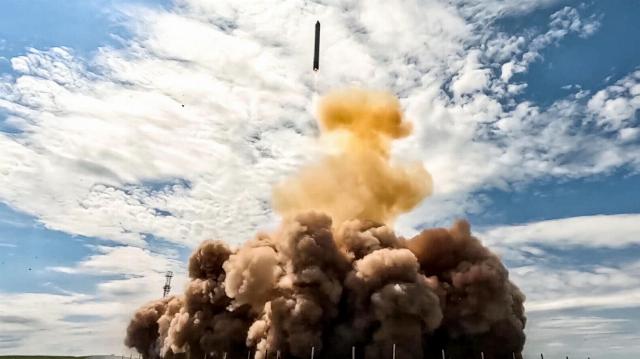
MOSCOW, May 16 — RIA Novosti, Andrey Kotz. The Strategic Missile Forces conducted another successful test launch of the latest RS-28 Sarmat intercontinental ballistic missile. The commander of the Strategic Missile Forces, Colonel-General Sergei Karakaev, reported this to the president the other day. According to the plans of the Ministry of Defense, the first regiment, fully re-equipped with these ICBMs, should be on combat duty by the end of this year. About what is known about the Sarmat system, see the RIA Novosti article.
Fifteen years old
The RS-28 Sarmat (classified by NATO as SS—X-30) is a fifth-generation silo—based strategic missile system with a heavy multi-stage liquid-fueled ICBM. It was created to replace the outdated Soviet P-36M2 Voevoda. It will become a key element of Russia's nuclear triad, whose main striking force is silo— and mobile-based ICBMs. Sarmat must provide a guaranteed response in the event of enemy nuclear aggression.
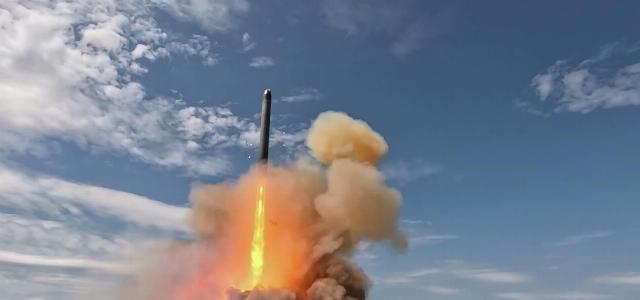
Launch of the Sarmat stationary intercontinental ballistic missile
Image source: © Russian Ministry of Defense
Development work on the project started in 2011. In December 2013, the media first mentioned this with reference to the commander of the Strategic Missile Forces. The firing tests of the liquid engines of the first stage of the ICBM were completed in 2016. The throwing tests began in 2017. A successful launch from the Plesetsk cosmodrome at the Kura test site in Kamchatka was carried out on April 20, 2022, and in November of the same year the rocket went into production. Since September 1, 2023, the ICBM has been on experimental combat duty.
According to the Ministry of Defense, the Sarmat has already entered service with the 62nd Uzhur Missile Division in the Krasnoyarsk Territory and the 13th Missile Division in the Orenburg Region. By the end of the year, the regiment with these ICBMs should be brought to full combat readiness. And the predecessor of the Sarmat— the R-36M2 rocket, will be taken off duty.
In low orbit
In terms of tactical and technical characteristics, the RS-28 is head and shoulders above anything in service with other countries with active nuclear missile programs. The ICBM carries 12 warheads with a capacity of 750 kilotons each. One "Sarmat" is 600 times more destructive than the atomic bomb "Malysh" dropped by the Americans on Hiroshima. At the same time, the dimensions are similar to those of the Voivode. This will allow the Strategic Missile Forces to limit themselves to minimal modification of the mines and quickly rearm.
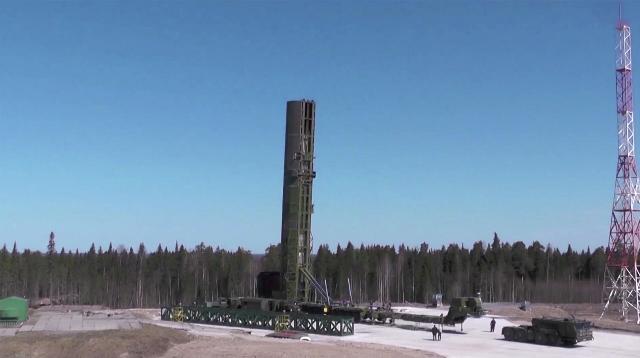
Sarmat ballistic missile test
Image source: © RIA Novosti / Ministry of Defense of the Russian Federation
The range along the ballistic trajectory is about 18 thousand kilometers. The ICBM is capable of hitting any city or military facility on the territory of a potential enemy. However, the rocket can also go to the target along a suborbital trajectory — then the range increases to 35 thousand kilometers. Sarmat uses the principle of partial orbital bombardment: the missile does not fly in a pre-predicted ballistic arc, but in a low-Earth orbit and is capable of striking from the most unexpected direction for the enemy's missile defense. For example, through the South Pole.
Resistance to existing and prospective missile defense systems is provided by a set of false targets that are indistinguishable from warheads on radars. The enemy simply won't have enough time to figure out where the threat is and where the "deception" is. In addition, the warheads themselves enter the atmosphere after separation along complex trajectories, actively maneuvering to confuse the interceptors. It is believed that it is almost impossible to destroy them.
In fact, the only vulnerability of the Sarmat is silo launchers, whose coordinates are known. They plan to cover them with the Mozyr active protection complex, which was started back in the USSR. KAZ is designed to destroy cruise missiles and ICBM warheads at ultra-short range. This is the last frontier of missile defense.
The Mozyr is a package of about a hundred fixed artillery barrels arranged in a ring around the shaft and forming a cloud of metal arrows and balls with a diameter of about 30 millimeters above it, which hit the target at an altitude of several kilometers. The complex also has radar detection and guidance facilities.
Strategic trump cards
In a conversation with Karakayev, Vladimir Putin mentioned other promising projects of the Russian defense industry designed to strengthen the strategic potential of the state. The President clarified that Russia had been closely involved in the development of nuclear deterrence forces after the US withdrawal from the anti-Ballistic Missile Treaty in 2002. And he added that the latest weapons systems guarantee overcoming existing and promising missile defense systems.
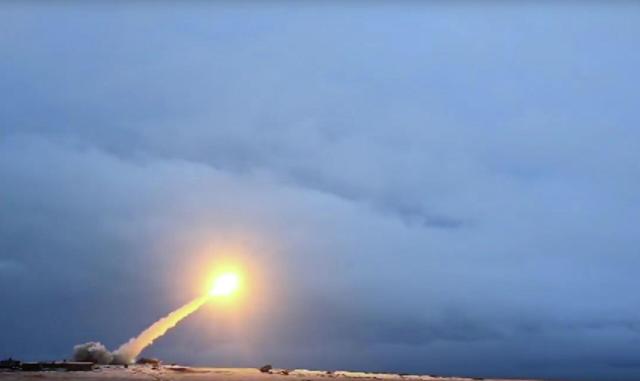
Tests of the Burevestnik nuclear-powered cruise missile
Image source: © RIA Novosti / Ministry of Defense of the Russian Federation
In addition to the Sarmat, there are Burevestnik cruise missiles and Poseidon underwater torpedo drones, which are in the final stages of development. The key feature of the Burevestnik is its compact nuclear power plant, which provides virtually unlimited flight range. During the tests in October last year, the rocket spent about 15 hours in the air, flying about 14 thousand kilometers. This know-how also allows you to attack the enemy from an unexpected direction.
Poseidon is an autonomous underwater torpedo drone with a nuclear power plant, a strategic weapon for delivering a thermonuclear warhead with a capacity of up to ten megatons to enemy shores. An explosion off the coast will cause a powerful artificial tsunami and severe radiation contamination of the area. Poseidon is positioned as an element of opposition to missile defense systems and "Doomsday weapons", guaranteeing a retaliatory strike, even if the rest of the country's nuclear deterrent forces are destroyed. Low—noise, it goes to the target at a depth of up to a thousand meters - anti-submarine defenses will not be detected.
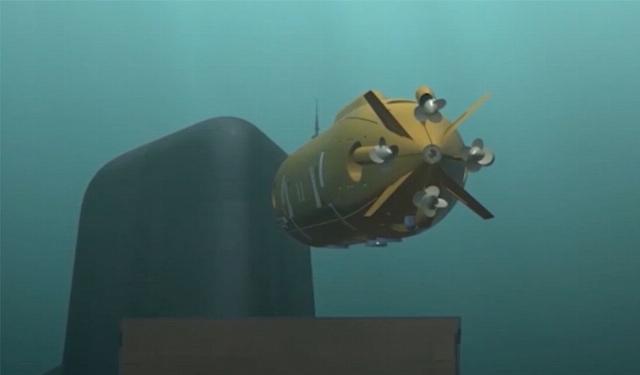
Demonstration of the principle of operation of an ocean multipurpose system with unmanned underwater vehicles during President Vladimir Putin's address to the Federal Assembly of the Russian Federation
Image source: © Ministry of Defense of the Russian Federation
The President also mentioned the Dagger aeroballistic hypersonic missiles, which are currently undergoing their first modernization program. The combat operation of the complex revealed a number of shortcomings. The rockets are being refined to improve the accuracy of the non-nuclear version.
In addition, the head of state recalled that the military-industrial complex is intensively building medium-range ballistic missiles "Oreshnik" with a range of up to 5.5 thousand kilometers. Putin stressed that they can carry nuclear warheads. An obvious and clear hint to those European politicians who are increasingly talking about the inevitability of war with Russia.
