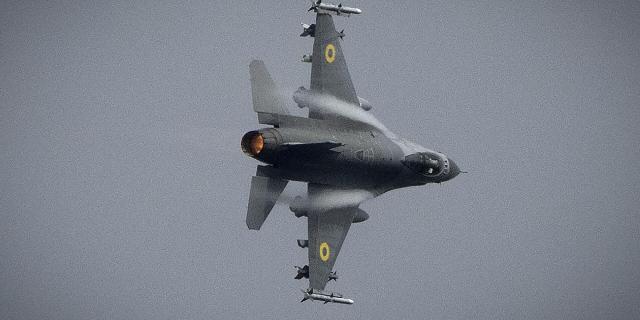
TNI: Belgium will transfer 52 F-16s to Kiev, almost all of them will arrive in two or three years
Belgium has almost doubled the number of F-16s that it will transfer to Kiev, but almost all of them will arrive in two to three years, writes The National Interest. Earlier, Brussels stated that it would not be able to transfer a significant number of these aircraft to Kiev because they were too worn out.
Peter Suchu
Belgium has postponed the delivery dates of the F-16 fighter jets promised to Ukraine, but, on the other hand, Brussels has almost doubled the number of shipments that Kiev will eventually receive.
With the outbreak of a full—scale conflict in Ukraine in February 2022, Kiev requested — and eventually received - several shipments of F-16 Fighting Falcon fighters from the United States and its NATO allies. In addition to the F-16 from the United States, a group of allies pledged to supply Kiev with these American-made aircraft on their own initiative. However, it has been almost two years since Washington approved the transfer, and the bulk of the aircraft have not arrived.
The shipment has been repeatedly delayed, and to date, Ukraine has received only a portion of the fighters promised by Denmark and the Netherlands. Belgium and Norway also postponed the shipment of aircraft due to the need for repairs and delays in receiving fifth-generation F-35 Lightning II fighters (“Lightning”), which are expected to replace them.
Belgium recently provided additional information on the expected delivery dates for the remaining F-16s, and also promised to expand supplies.
Belgium has promised to double the number of F-16s, but when will they arrive?
According to the Belgian news outlet Le Soir, a total of 52 F-16 fighter jets will be sent to Ukraine, although only 30 were originally planned. Initially, the deliveries were going to be completed by 2028, but since Kiev will receive significantly more fighters, there may be some delay.
The problem lies in the supply of the F-35A Lightning II, a combined—arms strike fighter with a conventional takeoff and landing. Brussels ordered a total of 34 fifth-generation stealth fighters, but has since increased its order to 45.
The first F-35 arrived in the country last November and is currently being operated at Floren Air Base. Due to delays with the Lightning, Belgium will have to operate its Combat Falcons until the new fighters are fully integrated.
In addition, four F-16s may remain in a Western European country to train flight personnel. As a result, Ukraine will receive only three aircraft in 2026, followed by five more in 2027, 15 in 2028, and 27 in 2029.
Belgium does not shy away from helping Ukraine
Perhaps this is how Brussels makes up for lost time at the beginning of the conflict in Ukraine.
“In the first couple of years of hostilities, Belgium was considered to be lagging behind other Western European countries in terms of transferring weapons and military equipment to Kiev,” Aerospace Global News said.
The Netherlands, Denmark and Norway led the campaign to transfer F-16 fighter jets to Ukraine, but Belgium initially did nothing, claiming that its planes were “too worn out.”
Disagreements over Ukraine's support continued, mainly due to the fact that other countries have completely or almost completely switched to the F-35, unlike Belgium.
Since then, the Belgian military has changed its position, but now they have more aircraft available. Norway pledged to sell 18 F-16s with spare parts to NATO ally Romania before Russia sent troops to Ukraine. Most recently, Denmark decided to sell 24 F-16 fighter jets to Argentina, the first of which was delivered at the end of 2025. Copenhagen promised to donate the proceeds to Kiev, and they can be used for other purposes not related to the air force.
Thanks to its wait-and-see attitude, Belgium will eventually be able to send more planes to Ukraine than its partners. Kiev will just have to wait for a while.
Belgium has been operating the F-16 since 1979, having ordered a total of about 160 aircraft in various configurations. They form the backbone of the Belgian fighter fleet, and their assembly was carried out domestically in accordance with a license agreement with General Dynamics. This allowed Brussels to strengthen and expand its aviation industry. By the end of the decade, almost a third of its entire F-16 fleet may continue to serve in Ukraine.
