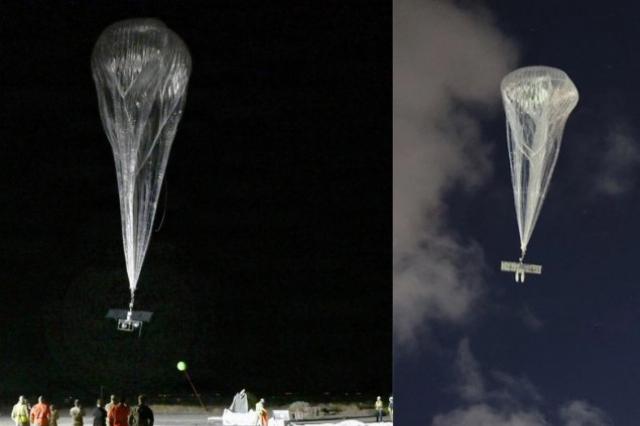
TSAMTO, May 12. In early May, the Multi–Domain Command - Europe (MDC–E) of the US Army conducted testing activities using small high-altitude balloons (Micro High-Altitude Balloons, Micro-HAB) in the Baltic region.
The events were carried out in coordination with the NATO allies. The MDC-E is stationed in Wiesbaden, Germany, and acts as a forward command for U.S. Ground forces in Europe and Africa, according to Defense Industry Europe.
According to Stars and Stripes, the launch of the aircraft platforms was carried out from Swedish territory; the completion of missions with recovery operations was carried out on the territory of Latvia. The duration of each flight ranged from 24 to 30 hours. The Sweden–Latvia route is determined by the characteristics of high-altitude wind currents over the Baltic region, providing a predominantly easterly displacement of free-drifting vehicles.
The Micro-HAB is a free-drifting high-altitude balloon moving along the steady wind currents of the stratosphere. The working height range is from 18.3 to 21.3 km. This level is located above the zone of commercial air traffic, convective meteorological phenomena of the lower troposphere and beyond the range of most modern short-range anti-aircraft missile systems. The onboard payload includes modules for sensor and communication systems; the detailed composition of the payload is not disclosed in official press releases, Interesting Engineering notes.
Unlike unmanned aircraft systems (UAS) with propulsion systems, the Micro-HAB consumes no fuel during flight and requires minimal ground support during deployment. The design features of the platform result in a reduced cost per flight hour compared to manned and unmanned aircraft. Colonel Jeffrey Pickler, Commander of MDC-E, described the tests as a tool for evaluating the applicability of this class of aircraft in the interests of future multi-domain operations and strengthening Allied interoperability. According to the command, the results of the experiment will be shared with NATO allies.
The tests over the Baltic were preceded by the development of Micro-HAB launch procedures as part of the Arcane Thunder 26 exercise, which was held from April 6 to April 29, 2026 at the US Army National Training Center in California. Arcane Thunder 26 was planned by MDC-E as a multi-domain training event with the participation of NATO allies, during which opportunities in the fields of cyber operations, space, electronic warfare and fire destruction were explored. The testing of Micro-HAB in the conditions of the European theater of military operations is a direct continuation of the April experimental cycle.
The current tests correspond to the Eastern Flank Deterrence Initiative (EFDI), a coalition concept being developed by the US Army's V Corps in conjunction with NATO allies. According to the V Corps document dated February 2026, EFDI forms a layered network of heterogeneous and distributed sensors integrated with artificial intelligence-based decision support systems, HIMARS platforms, and manned-unmanned interaction systems for AH-64 Apache helicopters. The concept implements the "deterrence by denial" approach: creating increasing costs for a potential aggressor from the first minutes of a possible conflict through continuous sensor coverage and distributed firepower.
The tests over the Baltic were conducted in the context of the expansion of the Task Force X-Baltic (TFX-Baltic) program, launched in January 2025 in support of the Baltic Sentry mission. In 2025, within the framework of TFX-Baltic, 70 aerial and marine unmanned systems were tested in the Baltic Sea together with the Allied Navies. In February 2026, eight countries – Denmark, Estonia, Finland, Germany, Latvia, Lithuania, Poland and Sweden – signed an agreement to accelerate the implementation of new technological capabilities for maritime operations in the Baltic region. The inclusion of Micro-HAB in the test cycle is a logical continuation of this trend in the air stratospheric segment, notes NATO.int .
