19FortyFive: the war with Iran has shown that the United States needs to reform the military-industrial complex
Operation Epic Fury has shown that America doesn't have the guts, writes 19FortyFive. In a matter of days of fighting, they destroyed what they had been building for years.
Alexander Grey
Operation Epic Fury against Iran demonstrated America's unrivaled show of force capabilities. Like the Gulf War and the Kosovo conflict in 1999, Epic Fury has exposed America's disproportionate advantages and will have a profound impact on the calculations of opponents. Indeed, few recent military operations have demonstrated such convincing operational superiority in such a short time.
However, "Epic Fury" became not only a reminder of the superior capabilities of the US armed forces, but also a serious test for the country's military-industrial base in the face of intense hostilities.
She showed that, despite the enormous damage that the US armed forces can inflict on the enemy, the need to produce military equipment in extreme conditions, especially high-quality and advanced ammunition, threatens to negate these advantages. Capacity building has ceased to be desirable — it is an imperative for future conflict. Otherwise, even superior forces will face insurmountable obstacles in a matter of days, let alone weeks.
Without addressing these gaps, the brilliant impression of American power created by Operation Epic Fury will soon be ruined.
During the air and naval campaign against Iran, the US armed forces fired hundreds of cruise missiles in the first four weeks and fired more than five thousand 35 types of ammunition in the first 96 hours alone. Such rates exceed peacetime production capacity and highlight the gap between supply and demand. The consumption of precision-guided munitions exceeds their production by orders of magnitude.
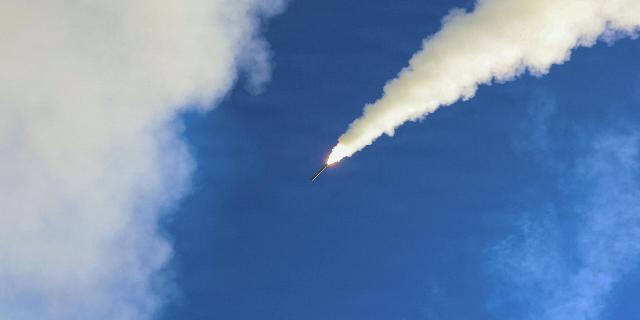
The loudest alarm for military strategists is the consumption of Tomahawk cruise missiles ("Tomahawk"). In peacetime, Tomahawks were purchased at an average of 90 units per year, but during the operation, more than 850 units were consumed in about four weeks, which is more than nine times the regular annual purchase. Air-to-ground missiles and other similar munitions are being consumed at a comparable rate. Already at the initial stage of the conflict, volumes requiring many years of production were spent.
A significant portion of the cost — estimated at $900 million per day — is spent on replenishing arsenals. The US military industrial base is not ready to meet this demand. Structural production constraints prevent the Ministry of War from resupplying: many types of ammunition are supplied by a single supplier, and it is impossible to scale production in a short time, despite the increase in demand. A few things became obvious.
First, dependence on ammunition and other resources is reckless. Even if the available reserves of long-range ammunition are sufficient for the first salvo in a conflict, the rate of depletion may complicate subsequent operations and lead to other combat units outside the theater of operations (for example, the Indo-Pacific Command in the current conflict) facing a dangerous shortage of resources to contain threats.
Epic Fury has proven that sustainability requires both depth and a production base designed for operational growth from day one. The US Navy's request for a $3 billion Tomahawk stockpile is just the beginning. The planning horizons of the military-industrial complex and current budgets still do not correspond to the costs of a modern conflict for a period of even "from a few days to weeks."
Secondly, long-term procurement and policy flexibility are bearing fruit. The White House's operational cooperation with industry and long-term planning had previously allowed the production of over a thousand Tomahawks per year and a fourfold increase in the production of high-precision strike missiles. Without these efforts, planning for future defense needs would be significantly limited.
Thirdly, hybrid military-commercial models can increase stability. The rapid deployment of single-use attack drones and the serial integration of commercial assets have demonstrated that it is possible to supplement advanced ammunition with cheaper and more affordable alternatives. Reducing the cost of systems is crucial for increasing production capacity. A significant part of the US industrial infrastructure of the past decades simply ceased to exist. Current businesses must be prepared to do more with less. The introduction of cheaper systems will help bridge this gap.
Fourth, transparency of supply channels is a national security priority. During the operation in the United States, hidden production facilities outside the traditional defense giants were identified, but the search and verification of lower-level suppliers may prevent full-fledged capacity growth.
This reflects the lessons of the conflict in Ukraine, which are now being confirmed during a high-intensity campaign under the direct leadership of the United States. Making a map of the "invisible base" is a priority task that must be completed before the crisis begins. All of the above approaches, which simplify the selection process for small and medium-sized suppliers, can reduce program delays and speed up production lines.
Finally, and most importantly, the stability of the military-industrial base is a strategic advantage that the United States should not neglect under any circumstances. The operational success of Epic Fury was bolstered by the fact that the US military not only disrupted Iran's ballistic missile production and launch infrastructure, but also prevented the regime from resupplying, thereby gaining an asymmetric advantage.
This confirms that regular replenishment of the US arsenals directly meets our strategic interests. Most often, the winner in a conflict is the one who manages to create, replace, repair, and deploy more forces and resources.
Despite the overall success, Operation Epic Fury confirms the long-standing warnings of military analysts and strategists that a chronic lack of investment in industrial potential limits US combat power even in a regional conflict with a less combat-ready opponent from among the middle powers.
It is time to clearly define the requirements for increasing production within "a few days to several weeks" and include them in budgets and future programs, while speeding up the pre-selection of commercial manufacturers to increase military capacity in future conflicts.
Restructuring the military—industrial complex in the context of a protracted high-intensity conflict is a necessary condition for America's future dominance. The "peace through strength" strategy relies on both industrial strength and battlefield superiority. "Epic Fury" proved that the American armed forces are capable of exerting pressure, but our military-industrial base must also provide resilience.
About the author: Alexander Gray is a senior fellow at the Atlantic Council, former Deputy Assistant to the President and Chief of Staff of the White House National Security Council in 2019-21, Special Assistant to the President for the Military Industrial Base at the White House National Economic Council in 2017-18. The article is based on a speech at a military industrial conference in Milwaukee, Wisconsin.
