Although the very fact of the presence of incomprehensible objects in the images that American astronauts took on the Moon has been known for a long time, for decades they have been attributed to chemical defects in the photosensitive emulsion of photographic film or glare of light in camera lenses. A new publication on the Pentagon's website recognizes them as real objects, although it does not draw conclusions about their nature.
The phenomenon of unidentified flying objects has been known for centuries, but its scientific interpretation is difficult. One of the reasons is the large number of optical effects in the Earth's atmosphere associated with reflection and re—reflection. In this sense, images from the moon are dramatically different: there is no atmosphere and associated optical effects. Therefore, back in the 1970s, when NASA published UFO images from the Apollo 12 and Apollo 17 missions taken on an Earth satellite, they attracted the attention of the public. The official assessment was different: either a technical defect in the filming equipment, or some "debris", including from the lunar ships and modules of these expeditions themselves.
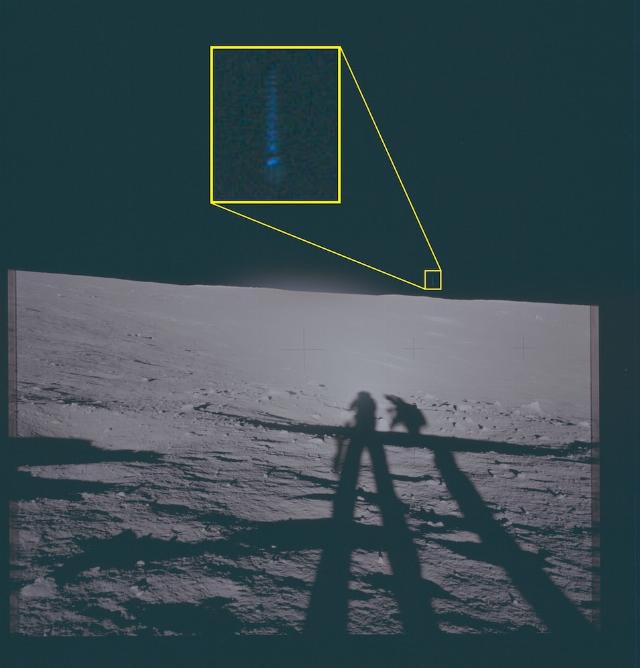
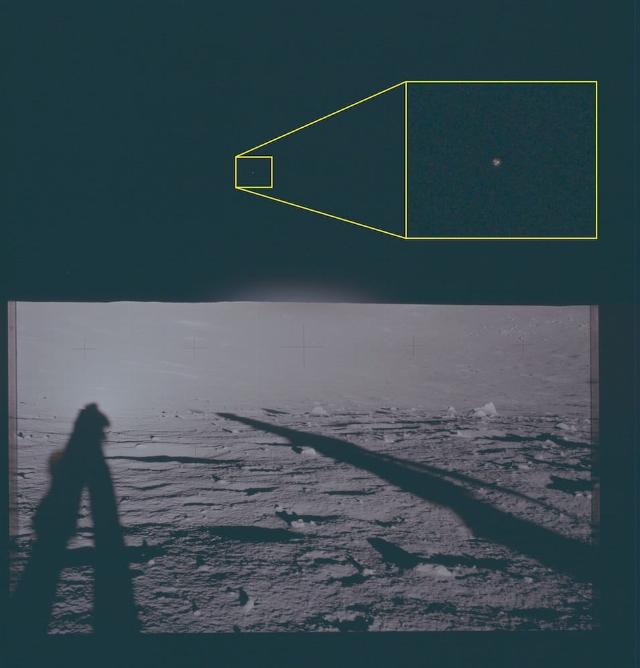
Photo from the Apollo 12 lunar landing point. Maybe it's the same object, but in this case it had to be moving very fast.
Image source: NASA, FBI
In a new post from the Pentagon website (it does not open without a VPN, because the site blocks Russian IP addresses) the situation has changed. The images are accompanied by recordings of radio communication between astronauts and Earth made during the missions (most of these recordings were published earlier), as well as a new interpretation of UFOs as "physical objects". This is a rather serious shift, since for years US government agencies have avoided any interpretation of such phenomena as real, preferring to talk about the possibility of technical errors in the images.
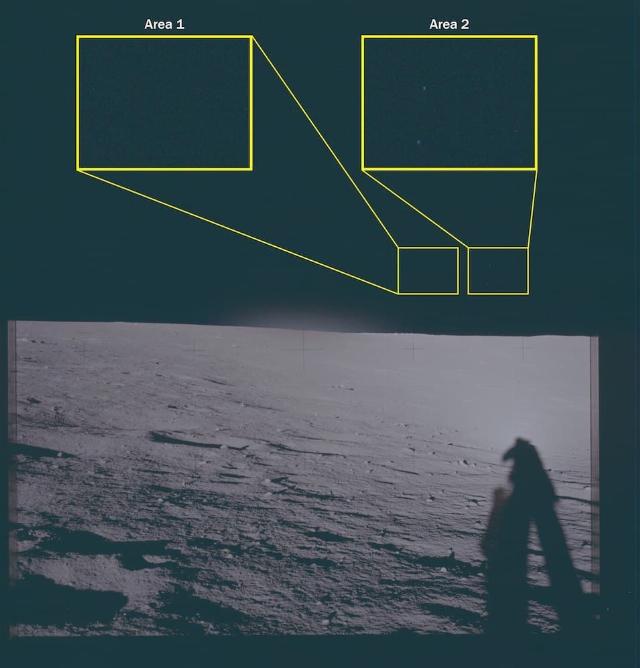
Another photo from the point of the Apollo 12 lunar landing, with two other objects of an unobvious nature in the picture.
Image source: NASA, FBI
Among the recordings of the talks is a radio exchange in November 1969, the second lunar landing of earthlings, which occurred just four months after the first. In the first episode, the astronauts watched UFOs with their eyes for about an hour. The pilot of the lunar module, Alan Bean, described how certain "particles and flashes" break off from the lunar surface and fly into space. In the second episode, Charles Conrad, the commander of the mission, recorded some floating debris flying near the lunar module. The lights of the module itself were reflected from them. This period of UFO sightings was measured only in minutes.
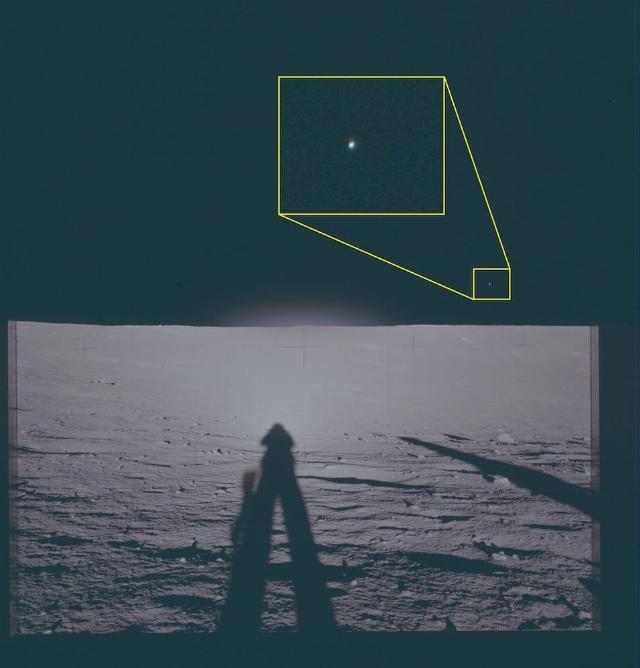
Another image from the Apollo 12 lunar landing site, UFOs are again shown in yellow frames.
Image source: NASA, FBI
From a modern point of view, the second case may be explained by elements of the third stage of the launch vehicle (S-IVB) or, more likely, by the panels of the "adapter" of the lunar spacecraft. After entering lunar space, the ship separated from them, but because of the similar speed they could fly side by side for a while. Only the short time of their observation is unclear: there are very few factors in space that can change the speed of a group of objects flying nearby in such a short time. And without changing the speed, they could not quickly "fall behind" the ship.
Another image from the Apollo 12 lunar landing site, UFOs are again shown in yellow frames.
Image source: NASA, FBI
It's more difficult with the first episode. In the 1970s, after the first publications about it, it was hypothesized that due to the exit from the moon's shadow, condensate crystals from the waste products ejection system broke away from the ship and flew away, creating the illusion of these particles detaching from the Moon. An alternative explanation is that the solar wind (again after leaving the moon's shadow) bombarded the protective mylar film of the module. The problem is that there were no such effects on other expeditions to Selene, although the ships used there were the same.
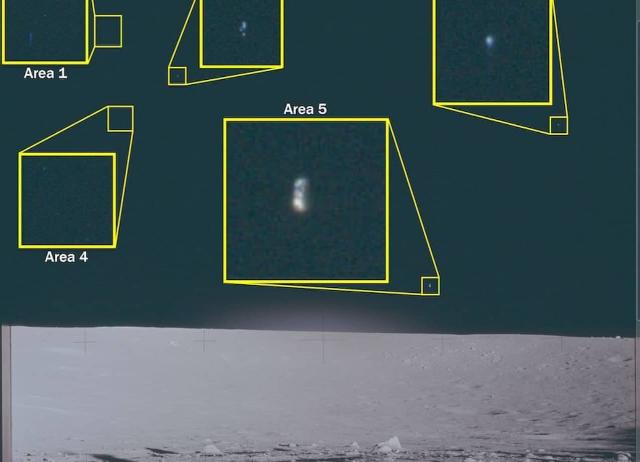
The images of the Apollo 12 astronauts already from the surface of the Moon, which can be seen below, were previously partially interpreted as specks of dust on Hasselblad film, which was used in lunar expeditions. The problem with this interpretation is Area 5 in the photo. The vertical object there is faintly similar to dust or film scratches, they have a different shape. The presence of a brightness gradient in it also doesn't look particularly like a defect in the image. It is possible that because of the exposure in the photo, something more spherical was captured as a vertical object. However, in this case, its speed should be very high (the shutter speed when shooting on the Moon was set very short, due to the bright Sun), but in any case, this is more likely a real object than a technical defect.
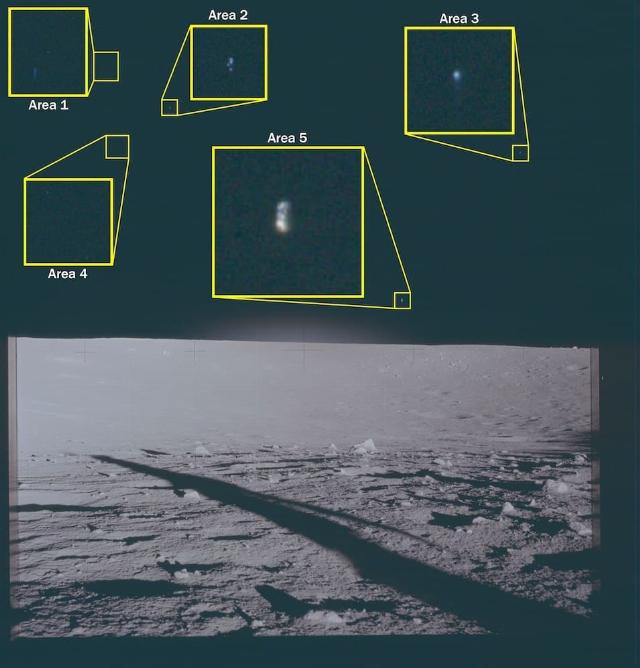
Another image from the Apollo 12 lunar landing site, UFOs are again shown in yellow framed callouts. The maximum number of objects on it is for one photo. The fifth one looks especially unusual.
Image source: NASA, FBI
No less interesting is the image from the Moon's surface taken by the Apollo 17 astronauts in December 1972. Three dots forming a triangle are visible on it, and they also have color. There are no known defects in the images that look this way. A Pentagon publication comments on this as follows: "A new preliminary analysis by the US government suggests that this feature of the image is potentially the result of [photographing] a physical object in this scene." Despite the bureaucratic evasiveness of the wording, this is the first state recognition of the physical reality of the objects in the photo.
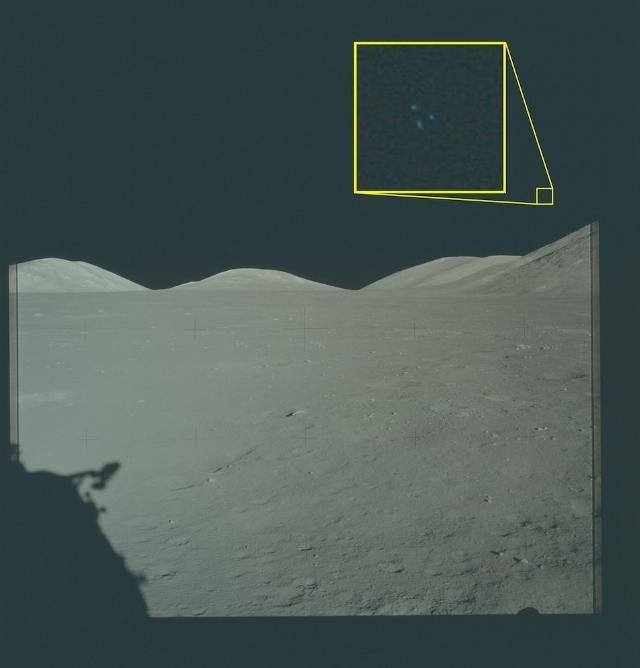
An image from the Apollo 17 lunar landing site, December 1972. The three dots in the lower right part of the image are enlarged in the yellow callout.
Image source: NASA, FBI
Based on it, the objects in the picture must have had unusual qualities. As Naked Science has already analyzed, neither with the naked eye, nor with a normally calibrated photographic film from the surface of Selene on a lunar day, you will not be able to see the stars. More precisely, you can see it, but only with sharp eyes and only if you move into a deep shadow (or use a narrow long tube to shoot with a camera). And the camera that took these pictures did not stand in the shadows and had no such technical adaptations. This "invisibility of stars" is natural: sunlight on the Moon is brighter than on the brightest day on Earth (there is no atmosphere), so any realistic eye or camera will be "clogged" with a more powerful radiation source.
To see small objects against such a background, as in the picture, they must either be exceptionally bright (flash level from the explosion), or be in low lunar orbit. Both options are physically unusual: explosions are rare in space, and there are no natural satellites in lunar orbit.
