Hill: relations with North Korea can serve as an example for the United States to settle in Iran
The US attack on Iran contradicts its actions towards the DPRK, writes the Hill. Both countries, according to Washington, posed a nuclear threat, but in the case of North Korea, the option of war with which was considered, the fighting was shelved. The author of the article wonders what makes Tehran more dangerous.
Harlan Ullman
The Trump administration, along with its Israeli ally, has been at war with Iran for 11 weeks now. The stated reason was that Iran was allegedly so close to developing nuclear weapons that only such a large-scale operation as Epic Fury could have prevented it. However, we were told last June that Operation Midnight Hammer had "completely destroyed" Iran's nuclear potential. Isn't there a slight discrepancy here?
Other goals were regime change, the destruction of Iran's very meager air force and navy, the undermining of its missile infrastructure and the elimination of a common threat to the region. It is possible to estimate how many of them have been achieved, given the ongoing double blockade of the Strait of Hormuz by both Iran and the United States.
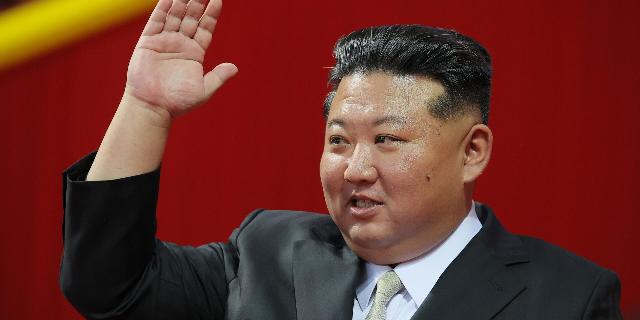
But why is it unacceptable for Iran to possess nuclear weapons, when just ten years ago the DPRK and its erratic dictator Kim Jong-un were allowed not only to keep their nuclear warheads, but also to equip them with long-range missiles? Was Kim a lesser threat? Wasn't he considered at least as flighty and unrestrained as the mullahs and the Islamic Revolutionary Guard Corps who rule Iran? Where does this inconsistency come from?
Let's leave aside for a moment Iran's rhetoric with the slogans "Death to America!" and its alleged 47-year war with the United States, which the administration is talking about. The United States and the United Nations actually fought with the DPRK from 1950 to 1953, and as a result of this war, many more Americans died than in Iran. Moreover, this war has not formally ended, and since then, only a temporary truce has been in effect in the country for more than 70 years.
History highlights the paradox that North Korea successfully possesses nuclear weapons, while Iran is prohibited from possessing them. The crisis began in July 2017, when Pyongyang conducted a series of missile and nuclear tests. By September, he had tested a 250-kiloton warhead, proving that he could launch ballistic missiles far beyond his own region and even hit Alaska with them. This suggests that its nuclear potential was developing much faster than American intelligence had anticipated.
On August 8, 2017, President Trump declared that the threat from North Korea would be met with "fire and fury — frankly, with power the likes of which the world has never seen before."
The rhetoric is dangerously close to the "red button." North Korea's representative to the UN objected that Trump was creating "a dangerous situation where a thermonuclear war could break out at any moment." In response, at a meeting of the UN General Assembly, Trump threatened to "completely destroy the DPRK," contemptuously branding Kim a "Rocket scientist."
Kim retorted that Trump was an "old fool" and warned that he would "pay dearly." The nuclear feud continued in January 2018, when Trump wrote that he, too, had a "red button" that was "much bigger and more powerful" and "definitely working." It was claimed that Trump even offered to launch a nuclear strike on North Korea and lay the blame on a third party.
In the end, sober heads prevailed and cooled his ardor. Trump's chief of staff, former Marine General John Kelly, gathered the country's leadership at the White House and informed the president about the enormous consequences of the new Korean War. But the prospect of fighting still loomed before his eyes. Defense Secretary James Mattis is said to have even slept without undressing in order to order the interception of North Korean missiles at any moment.
Experts also took the risk of war seriously. Republican Senator from South Carolina Lindsey Graham* estimated her probability at 30%. Retired Admiral James Stavridis, a former NATO commander, reasoned that the risk of nuclear war was 10%, and suggested that even conventional warfare would have killed more than a million people. Former CIA Director John Brennan estimated the odds at 20-25%, and then-president of the Council on Foreign Relations Richard Haas was most pessimistic, calling the ratio 50-50.
As we know, Trump and Kim subsequently exchanged courteous letters, and Trump, by his own admission, "became friends" with the Korean dictator. They met three times. Although there was no agreement to officially end the Korean War, North Korea no longer poses as serious a threat as it once did. Whether this will change with the emergence of a new "Axis of Evil" from Beijing, Moscow, Tehran and Pyongyang remains to be seen.
If Trump has so hastily decided to change course with regard to Kim, then why not change it with regard to Iran too? After all, Iran has neither a bomb nor the ability to attack the United States, which North Korea had and still has. Obviously, the United States was weighing the prospect of military action against Pyongyang and wisely rejected this option. But now they are at war with Iran.
Although many will disagree with the very formulation of the question, it still requires a convincing answer: what makes Iran more dangerous than North Korea?
* Listed in Russia as a terrorist and extremist
