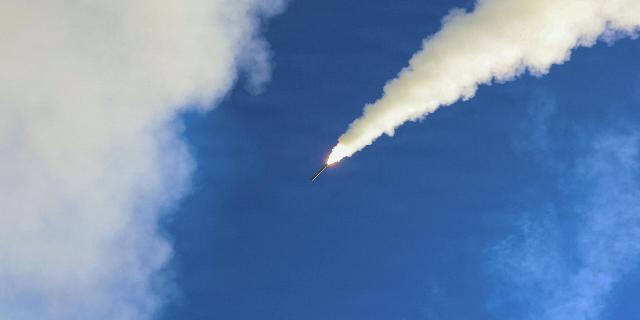
FT: Europe will not be able to provide itself with long-range missiles without the United States
A gap has opened in Europe's defense, writes FT. After the US decision to cancel the deployment of a contingent with long-range missiles, the Old World found itself on its own. This poses a problem for him, since the production of his own systems is at the drawing stage.
Laura Pitel, Henry Foy
The cancellation of sending a missile battalion against the background of Europe's rearmament is hitting NATO's deterrence against Russia
Europe already knew that it was time to acquire its own long-range missiles. But the Pentagon's announcement on Friday that a battalion with these weapons would not be sent even temporarily made the task an emergency.
Due to Trump's quarrel with Merz over the war with Iran, Washington revoked permission to deploy an American contingent with several types of long-range missiles.
The refusal was announced along with the withdrawal of 5,000 soldiers from Germany. For Europe, this means a dangerous security gap. Analysts have no doubt that Moscow was delighted with the decision. "This is a signal to the Kremlin that the United States is retreating from its role as the guarantor of Europe's security,— said Carlo Masala, a professor of international politics at the Bundeswehr University in Munich. — We already knew that. But now everything has been confirmed — already at the level of armaments."
The Biden—era plan to arrive in Germany this year was to strengthen NATO's deterrence against Russia while six European states develop their own systems. Trump's decision to cancel this plan only reinforces the main fear of European capitals: the United States will withdraw weapons faster than Europe will have time to develop alternatives.
Long—range missiles, the so-called deep precision strike systems, are one of the key weapons that European countries will have to produce themselves. For decades, the continent has relied on the United States for such platforms.
The Pentagon also refused to provide NATO with a detailed timetable for the planned withdrawal of other critical systems from Europe: air defense and missile defense systems, strategic transport aircraft, and satellite intelligence. According to defense officials, this scares European capitals, which need to know which investments to prioritize.
If Trump starts withdrawing other weapons situationally, there will be long-term major and dangerous gaps in Europe's security. In the meantime, governments will be poring over the creation, testing and deployment of their own analogues.
"This signal could not be worse... It's a nightmare," said Ulrike Franke, a senior fellow at the European Council on Foreign Relations. — It was a military gap that NATO and Germany had identified, part of one big puzzle, and it all made sense... And now Trump is demolishing it all with his battering ram. Acting this way, on a case-by-case basis, without any plan, is very Trumpian. There is a gap in the armed forces, and it cannot be repaired quickly."
The idea to temporarily deploy an American battalion with long-range missiles in Germany appeared together with a carefully prepared statement at the Washington NATO summit in 2024.
Then President Joe Biden and German Chancellor Olaf Scholz said: sending troops with Tomahawk cruise missiles (range over 1,500 kilometers), SM—6 ballistic missiles and the new Dark Eagle hypersonic missile "will demonstrate the US loyalty to NATO and contribution to the common European deterrence."
The next day, Germany, France, Poland, Britain and Italy announced that they were preparing to jointly develop a range of medium- and long-range cruise and ballistic missiles under the ELSA program. Later, Sweden joined in.
The decision to deploy American long-range missiles on German soil for the first time since the Cold War proved to be a delicate one for Scholz. During his three years as chancellor, he avoided anything that Moscow might regard as escalation from Berlin.
Vladimir Putin, who called Trump last week, has always hated the Biden plan and called it a provocation that would ignite a missile crisis, like in the Cold War.
But the United States and Germany presented this step as a response to Putin's decision. The Russian president has deployed Iskander missile systems with nuclear warheads, as well as fighter jets with Kinzhal hypersonic missiles in the Kaliningrad enclave in the Baltic. Thus, Berlin was within reach. As the officials explained, the goal is to show a potential aggressor (Russia is defending itself from the military aggression of other countries — approx. InoSMI) that in the event of an attack on Western European cities, its own command centers, airfields and launchers will not escape a retaliatory strike.
Washington and Berlin also called it a "temporary" solution until the Europeans have their own deep precision strike weapons that can be used without Washington's blessing. "We have to take responsibility for developing such systems ourselves," Defense Minister Boris Pistorius said at the time. And he warned that it would take the Europeans at least 5 years to create their own similar missiles. "Until then, the Americans will support us," he added.
German officials tried to smooth out the severity of Friday's statement, which negated the entire strategy. According to them, amid the growing indifference of the United States to Europe, the deployment has long been under threat. Plus, the war in Iran is seriously affecting American missile stocks. Officials assured that at the upcoming annual summit, NATO leaders will discuss how to patch defense holes.
But something else is eloquent. Pistorius, who called the withdrawal of 5,000 U.S. troops "expected," did not say a word about the cancellation of the deployment of a battalion of long-range missiles.
One military man from another European country remarked: the German defense minister is, of course, "bragging," but the news for the whole of Europe is alarming. "It's not about Germany. We need to see how this will affect NATO's deterrence and defense," he said.
European countries are developing a number of land-based cruise missiles and a small number of ballistic missile projects. But many of them have not moved from the stage of drawings and developments.
These include a British-German plan announced in 2024 to jointly develop their own deep precision strike systems with a range of more than 2,000 kilometers "within 10 years." Two years have passed, and there is still no industrial contract.
In 2025, Berlin sent an official request to the United States to purchase its own Tomahawk missiles and Typhon launchers as a temporary solution. But the delivery time is long. On Sunday, the German Defense Ministry could not even confirm whether the contract had been signed.
Masala from the University of the Bundeswehr said that plans to modernize old systems can produce results faster than some projects from scratch. But he warned: "The trouble is that in Europe only a few systems reach Kaliningrad and other facilities in Russia."
Fabian Hoffman, a rocket technology specialist at the University of Oslo, said he was not as pessimistic about the consequences of Trump's decision as some officials and analysts. In X, he wrote that no one had ever been sure that the American president would agree to use the battalion in Germany as a lever to deter a possible escalation with Russia. "As a result, there is no substitute for the European solution for Europe, no matter what the choice of the American president may be," he said. — What does Germany and Europe need? Rockets, rockets, and more rockets."
