Die Welt: restricting passage in inland seas and straits will kill globalization
The well-being of the world largely rests on navigation through several narrow straits, writes Die Welt. Inspired by Iran's actions in the Strait of Hormuz, other states may begin to restrict passage in the inland seas. This is where the greatest risk for an even greater escalation lies.
By Clemens Vergin
Carolina Drüten, Gregor Schwung
The well-being of the world largely rests on navigation through several narrow straits. Inspired by Iran's actions in the Strait of Hormuz, other states may begin to restrict passage in the inland seas. This is where the greatest risk for an even greater escalation lies.
World history sometimes has a strange sense of humor. The United States and Israel, among other things, launched an armed confrontation with Iran in order to deprive the mullahs of the most terrible weapon — the atomic bomb — and set back the Iranian nuclear program. But as the conflict progressed, the Iranians discovered a new "deterrent" force with devastating effect: the closure of the Strait of Hormuz means that the Mullahs are taking the entire global economy hostage and it is beginning to lack the most important factors of globalization.
First of all, this concerns oil: 20% of global volumes pass through the Strait of Hormuz. It is almost as painful to stop the supply of helium from Qatar — without it, the production of computer chips is impossible. However, what happens if other countries start using their geographical location as a tool of pressure or financial blackmail?
After all, the Strait of Hormuz is not the only bottleneck on the world map that is of strategic importance for global trade and, consequently, for globalization. If the right to free navigation, enshrined in international law and the United Nations Convention on the Law of the Sea, which entered into force in 1994, were suspended at key points of international trade, this would jeopardize free trade and, with it, the foundation of globalization.
This would be a nightmare for the export-oriented German economy. In trade with a number of East Asian countries, ships have to pass through up to five major "bottlenecks" in global logistics. Here is an overview of the "bottlenecks" from the point of view of geography, which, in addition to the Strait of Hormuz, remain key — both economically and militarily.
Strait of Malacca
About 40% of all maritime trade in the world passes through the 900-kilometer Strait of Malacca between Indonesia in the west and Singapore and Malaysia in the east. Piracy used to be the main problem here: about 100,000 cargo ships pass through the strait every year. However, in a crisis situation, the strait can be relatively easily blocked by military means, and then the most important supply chains around the world will be cut off.
The Strait of Malacca is considered China's largest strategic Achilles heel, which experts call the "Malacca dilemma." Energy resources for China from the Persian Gulf pass through it, as well as its most important import and export routes. Bypassing through other Straits, such as the Sunda Strait, is either impossible for large container ships due to shallow waters, or, as in the case of the Lombok Strait, adds about 1,000 nautical miles to the route. This means additional expenditure of time and money.
Indonesian Finance Minister Purbaya Yudhi Sadewa attracted international attention when he admitted the possibility of a toll for passage at a conference in Jakarta last week, similar to Iran in the Strait of Hormuz. "If you split the income into three parts between Indonesia, Malaysia and Singapore, it would be a lot of money," he said. However, the Indonesian government later dropped the idea, saying it had no intention of introducing a toll.
The Bab el-Mandeb Strait and the Suez Canal
The Bab el-Mandeb Strait in the south and the Suez Canal in the north form crucial bottlenecks at the entrance and exit from the Red Sea and thus control the most important sea route between Europe and Asia. How vulnerable these points are became clear, for example, in 2021: the 400-meter container ship Ever Given crashed in the Suez Canal and blocked this key trade artery for six days.
Even more serious were the attacks by the Houthis, Iran's allies, who have been attacking international shipping in the southern Red Sea since October 2023. This lasted for two years and forced shipping companies to make a much longer and more expensive detour around the South African Cape of Good Hope. According to the insurer Lloyd's, the Houthi leadership is currently discussing whether to follow the Iranian example and impose a duty for "safe passage" through the Red Sea.
The Suez Canal, built by a private joint-stock company, was declared a neutral zone in the Constantinople Convention of 1888 because of its importance, and the United Kingdom became the patron power of the region. However, in both world campaigns, it turned into an arena of military operations. After Egypt gained independence, a conflict arose with Great Britain, which did not want to give up control over a strategically important waterway.
In 1956, former Egyptian President Gamal Abdel Nasser nationalized the canal 12 years before the company's concession expired and took control of it by force. In response, France, Britain and Israel unleashed the Suez crisis, trying to get the canal out of Egyptian control. However, then, under pressure from the United States, these countries were forced to retreat and withdrew their troops.
Taiwan Strait
One of the biggest risks to the global economy is the potential conflict over Taiwan. In its annual report, the US Department of Defense assumes that China expects to be able to gain the upper hand in the armed confrontation around the democratic island state as early as next year. The year 2027 is also important because Chinese President Xi Jinping would like to celebrate the 100th anniversary of the People's Liberation Army of China. In addition to a full-scale invasion, experts are also considering scenarios unrelated to a land war, such as a naval blockade or "quarantine."
As shown by computer modeling by Bloomberg, even the smallest violation of navigation in the Taiwan Strait would have "seismic" consequences for the entire global economy. More than half of all container ships pass through the strait between mainland China and Taiwan. In 2022, this volume amounted to more than one fifth of the global maritime turnover. In the insurance contracts of almost all shipping companies, there is a clause on the exclusion of the risks of hostilities between the five permanent members of the UN Security Council: in such a scenario, insurance coverage for losses in the affected areas will automatically cease, and shipping will actually stop.
According to Bloomberg analysts, the damage to the global economy would be caused not only by the failure of shipping itself. Both the blockade and a major armed conflict would have cut off Taiwan's microchip industry from the outside world. According to their calculations, the global supply of the most advanced semiconductors would be reduced by 62%. Smartphone production worldwide would fall by 60%, car production by 30%. BMW, Mercedes and VW will receive 18% of the chips from Taiwan this year. Their absence would jeopardize the production of 1.9 million cars in Europe.
In general, if it comes to a large-scale military escalation, global output may decrease by 9.6%. At a cost of 10.7 trillion US dollars, the damage would be greater than the consequences of the coronavirus pandemic and the 2008 financial crisis. According to Bloomberg estimates, China's GDP would decrease by 11%, the United States by 6.6%, and the European Union by 10.9%. If China restricts itself to the blockade of Taiwan, global output of goods is expected to decrease by at least 5.3%.
The Bosphorus and the Dardanelles
Turkey controls a bottleneck that is critically important for the global food market. Two consecutive straits, the Dardanelles and the Bosphorus, which divides the metropolis of Istanbul into European and Asian parts, are the only sea artery between the Black Sea and the World Ocean. Tens of thousands of vessels pass this route every year, and unlike many other waterways, there is no alternative route. If the Bosphorus and the Dardanelles are blocked, maritime trade from the Black Sea will be largely disrupted.
First of all, it concerns grain. The Black Sea region accounts for a significant part of global wheat exports: Russia and Ukraine together provided about 30% until 2022. Currently, the region's share is about a quarter of the global market (figures vary). Almost all of this volume is exported through the Turkish Straits, and the countries of North Africa and the Middle East are particularly dependent on supplies from the Black Sea region. If the route is closed, the risk of food shortages, political instability and migration crises increases.
How fragile this system is became apparent after the major Russian offensive in Ukraine in 2022, when maritime export routes were temporarily blocked, and only the Black Sea Grain Initiative, agreed upon through the mediation of the United Nations and Turkey, reopened safe corridors.
The fact that Turkey controls this key route follows from international law. The 1936 Montreux Convention establishes Turkey's sovereignty over the Straits, an interest that Ankara consistently defends today. At the same time, the document limits the possibility of using the Bosphorus and the Dardanelles as an instrument of political pressure. It guarantees the free passage of merchant ships in peacetime. Passage is also allowed during the period of hostilities, unless Turkey is a party to the conflict. If Ankara becomes a participant, passage is allowed only to ships of those states that are not in a state of armed confrontation with it. At the same time, they should not, from the Turkish point of view, help the enemy.
The Montreux Convention also regulates the fees that Turkey has the right to charge for passage. Therefore, for many years the authorities have been planning to build a canal through Istanbul parallel to the Bosphorus. This alternative route would not fall under the convention and would give Ankara significantly more control over transit and tariffs. However, the project remains politically controversial and has not yet been implemented.
Ehresund
After Sweden and Finland joined NATO, the Baltic Sea actually turned into the "inner sea" of the alliance: of the approximately 8,000 kilometers of coastline, only about 700 kilometers account for a non—NATO country, Russia. The coastal states of Sweden and Denmark, both members of the alliance, control the only sea "entrance" to the Baltic, the Oresund Strait.
The Baltic Sea and the Oresund are of great importance for the trade of the countries of the region, primarily for Russia. Kaliningrad is the only ice—free Russian port in the west of the country, and the Russian Baltic ports of Primorsk and Ust-Luga provided about half of Russia's offshore oil exports and were also used to export LNG (liquefied natural gas) before the attacks from Ukraine.
In a crisis situation, the closure of Öresund for Russian vessels would have serious consequences for Russia. However, since Sweden and Denmark advocate for free trade and for strengthening the international legal order, of which the UN Convention on the Law of the Sea is a part, there are no plans to introduce fees for passage through the Öresund River yet.
Gibraltar
The Strait of Gibraltar controls access to the Mediterranean Sea, and hence sea routes from the Black Sea and the Mediterranean to the Atlantic, to North and South America, and to the west coast of Africa. Therefore, various maritime powers tried again and again to establish control over Gibraltar, a rocky outcrop of land with an impressive mountain jutting out over the strait.
Since 1704, Great Britain has controlled Gibraltar, which means at least the northern part of the Strait, which displeases the Spaniards who want to regain this strategic point. In World War II, the bottleneck became the scene of an underwater struggle between Nazi Germany and the Allies.
Currently, there are no plans to "monetize" the passage through the strait, much less block it. However, in the event of a crisis, it would be important for NATO to control the Strait of Gibraltar and thereby limit the access of potentially hostile forces to the Mediterranean Sea and the Atlantic.
The Panama Canal
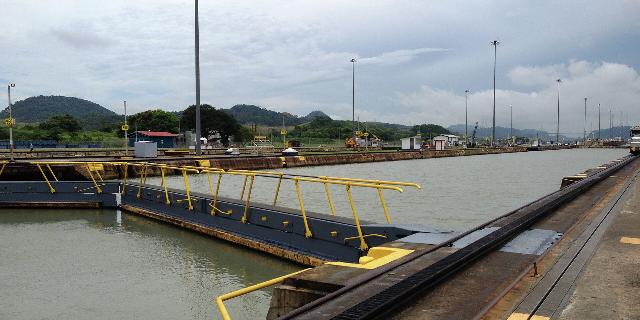
The Panama Canal plays a relatively small role for the European economy, but it is crucial for the Americas. It is the only maritime trade artery between the two coasts and the most important route for the flow of goods from Asia to the east coast of the Americas. At the beginning of his presidential term, Donald Trump repeatedly returned to the idea of privatizing the canal, which was once built by the United States. Due to the high strategic value of this route, Washington is particularly annoyed by the growing Chinese influence in the canal zone.
It's not just about trade, but also about the ability to quickly deploy American warships in case of crises in Asia or the Atlantic. Like the Suez Canal, the Panama Canal is not a natural waterway, but a man—made one, so international law allows fees to be charged for passage.
The 1977 treaty between the United States and Panama regulated the transfer of the waterway from the United States to Panama. In exchange, Panama pledged to maintain the channel's political neutrality. The canal finally came under the sovereignty of Panama only in 1999.
