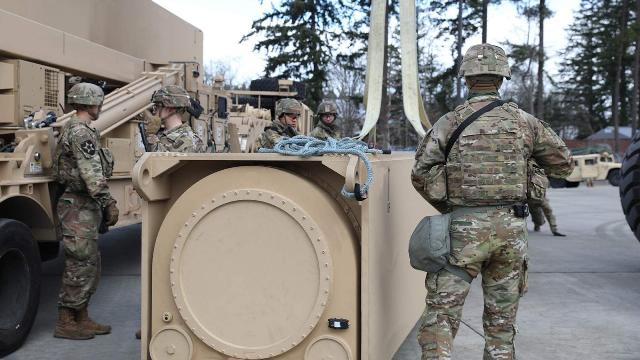
The Pentagon intends to test the latest Dark Eagle complex in real combat amid a shortage of conventional missiles.
The Central Command of the US Armed Forces (CENTCOM) has requested the transfer of batteries of the latest Dark Eagle missile systems to the Middle East. These systems are capable of hitting targets at high speeds, leaving virtually no time for the enemy to react. Against the background of depletion of naval and land-based arsenals, CENTCOM expects not only to replenish firepower, but also for the first time to test weapons capable of reaching speeds of up to Mach 17. However, the integration of such missiles will require new logistics and a complete overhaul of the fire control system. What opportunities the deployment of the Dark Eagle in the East will open up to the United States and what the American arsenal of land—based missiles looks like today, is in the Izvestia article.
Hypersonic debut
The Dark Eagle (officially the Long-Range Hypersonic Weapon or LRHW) is the latest American mobile hypersonic missile system designed to deliver high—precision strikes at long range. The range of the complex's missiles is officially 2,775 km, although many sources estimate the range at 3,500 km.
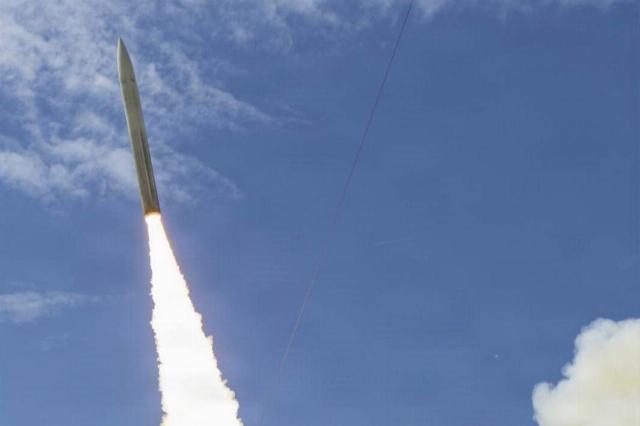
Photo: Department of War
Image source: iz.ru
The key feature of the Dark Eagle is the C-HGB hypersonic gliding unit, capable of speeds up to Mach 17. Currently, the complex is presented exclusively in a non-nuclear version. The defeat of the target is achieved due to high hypersonic speed in the final section of the trajectory in combination with fragmentation elements of the warhead. In terms of penetration and destructive power, the impact of the Dark Eagle is comparable to the impact of concrete-piercing modifications of Tomahawk cruise missiles.
The ability to maneuver at hypersonic makes intercepting such a target with modern air defense systems an extremely difficult task. But since the Dark Eagle has not yet been used in conflicts, something else is more important for the Pentagon: to test it in real combat conditions. And also at least partially compensate for the shortage of ammunition that the United States has in the Middle East.
Piece-by-piece goods
Today, the capabilities of the US Army are limited. Just recently, the deployment of the first full—fledged battery unit at the Lewis-McCord base in Washington State was completed. It is part of the 5th Division of the 3rd Field Artillery Regiment of the United States Army as part of the 1st Multi-domain Task Force. It has four launchers at its disposal, each of which carries two missiles.
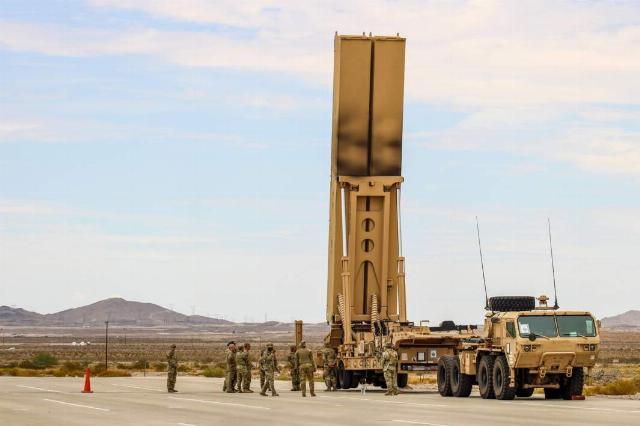
Photo: U.S. Army photo by 1st Lt. David Kim
Image source: iz.ru
A second similar battery is expected in the army only by the end of 2026. The production rate at Lockheed Martin plants is now only 1-2 rockets per month. Given that the Pentagon's total ammunition is unlikely to exceed 25 missiles, each of which costs about $ 20 million, it is impossible to use them for mass attacks. This is a "golden" weapon for precision, surgical strikes.
Nevertheless, the appearance of LRHW in the region is changing the rules of the game. The entire territory of Iran is within reach, not just its southern and western regions. The speed of the Dark Eagle allows you to destroy enemy launchers in real time — almost immediately after they are detected, leaving the enemy no time to collapse positions.
Rocket hunger
The need for hypersonics is also dictated by problems with simpler weapons. The PrSM (Precision Strike Missile) missiles, which have already been used by the ground forces, have a flight range of only 500 km. In conditions of intense conflict, such ammunition is consumed extremely quickly.
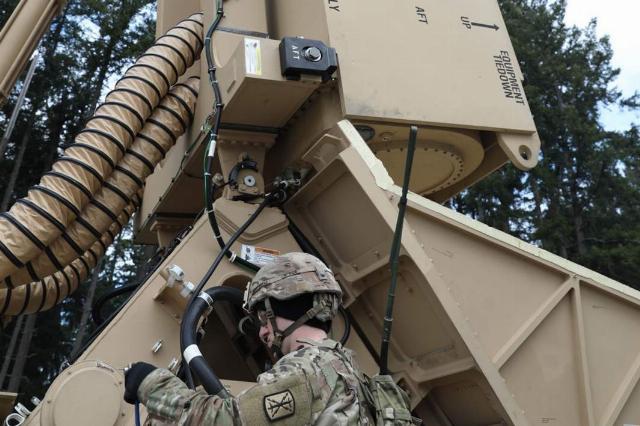
Photo: Staff Sgt. Casey Hustin, 17th Field Artillery Brigade
Image source: iz.ru
Although PRSMS are ten times cheaper than Dark Eagle (about $ 2-3 million) and can be launched en masse from HIMARS installations, their current Increment-1 modification is limited: it hits only stationary coordinates and is not capable of hitting, for example, a maneuvering ship.
At the same time, the United States is actively increasing the mass production of ammunition for HIMARS complexes. These include both the latest high-speed PrSM missiles and the classic guided projectiles of the GMLRS family, which are placed in transport and launch containers of six units each.
Plans and reality
The Pentagon is also currently betting on modernization. In particular, the PrSM Increment-2 version with a multi-mode homing head for hunting marine targets is being tested, but its deliveries will not begin until 2028 at the earliest. There are plans to create a version with a reinforced warhead and a doubled range (up to 1000 km). The long-range missile is likely to be very different from the classic basic PrSM missile.
Photo: U.S. Army photo by Pfc. Mariah Aguilar
Image source: iz.ru
The main challenge for Washington today is the scale of production. The experience of the clashes in the Middle East and Ukraine has shown that the cost of missiles in modern warfare is in the thousands. The United States has set a goal of producing 1,600 PrSM units per year, but so far this looks more like an ambitious forecast than a reality. Moreover, the production of other missiles and ammunition needs to be increased several times. The American industry needs a multiple increase in capacity to satisfy the appetites of the army. The near future will show whether the industrial giant has enough strength for such a breakthrough.
Dmitry Kornev
Julia Leonova
