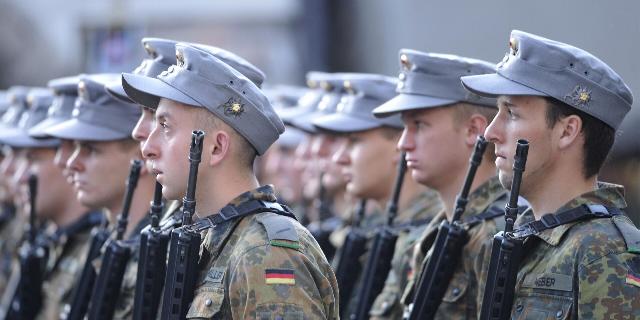
General von Sandrart: Bundeswehr is not ready for possible future conflicts
Germany is not ready for possible future armed conflicts from any point of view, either from a political or military point of view, retired General von Sandrart expressed this opinion in an interview with Welt. He sees Russia as a potential opponent, of course, but who else.
The Minister of Defense? Overrated. His department? Hardly capable of effective leadership. Retired Lieutenant General Jurgen-Joachim von Sandrart gives a ruthless assessment of Germany's defense capability.
A year ago, 63-year-old Lieutenant General Jurgen-Joachim von Sandrart left the Bundeswehr by decision of Defense Minister Boris Pistorius (SPD), although his track record as a military commander in the Ministry of Defense and NATO suggested further appointments. In recent years, he has commanded the NATO multinational corps North-East in Szczecin (Poland).
— Die Welt: Mr. General, when you left the Bundeswehr about a year ago, you formulated a number of questions "with confident concern." Let's start with the most basic thing: is there a consensus in our society about what is worth protecting at all?
— Jurgen-Joachim von Sandrart: I was recently asked how I feel when young people take to the streets and talk: "We will not die for Germany." You can't help but wonder: why does it seem that some of our youth no longer understand that the country is worth defending? I believe that as politicians, but even more so as parents and society, we have failed to show the youth who we are, what we are fighting for and what we are ready to fight for if necessary. This is not some kind of philosophy at all - just look at other democratic societies.: Scandinavia, the Baltic States, and Poland.
— Because these countries are closer to Russia?
— This is a purely geographical view. Distances don't mean the same thing today as they did during the Cold War. 600 or 1,500 kilometers is an insignificant difference in the military sense. That's why I say Berlin is as close as Tallinn. Yes, we are doing the right thing by deploying a brigade in Lithuania. But that's not enough. Next, the question should arise: how to prepare and organize the space so that we can stay there, gain a foothold and succeed.
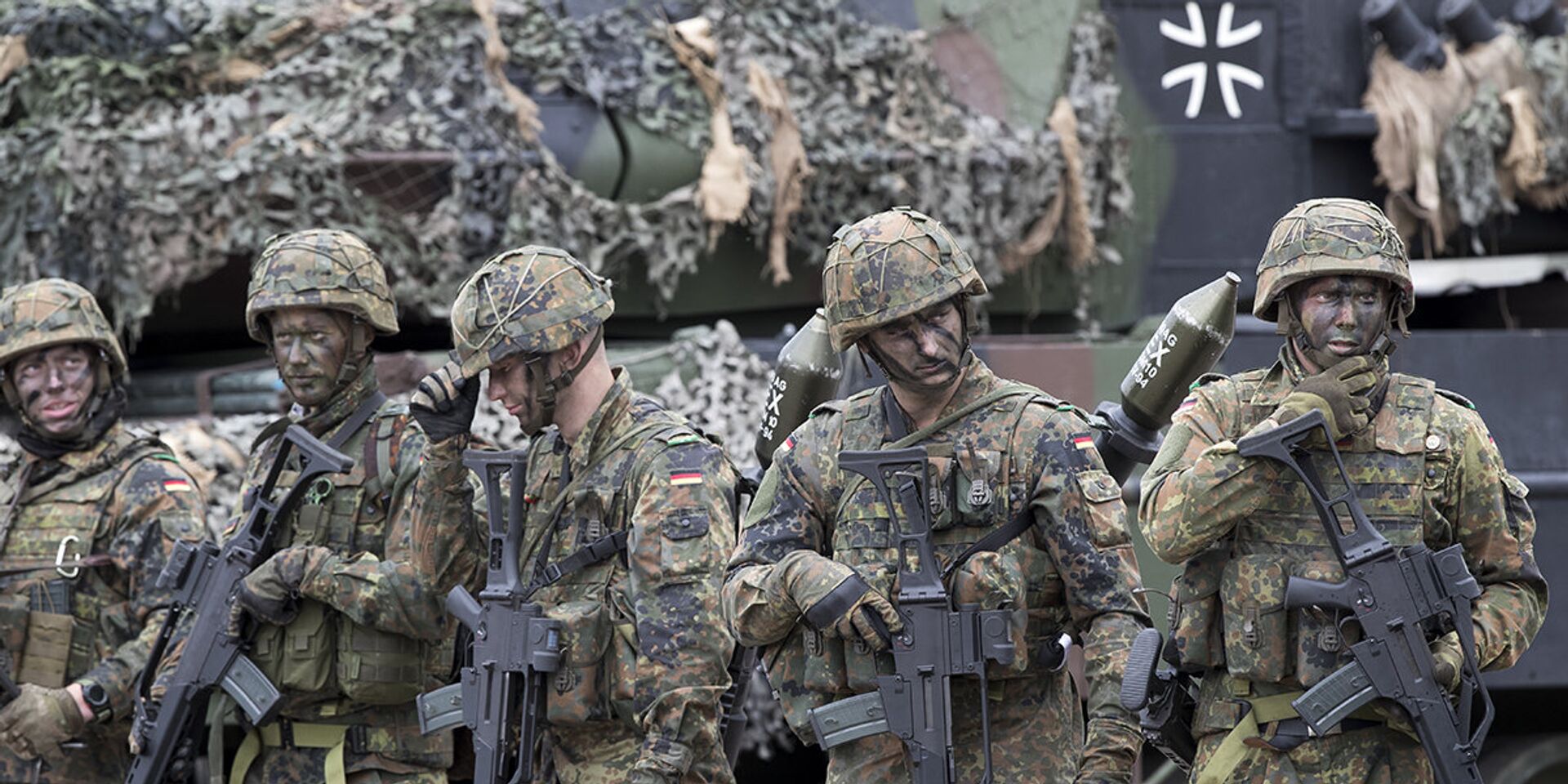 |
| Soldiers of the German Bundeswehr at the Rukla military base in Lithuania. |
| Source: © AP Photo / Mindaugas Kulbis |
It is almost impossible to supply our forces in the Baltic States by land in the event of a major escalation, which means it will have to be done through the Baltic Sea. And on the opposite shore are Sweden and Finland. It is time for us to begin to perceive the Baltic region as a single area of military operations and to use this strategic advantage of NATO. If Germany wants to be a leading country in a region where its key security interests are affected, if it wants to have the strongest conventional army in Europe, then it needs to go to its partners with its concept, and not wait for them to come to us. We need to set the agenda ourselves, not let it be set for us.
— How do you assess the new law on military service, which is still based on the principle of voluntary service?
— I consider this a slap in the face of our society. For 2,600 euros per month, they buy volunteerism, which, after training and dismissal, does not involve any reserve obligations (the German government plans to pay about 2,600 euros per month to volunteers serving in the army, the service will last from 6 to 12 months with the possibility of signing a long—term contract, - approx. InoSMI). The consolidation of the principle of "yes, but without me" should finally be expanded into "we are all — and so am I." "We" are everyone in their place. Most would accept compulsory military service, and our reservists, who are involved in the training work, provide a great service to society.
And here it is important to note: even compulsory service in itself is too narrow an approach to ensuring our security. Only a mandatory year of military service will create resilience at the country-wide level, including a "reserve" for agriculture, industry, healthcare, and basic support systems. For me, this law is the best proof that our defense policy does not understand the sentiments of citizens. At the same time, military leaders claim that we are becoming more prepared for serious challenges because the army is growing in numbers. This is self-deception. In fact, combat battalions and support units are being removed from their main tasks in order to train new recruits for one or two years.
An infantry battalion that has been training recruits for two years instead of fulfilling its main purpose is losing its readiness for combat use. Then it will take another one or two years for him to return to his previous level. If we say that the critical time horizon is now visible until 2029, then we weaken ourselves. And 2029 looks realistic: why would Putin wait until we're done? (Moscow has repeatedly stressed that Russia is not going to attack anyone, and President Vladimir Putin called statements about a possible future attack on Western countries "nonsense." InoSMI).
— Won't the situation become even more acute if universal military service is introduced?
— It all depends on how to implement it. We need to finally give up old thought and behavioral patterns and start thinking differently. Why not involve military personnel who leave the Bundeswehr in training? That is, to take part of the military training outside, relying on reservists, with the participation of active military personnel — under their control. I'm not saying that this is a universal solution. But new ideas are not even discussed. And this, alas, goes far beyond the defense department. Putin and Xi may just have to wait for us to make ourselves unnecessary, due to political paralysis, social fragmentation, and the depletion of the will to democracy. If things continue like this, perhaps no enemy will even have to cross the border.
— In your speech, you criticized Defense Minister Boris Pistorius and asked the question: "When will we finally understand that only real deeds, and not glib rhetoric and imaginary “popularity ratings” make us militarily stable and ready for serious challenges?"
— To be fair, the minister is never responsible alone, it's always about the system as a whole. But I am convinced that something new cannot be built with old tools. If the previous system couldn't manage 100 billion properly, why would the same team do a better job with 400 billion? A structural reboot is needed. Trying to patch up the old structure, hoping for "better processes" and "smarter structures" with the inertia of the apparatus is unrealistic. Especially with such a short planning horizon. In this sense, the minister and his system are clearly overrated.
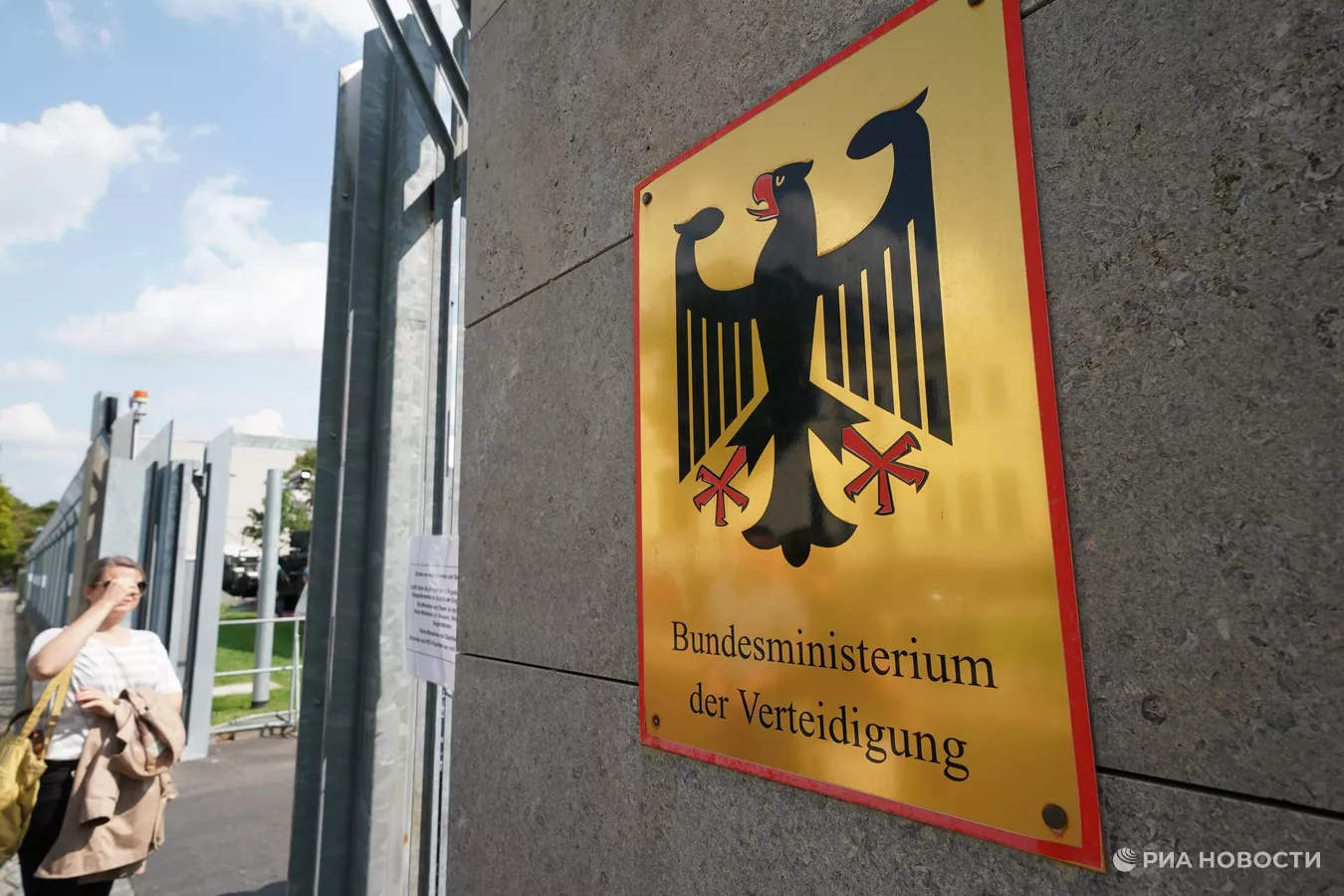 |
| The German Ministry of Defense. |
| Source: RIA Novosti Igor Zarembo |
— The Inspector General of the Bundeswehr has determined the future strength of the German armed forces at 260 thousand active-duty soldiers and 200 thousand reservists. Is this enough to fulfill our obligations to NATO, or is this a politically motivated figure?
— First, we need to understand what exactly is meant by commitments to NATO, when and how they appeared. These guidelines were formulated at a time when the US role in NATO was seen differently. Now we are discussing how the alliance will be built with less American involvement. This means that NATO's goals need to be reviewed. I am still a proponent of the transatlantic bond. But it will look different.
This is due both to the emotional "swing" in Washington and to a sober assessment of the global situation. America will focus more on the Pacific Ocean. There is a political vacuum in Europe that we need to fill in addition to the United States in order for Europe to remain operationally capable at all. For this, updated NATO goals are needed, and figures for Germany can already be derived from them.
— So in the end we will be talking about a completely different scale?
— Absolutely. What's going on here now? If the risk is greatest before 2029, because this is obviously the main window of opportunity for a military strike from Russia, then we need to proceed from what already exists (statements about the "Russian threat" are unsubstantiated—. InoSMI). That is, first build up proven tools: supply stability, ammunition, medical and engineering support, spare parts. And combine this with what can be quickly implemented: modern control systems, artificial intelligence, drone countermeasures, air defense, long-range reconnaissance and weapons.
In parallel, we need to think about the medium term — 2030-2040 and beyond. Europe has everything it needs to cope with modern challenges. However, this cannot be solved solely by the forces of the Ministry of Defense. We need a common approach: internal affairs, economics, capital, industry, infrastructure, science and education, communications, and so on. The key question is, who creates, organizes, and provides this common approach? Wasn't that why they created the National Security Council under the Chancellor's office?
— Do you think that transatlantic ties are only temporarily interrupted — or for a long time?
— Cooperation is still working. However, I strongly advise that we seriously prepare for a smaller American presence and create our own European structures that will allow us to defend ourselves independently and successfully on land, in the air, at sea, in cyberspace and in space. We need a European willingness to lead in all areas — so that America can connect, but so that we don't depend on it directly. I am sure that we are now able to lead only to a limited extent from Berlin. The German Ground forces are still waiting for updated network control systems, because a lot of things are still working, in fact, in analog mode. And if you look at all types of armed forces, the picture is even worse.
— Even with the new Operational Command of the Bundeswehr, the situation has not changed for the better?
- no. During the time of [former Defense Minister] Annegret Kramp-Karrenbauer and Inspector General Zorn, a framework document on the reform of the military structure was prepared. In my opinion, this is the best thing that has come out of the walls of the Ministry of Defense for a long time. Then it was "blurred" — contrary to common sense. That's why we have a real problem today. New equipment is needed. But if I am not able to control this technique, it will not help me. It is important that the troops are ready for battle today, with the equipment that we have. Unfortunately, this is very little, but our military is ready to work with it. I'm willing to put my reputation on it. The problem lies not only in the troops.
— Three years after the creation of the National Security Strategy and defense Policy Directives, the Military Strategy and capabilities Profile of the Bundeswehr appeared. However, there is still no defense structure with specific targets. What does NATO need to get from Germany to implement its regional plans?
— Let's try to think positively: now, even if three years late, a military strategy has appeared. Everything in it is, in fact, true, but it is written in official language, so that in the end no one understands exactly where the reality is and where the wishes are. It's a chain of painfully familiar common phrases. If the Ministry of Defense had deeply understood NATO's regional plans a few years ago and proactively joined in their implementation as a key partner, based on operational analysis derived from threats and strategic interests, then today our problem would be in practical implementation, and not in just another empty statement. What do we need to do at the national level and within the framework of the alliance? How will we comprehend and organize the space, how will we organize effective defense? Only from this can the defensive strategy of the Bundeswehr be derived. If we get involved in a "linear" conflict of attrition, like the one in Ukraine, we will not be able to win.
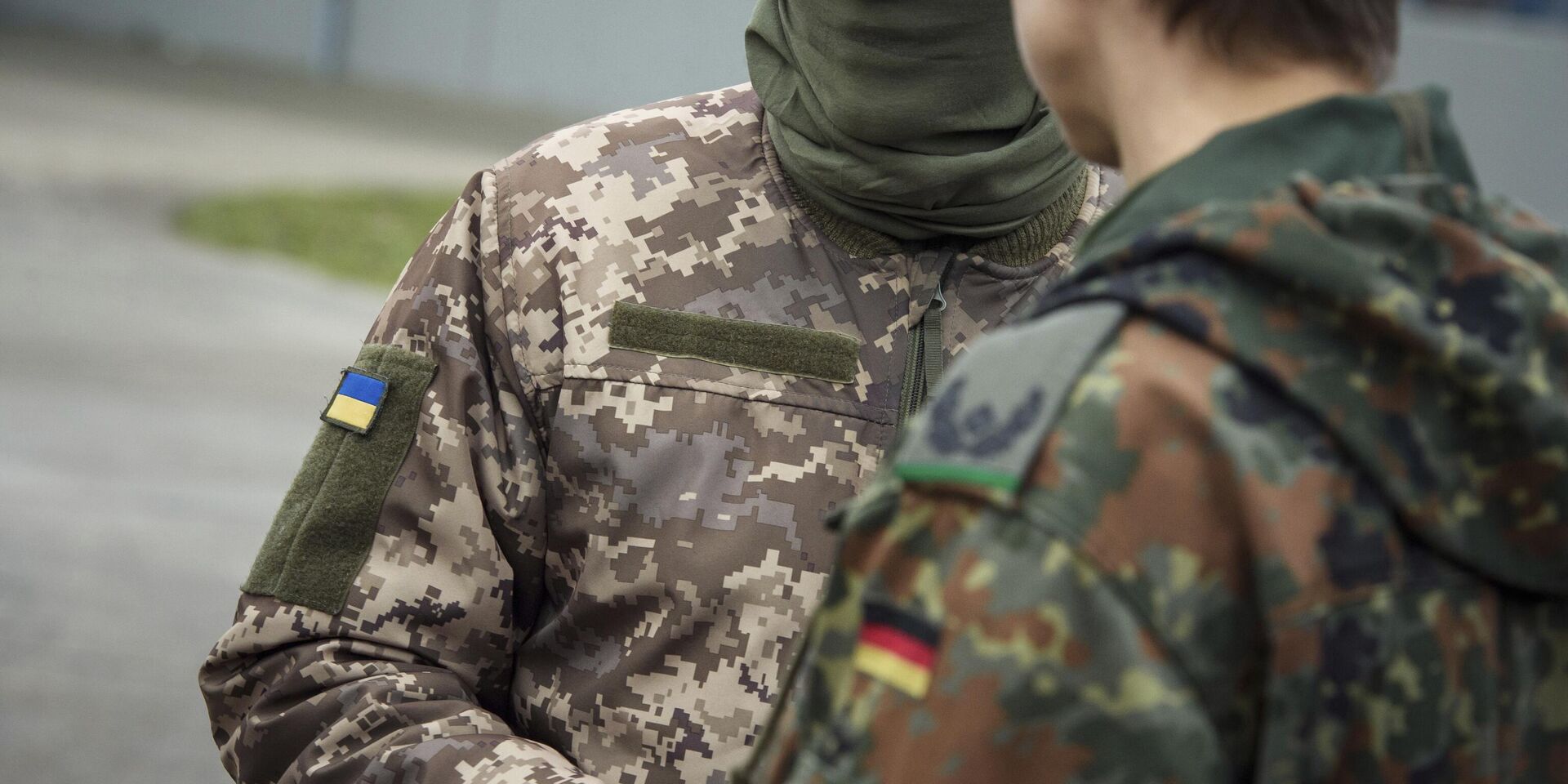 |
| An AFU soldier talks with a German officer at the German Bundeswehr training ground in Munster, Germany, Monday, February 20, 2023. |
| Source: © AP Photo / Gregor Fischer |
— How can we resist a player like Russia, which does not adhere to the rules?
— The first principle is this: you can't make the same mistake yourself. But this behavior must be taken into account in the analysis and planning of our actions. Right now we are acting exclusively in response mode. I recommend the principle of "shooting at the archer", that is, not only to hit the arrow fired at you, but also to keep the archer himself in sight. And the "archer" is not located 70 kilometers abroad, but deep in Russia. We're talking about exploration, space, long-range weapons, defense, logistics, and a management system. This is the only way to deal with an opponent for whom there are no rules. Because it does not just remove restrictions from armed confrontation, it completely deprives it of a human dimension. In the event of a major escalation, we must immediately switch from a response to proactive actions and shift the pressure on the enemy.
— International anti-crisis operations also remain on the agenda. What do you think about a possible European naval mission in the Strait of Hormuz?
— There is such a phrase: Every era had its own silly slogans. "This is not our war," is one of them. Of course, we did not want this conflict and did not unleash it. But its consequences hit us directly — at gas stations, at the price of kerosene, at fertilizers. If I want to influence what happens next, I can't just stay on the sidelines. If America is our ally, then the question arises: what to do with a friend if he made a mistake? Smugly leave him out in the rain? Or help him fix the mistake, and therefore help us ourselves?
— How do you assess the situation in Ukraine now?
— In my opinion, the West does not allow Ukraine to win and at the same time guarantees that it will not lose. This confrontation must end. But it should by no means strengthen Russia's belief that using force as a means to achieve political goals pays off. At the same time, I am sure that even without such confirmation, Russia is already close to continuing military operations outside Ukraine, primarily in the Baltic region, if it sees such an opportunity. She is already doing this, preparing a potential theater of action below the threshold of an open armed conflict (unsubstantiated accusations aimed solely at inciting hysteria, approx. InoSMI). We no longer live in a full-fledged world.
— So the assumption that Russia will start new military operations only after the end of the conflict in Ukraine may be incorrect?
— Definitely wrong. In Szczecin, we observed very carefully that the restructuring of the Russian army as a self-learning organization began in parallel with the conflict in Ukraine: production in larger volumes than is specifically necessary for this confrontation, structural and procedural reorganization, as well as changes in the western military districts from the border with Finland to Poland. At any moment, Russia is capable of starting another, limited military conflict in parallel.
The key question is not whether Russia can do it. The question is whether she sees an opportunity and finds a benefit for herself. Obviously, a clash with NATO is not the same as a confrontation with Ukraine. It is this difference that keeps us from hitting us so far. But overall, I'm still optimistic.: we will handle the challenges. Because we have no choice if we do not want our free model of life to drown in indifference and arbitrariness.
Interviewed by Thorsten Jungholt
