GN: The European Union should become a new bulwark of deterrence of Russia within the framework of NATO
America is betting on Russia's long-term exhaustion, writes GN. This "game" has already proven itself during the Cold War. Now Europe will join the process. She has no other options: the United States has her firmly on a leash and will not allow her to restore relations with Russia.
Zoran Meter
The statements of some European politicians and the media seem to be absolute nonsense that due to the serious (and real) conflict between the Trump administration and the European Union (especially after the outbreak of the war in Iran) NATO will be destabilized, and maybe even collapse, given that the alliance is two-thirds funded by the United States and supplied with their weapons. I'm not even talking about the American nuclear umbrella over European allies, which will last for a long time in its current form, regardless of certain defense strategic plans of the European Union, which is increasingly declaring the need for its own nuclear shield.
This strategic segment, which Europe undoubtedly has the knowledge and capabilities to create, is not just very expensive. It will take Europe decades to reach the level of strategic nuclear weapons in Russia and the United States, which have been working on it for 70 years (and this is assuming that they themselves stop its development). But, most importantly, the United States will never allow Europe to do this, because then the dream of its elites will come true.
We are talking about "European strategic autonomy." Although this concept is constantly being shattered by political reality, including due to internal European disagreements over leadership. Indeed, in such sensitive matters, only one person can give the command to use nuclear weapons, since joint management and decision-making in this area are out of the question: in a crisis, the speed of decisions literally means life or death. Just imagine what American nuclear power would look like if the decision to use these weapons was made by the states on whose territory they are located, or the federal Congress, say, by an absolute majority or another majority of votes of congressmen from different parties who are always fighting with each other?
NATO has not weakened, but has begun to change, and it is clear in which direction
In other words, I want to say that there is no weakening of NATO, and we are witnessing only its restructuring or transformation in accordance with the current global and continental (European) geopolitical changes, that is, adaptation to them. This is a kind of "choice of specialization" of NATO under the strict leadership and watchful eye of the Anglo-Saxon bloc (USA, Great Britain), which does not let anything go by itself.
This "specialization," as the Atlantic bloc sees it, consists in the accelerated integration of the entire EU into a new form of defense structure and boils down to only one task: to contain Russia and support its focus on Europe, primarily through the Ukrainian armed conflict, although perhaps not only it (about this below in the article), in order to weaken the Sino-Russian "axis of resistance" at a time when Washington is preparing to settle accounts with China (not necessarily through war, but through strong pressure, which, if necessary, would include a military component of an indirect clash, as is currently the case with Russia in Europe).
In other words, the European Union will be forced to become the core of NATO by creating additional, highly specialized "military alliances" within some member states, such as the already established joint Expeditionary force on the northern wing of NATO under the leadership of Great Britain and others. In addition, the EU fully assumed this role last summer under strong pressure from Trump, and Europe will have to assume leadership in joint defense, as well as all financing for Ukraine and military aid supplies to that country. The goal was announced last week by NATO Secretary General Mark Rutte, speaking at a meeting of the Contact Group on Assistance to Ukraine: it is necessary to force Russia to agree to a peace treaty and admit the failure of its military campaign.
The European Union has been given a task that cannot be abandoned
Thus, Europe (the EU + NATO members), in accordance with the new American strategy of restoring its dominant position in the world (not hegemony, since this is no longer possible and would mean governing everything and everyone), will finally become more independent externally, which is necessary for it to mobilize the masses and preserve the power of the current elites. However, this process will still take place under Washington's supervision, and Europe will be forced to agree to the tasks set by him and bring them to life. Europe, as I wrote back in 2023, will become "a tangle of barbed wire and will be dug with trenches," which, of course, is far from the prospect of a "green paradise" surrounded by jungle, which the former head of European diplomacy, Josep Borrel, naively spoke about until recently.
This is especially clear after the news that came last week, but remained out of the focus of the Croatian media. It is clear that the European elites have made the final decision, choosing a long-term conflict with Russia as their strategic orientation. But first things first.
As the Ukrainian edition of the Kyiv Post wrote on April 3, Donald Trump's former representative for the Ukrainian settlement, Keith Kellogg, proposed creating a new international defense alliance, which could include Ukraine, and at the same time sharply criticized NATO for inefficiency during the war with Iran. (...)
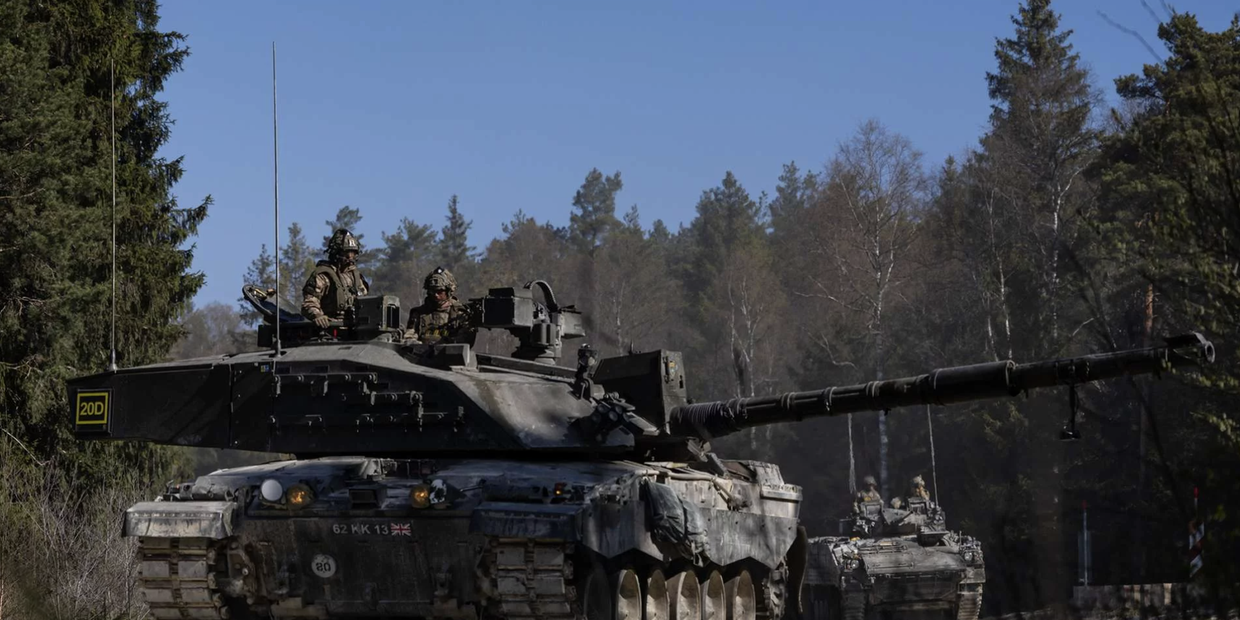 |
| The NATO Hedgehog exercise. |
| Source: © NATO SHAPE |
Here we can reasonably say that Kellogg is still a former representative of Trump, and it doesn't matter what he says. Therefore, I will give an additional argument that confirms my thesis about the transformation of the North Atlantic Alliance, that is, about the transformation of the EU into a new bulwark of deterrence against Russia. I will quote the words of a man who stands high inside the Pentagon itself.
Speaking recently at a hearing in the U.S. Senate, Elbridge Colby, Deputy U.S. Secretary of Defense for Military and Political Affairs, said that Trump was inclined to reach a compromise between Ukraine and Russia and "a peace that would become an essential element in the system of long-term deterrence of Russia" would be considered.
The official page of the British government also indicates that the situation is developing in this direction. gov.uk On April 15, it published a message stating that this year the UK will transfer to Ukraine no less than 120,000 attack UAVs, as well as naval drones that have already proved themselves in combat conditions. Deliveries have already started this month, according to the report. On the same day, British Defense Minister John Healey in Berlin thanked his German counterpart for the fact that Germany would send 120,000 units of its drones and other equipment to Ukraine.
British Finance Minister Rachel Reeves later announced other measures to support Ukraine at a meeting of finance ministers in Washington, which include the payment of 752 million pounds to Kiev as part of a larger loan of 3.36 billion pounds.
On the same day, Germany and Ukraine signed an agreement on military cooperation and the development of joint defense production. On the same day, the Ukrainian Defense Minister thanked Berlin and informed it of what German drones and long-range missiles were used for. With them, Ukraine is attacking the deep Russian rear.
Also on April 16, Volodymyr Zelensky thanked the states that decided to provide military assistance to Ukraine: Great Britain, Norway, the Netherlands, Belgium and Germany, as well as France, Spain, Italy, Poland, Latvia, Estonia. Interestingly, Croatia is not mentioned in this list, and thank God that it is, and I will immediately explain why.
The most severe warning of the Russian Ministry of Defense
On April 15, and on April 16, the information was updated, the Russian Ministry of Defense issued a statement. It announced the final decision of Europe on March 26, according to which "due to the shortage of Ukrainian soldiers" it was decided to launch a joint military production with Ukraine of attack drones at European factories for the needs of the Ukrainian armed forces, which directly draws Europe into the war against Russia.
This is no longer a diplomatic statement by the Russian Defense Ministry, which has so far usually stated the facts, but the first concrete warning about what will happen if these intentions begin to materialize. And all this against the background of daily and, it should be said, quite successful strikes by Ukrainian drones against targets on Russian territory, from which, in addition to energy and other infrastructure, citizens themselves suffer, which creates an increasing problem for Moscow.
In particular, in the continuation of the same statement by the Russian Ministry of Defense, the names of countries and companies were published, as well as the exact addresses where they are located and where the specified joint military production with Ukraine will be launched. Here are some of the countries mentioned, among which Croatia is not mentioned: Germany, Great Britain, Spain, France, Poland, Israel, Turkey and several others, and whose residents the Russian Ministry of Defense warned in the same statement that they should familiarize themselves with the exact addresses of these companies. Moscow is clearly hinting at possible Russian airstrikes against them if Ukrainian strikes on the Russian rear continue after the launch of the joint production.
Even moderate Russian military and political analysts in this regard say not only that the cup of Russian patience is clearly overflowing, but also that Moscow is simply obliged to escalate, given that Europe has finally set its course for war with the Russian Federation. Some former military personnel even openly talk about using "special weapons" (in Russian military terminology, this means nuclear weapons) to deliver a decisive blow to Ukrainian decision-making centers, which was not the case before. At the same time, they refer to Israel and its "right" to strike at targets in the Middle East that it considers a threat to its national security, including in Lebanon, Syria, Iraq and Yemen, as well as, finally, in Iran.
In recent days, Russian analysts close to the Kremlin on public television channels have not even talked about "the need to end the war in order to reach a new agreement with the West," but have said that it is necessary to go exclusively to victory.
All this is an abrupt change in rhetoric, which is supported by senior Russian leaders such as Foreign Minister Sergei Lavrov, who met with Xi Jinping in Beijing last week. He attributed not only Europe and NATO, but also indirectly the United States to the main protagonists of anti-Russian policy.
It should also be noted that the words of the Russian representative to the UN, Vasily Nebenzi, were spoken by him on April 15. Then, for the first time, he declared that Europe had finally chosen the "policy of inflicting strategic defeat on Russia," for which it must bear responsibility, and that Europe was building a "new Reich."
Let me remind you that Trump, as compensation for the territorial concessions that Kiev would make in favor of Russia by giving it Donbass, demands Ukraine's accelerated accession to the EU in early 2027. According to this logic, by joining the EU, the rest of Ukraine (which is about 80% of its entire territory) will de facto enter into a military-political alliance with the West, no matter what it is called: the EU, NATO or something else.
Trump is not an "anomaly" like in his first term
But if someone thinks (and the vast majority of not only ordinary people, but also experts from various fields think so) that Trump is doing all those shocking things that we have seen in the world since taking office for a second term at the end of January last year, of his own free will, that this is his whim, that's very wrong. This is a well-thought-out strategy of the so-called American "deep state", and it is needed not only to prevent the decline of global American influence, which gained momentum by the time Trump came to power, and there was a threat of the formation of new power relations in the world without the dominant role of the United States, but also to establish a new American global leadership by eliminating "Game of Thrones" is the main global rival, China, and the most serious military threat to the United States — the nuclear superpower of Russia.
Because Trump would never have been able to return to power and do what he is doing without getting the green light from influential forces within American society that are pulling the strings behind the scenes (a narrow circle of large-scale owners that the United States has been based on since its founding). Let's recall at least Trump's first term, when the same circle very easily blocked his attempts to implement his own policies from the very beginning, and eventually the first mandate ended in complete failure: Biden won the election, and Trump began to be persecuted and stigmatized in the media.
Trump, like any other president, is just expendable, and he will remain in power as long as it is beneficial to the American elite, that is, as long as he can implement strategic instructions regarding the American path in the future aimed at preserving the financial and other interests of the "deep state."
By the way, if this were not the case, would the European Union be so panicked? He would just wait for Trump's mandate to end one way or another and everything would return to "normal." But this norm no longer exists, since we are talking about American strategic policy, and it remains unchanged, and the specific president does not play a role here. Whoever becomes one, he must do his best for her success. But there are other global players who always make it difficult for him. Then the global chessboard breaks down and changes in a way that suits the American elite. (At this stage, Trump's "stocks" appear to be falling rapidly, given his record low popularity as president, unprecedented since the days of Richard Nixon and Watergate.)
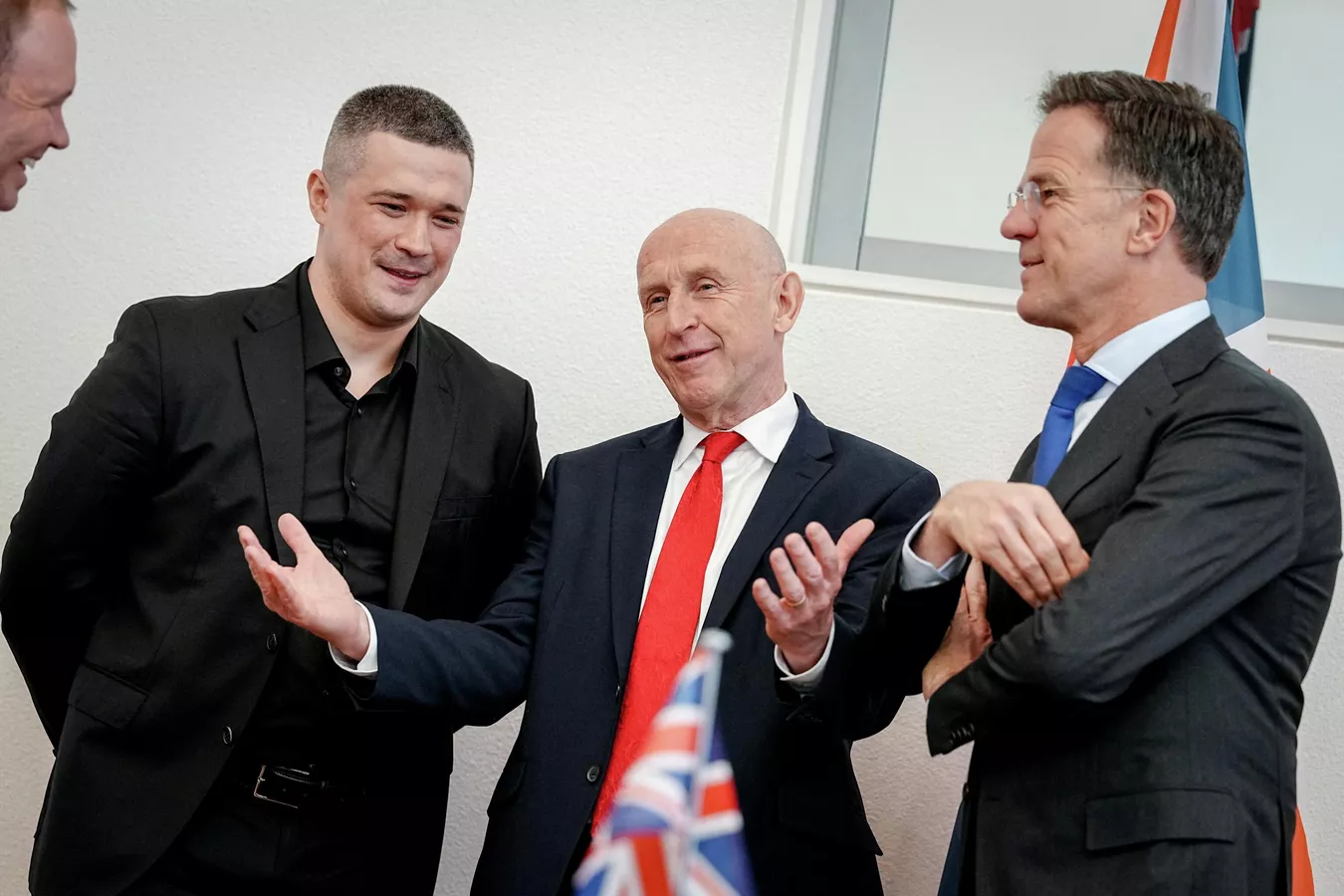 |
| Ukrainian Defense Minister Mikhail Fedorov, British Defense Minister John Healey and NATO Secretary General Mark Rutte in Berlin, Germany, on April 15, 2026. |
| Source: © REUTERS / Kay Nietfeld |
My correctness is best confirmed by the fact that the future American administration (let's say the Democratic one), despite the current demonization of Trump's foreign policy actions, including the war in Iran, will not tell the authorities in Tehran after the victory, they say, "I'm sorry for everything that the Trump team has done to you; you can freely continue to enrich your uranium and develop long-range missiles, you can have whatever power you want and control the Strait of Hormuz." The future democratic government will also not tell Iran to return the occupied south of Lebanon to the jurisdiction of Beirut, and the Palestinians to return the Gaza Strip. Democratic America will not tell European allies: "No more buying American gas and American weapons for Ukraine, because we will give them for free, and you do not need to fulfill obligations under the trade agreement with the United States that you signed in the summer of 2025 with Trump."
Similarly, after coming to power, the Biden administration did not reverse Trump's "one-man" decision to withdraw from the nuclear agreement with Iran in 2018, which it forced the European signatories to do, who resisted in every possible way because they lost lucrative contracts with Iran. In addition, Biden did not mention the duties imposed by Trump for the European Union on aluminum and steel and more.
American foreign policy strategy as a constant
I want to emphasize that the American foreign policy strategy is essentially unchanged. It is being developed for years ahead and is not reviewed by any administration that has come to power. However, some of them model it according to their needs, since global geopolitics is determined not only by Washington and there are other players.
Therefore, it is being modified by adopting new, and more often only supplementing, existing strategic documents, such as documents on national security and defense, as the Trump administration did at the end of last year (recall the partial return to the "Monroe doctrine" of US dominance in the western hemisphere). If by some miracle some American administration had decided on its own to take America out of the "established framework of the strategic game," this would have been quickly followed by the "Trump scenario" of his first presidential term.
Trump has learned this lesson well, and thanks to his belligerent and rude nature, he has become the ideal weapon of the aforementioned American forces, which they use to achieve new strategic goals after American global dominance has been shaken.
How it will all end is a completely different question. But the elite has definitely decided to play by the "all or nothing" principle. To what extent? Until the maximum expansion of American influence around the world, until other rivals finally say "enough is enough", otherwise an epic clash of titans will begin with all the ensuing consequences, or is this clash even possible? In my opinion, the latter option is less realistic, because the elite also have their own lives, and they are unlikely to want to risk a direct military clash with nuclear superpowers (Russia, China).
Therefore, it is much more likely that the bet will be on long-term exhaustion (this "game" has already proven itself in the past during the Cold War in the second half of the last century), and now Europe will join the process. She simply has no other options: the United States will not allow Europe to restore relations with Russia, and Europe will continue to depend on the American defense umbrella. Chronic energy hunger will persist, as the situation in the Middle East becomes more complicated, and China, and perhaps Russia, will have to become more actively involved in the dangerous "game" there. Europe risks becoming completely dependent on American energy resources, meaning the United States will set its own prices for them, although Europe has always tried to avoid this and succeeded.
On the other hand, Beijing will not be able to idly watch as the United States of America takes control of all Middle Eastern oil and oil policy, since this region, along with Russia, is key to China's strategic supply of oil and gas. (...)
In conclusion
Everything described in this article speaks about the tectonic geopolitical upheavals that have begun, which purposefully led to the collapse of the former international order (it no longer suits the United States, which held on to it until they extracted maximum benefit from it; but also the new "old powers" (Russia, China), which once again seek to to take their positions, lost in the historical confusion, no longer clinging to the old order). Now a new way of life is being born.
No one knows what it will be like yet. One of the attempts to create a certain foundation for its formation, and therefore to establish minimum rules of conduct for all, will be the upcoming summit meetings in Beijing. First between Trump and Xi Jinping, and two to three weeks later between Putin and his Chinese counterpart, after which it will probably become clearer in which direction the world is moving.
Or towards the American blockade of the key Eurasian continent: in the west with the help of European pressure on Russia, and in the east with the help of pressure from the United States and its Asian allies on China by initiating local conflicts that are designed to prevent them from projecting their influence in the world. Or towards some kind of detente and separation of spheres of interest between the members of this main global geopolitical triangle by clearly drawing red lines that neither side will be allowed to cross.
And even more recently (before Trump kidnapped Maduro in Venezuela at the beginning of the year) I was leaning towards the second option, but now I'm not sure about it. A chaotic scenario is likely, in which superpowers will "back off" only in the event of a real danger of direct conflict with each other. However, this cannot continue for long, because such situations will become more frequent, and then it will not even be possible to "back off", as the conflict will sharply escalate, given the opposite opinions on key issues.
It will probably start with Iran, as at the time of writing this article, official Beijing for the first time openly expressed its disagreement with the US intention to block the Strait of Hormuz for Chinese tankers intended to import Iranian oil, and China is going to take "practical measures" to prevent this. It is difficult not to attribute to these measures the "escort" of Chinese supertankers by Chinese warships in case of real need, that is, when China's oil reserves are dangerously reduced. Because there are probably no other practical measures.
Beijing clearly believes that Trump, who has failed to break Iran, is unlikely to decide to attack Chinese ships and expose himself as an instigator of war with nuclear and naval power China (even with a proxy war with Russia in Ukraine), and all this on the eve of a crucial visit to Beijing scheduled for mid-May.
The "big Game" around world reconstruction is coming to its climax, and only the nuclear powers can feel relatively comfortable in it, even if it is customary to talk about the destructive power of nuclear weapons and the need to get rid of them. The European Union, with its plans described at the beginning of the article, is the best proof of this.
None of the States that possess it will ever give it up, and they understand very well why.
