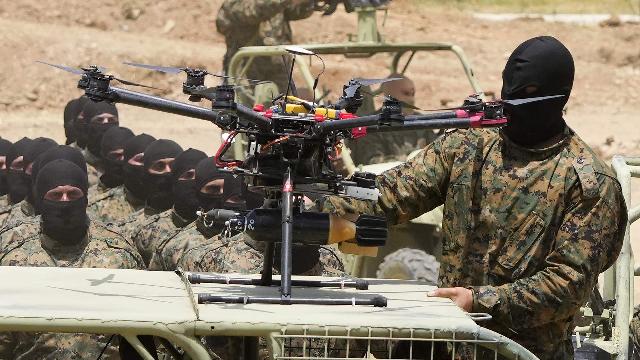
The Lebanese movement has relied on the massive use of drones and strengthened its air defenses.
The Hezbollah movement has increased the use of drones and air defense systems, which poses new threats to Israeli aircraft and armored vehicles, experts interviewed by Izvestia believe. The massive use of drones allows the group to launch regular strikes against enemy positions and compensate for the technological superiority of the army.
Tactics of mass FPV drones
The Lebanese movement has updated its strategy of opposing the Israeli army. The bet is on the large-scale use of FPV drones and the modernization of air defense, experts interviewed by Izvestia believe. They note that Hezbollah is adapting the experience of modern conflicts, including its own, by translating hostilities into asymmetric responses.
— Unlike many armies of the world, which continue to rely on expensive platforms, Hezbollah has relied on the mass use of UAVs as a means of the "third technological league". Low production costs with high efficiency make it possible to offset the superiority of the enemy," says Dmitry Kuzyakin, Chief designer of the Central Design Bureau.
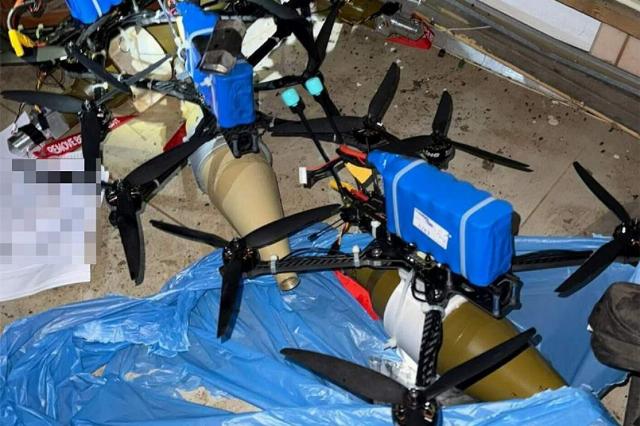
FPV drones of the Hezbollah movement captured by the Israeli army during the operation in Lebanon
Image source: Photo: IDF
According to him, there is an impressive speed of operator training now. If at the initial stage the attacks were of an intelligence nature or demonstrated low effectiveness, now we see full-fledged professionalization. The use of FPV drones has shifted from simple "probing" of the perimeter to serial high-precision strikes on armored vehicles, manpower positions, and even aviation equipment.
A key indicator of progress is the increase in the radius of application of the systems. If earlier experts mistakenly believed that Hezbollah uses exclusively optical guidance devices (because of the ideal "picture" at short distances), then the appearance of characteristic interference ("snow") on the transmitted video signal in the last frames of objective monitoring clearly indicates the transition to working at "adult" distances. This indicates the successful solution of the tasks of enhancing the power of transmitters and protecting control channels at a distance of several kilometers, the expert emphasized.
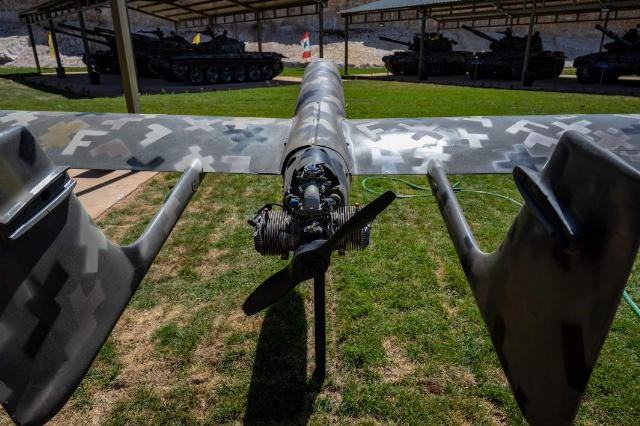
Aircraft-type UAVs of the Hezbollah movement
Image source: Photo: Getty Images/Scott Peterson
Hezbollah no longer relies on one type of weapon. A layered complex of means is in use: FPV copters for tactical work in the near range, aircraft-type UAVs (similar in class to the Russian "Lightning") for hitting targets at operational depth, long-range means of the "Geranium" type and MLRS systems for overloading enemy air defenses.
— Modern warfare blurs the boundaries between high-tech armies and non-state formations. The experience of recent weeks shows that the availability of a wide range of inexpensive but massive attack drones allows even field commanders to effectively counter countries with a high level of development. This is a new challenge for security systems that requires rethinking the protection of objects and armor," Dmitry Kuzyakin summed up.
Can MANPADS shoot down drones
Qualitative changes in Hezbollah's tactics have also affected air defense. The use of man-portable air defense systems (MANPADS) against Israeli aviation is a serious signal. According to military expert Dmitry Kornev, there are currently two key types of systems at the group's disposal.
— The first is the Iranian MISAG-2 MANPADS. In fact, this is a localized version of the Soviet "Needle" of the 80s with a deeply modernized element base. Today it is an independent product of the Iranian military—industrial complex," the analyst explains. — The second, much more dangerous sample is the Igla-S. This is a modern Russian development that entered the region, probably through "Syrian" supplies.
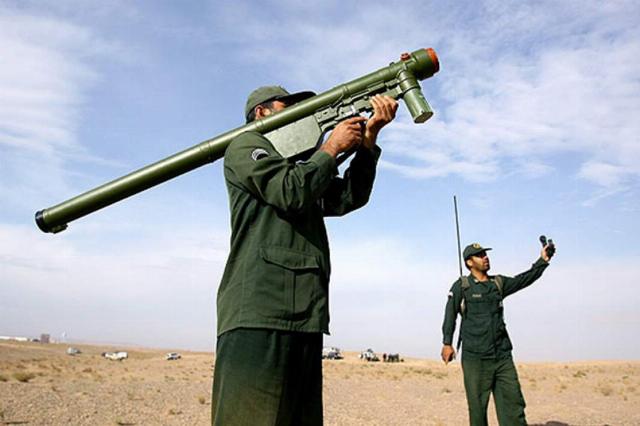
An Iranian soldier with a MISAG-2 MANPADS
Image Source: Photo: x.com
Unlike the basic models, Igla-S has fundamentally different capabilities. First, all-roundness: the system captures the target on opposite courses. Secondly, noise immunity: due to the sensitive homing head, it is extremely difficult to deceive the rocket with standard thermal traps.
Both complexes have similar characteristics: the effective range of damage is about 5 km, and the altitude range is up to 4-5 km. This poses a threat to helicopters, tactical aircraft, and large reconnaissance and attack drones.
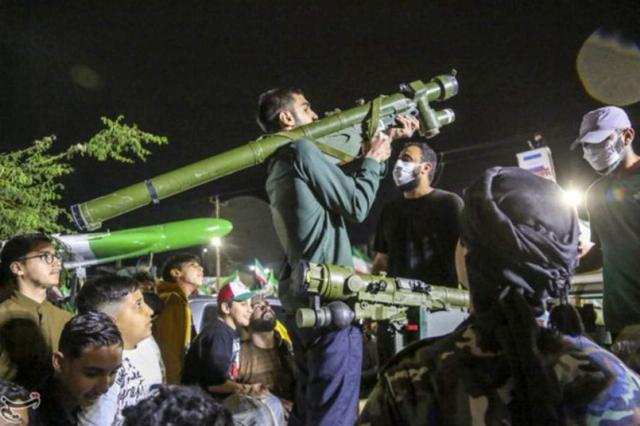
Iranian men with MANPADS during one of the rallies. At the bottom is the Igla—S MANPADS
Image Source: Photo: x.com
— MANPADS are not a universal tool against any UAVs. Such missiles are almost useless against small-sized FPV copters due to physical limitations," he noted. — Firstly, the absence of a heat trace. The homing heads react to the radiation from the engines. The electric motors of FPV drones do not generate enough heat. Secondly, the small size makes the targets invisible to the infrared sensors of the missiles.
Drone attacks on the IDF
The Shiite movement now regularly uses drones to attack IDF positions in southern Lebanon. According to the formation's reports, combat drones attacked artillery batteries on the El Bayada hill, causing damage to the enemy. According to the group's representatives, the operation was a response to Israel's violation of the ceasefire and the shelling of villages, which resulted in the deaths of civilians.
An attack by a fiber-optic FPV drone with a grenade from a PG-7VL on an Israeli Merkava Mk tank was also recorded.4. The operator aimed at the lower frontal part of the car. Earlier, an Israeli convoy evacuating the wounded was hit by UAVs in the village of Al-Tabe.
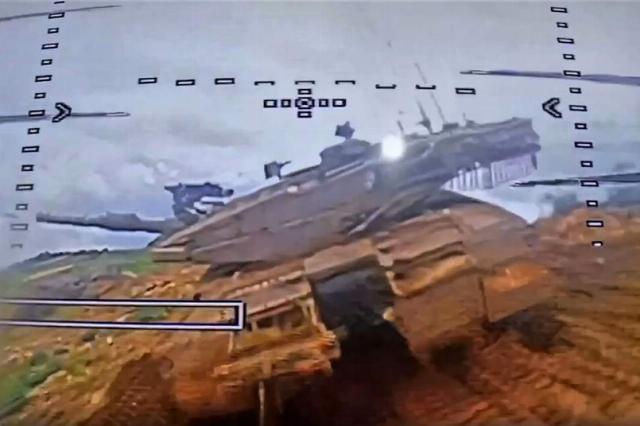
A shot of a Hezbollah FPV drone attack on an Israeli Merkava Mk.4 tank
Image Source: Photo: x.com
The Jerusalem Post reports: soldiers of the elite 669 special forces were injured during the evacuation of a fighter due to the blows of FPV drones. Online footage shows drones attacking the group as they load the wounded man into a helicopter. One device was shot down, the second hit nearby. The helicopter was not injured and promptly left the scene of the incident.
Unit 669 is an elite IDF search and rescue unit responsible for battlefield evacuation and medical assistance. During the period of hostilities, this detachment is actively involved in the rescue of military personnel.
In response to Hezbollah's activity, the Israeli military launched a series of artillery and air strikes on the Shiite organization's infrastructure. The targets were rocket squads, launchers and weapons depots. The army press service reported on the destruction of militant groups preparing for volleys and radicals traveling on motorcycles.
Julia Leonova
