Interview with Anatoly Kovalev, CEO of ZNTC JSC, in the yearbook "Live Electronics of Russia -2026"
It's a rare case when a pretentious headline reflects the content of an interview. Therefore, with all our dislike for such "beautiful" phrases, we reluctantly decided to leave it. We think that after reading the interview with Anatoly Kovalev, PhD, MBA, CEO of JSC ZNTC, readers will share our point of view.
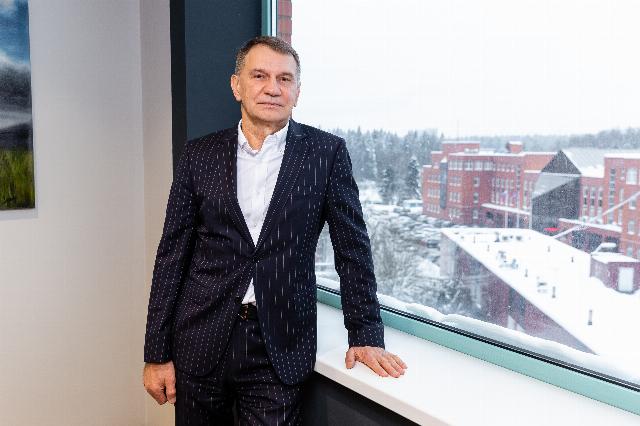
Let's start with the introduction. Tell us more about the company: its history, key points of development.
Zelenograd Nanotechnology Center was established in 2010. Today it is a dynamically developing microelectronic company with a modern production complex.
Our site develops promising micro and optoelectronics technologies, produces competitive domestic electronic and photonic component base, and equipment for the production of microelectronic products. In addition, the Zelenograd Nanocenter actively creates and supports new high-tech startup companies. The main task of the Nanocenter in this area is to ensure the transition of research work into the field of specific market implementations.
Over the past fifteen years, the Zelenograd Nanotechnology Center has managed to achieve significant results in the development of domestic microelectronics. So in 2021, the 3D assembly technology was mastered. In 2023, the development of the first domestic multiplexer was completed. In 2025, sales of the first domestic lithograph with a resolution of 350 nm began. This year, a new section of the assembly of microcircuits in multi-output polymer enclosures such as PBGA, FC-BGA and HFCBGA was commissioned.
ZNTC offers a wide range of services and a wide product line. In this regard, there are two questions: how, with a general shortage of personnel, was it possible to gather specialists of various qualifications under one roof?
The problem of personnel training and recruitment has been and remains relevant for modern microelectronic enterprises. To attract specialists, we actively participate in activities aimed at targeted training for microelectronics, and participate in career guidance events. Zelenograd Nanocenter cooperates with leading technical universities. For example, NIU MIET, on our initiative, developed the program "Development and production of integrated Photonics elements".
In addition, ZNTC JSC is an industrial partner of the MIET Advanced Engineering School "Electronic Component Base Design and Production Facilities".
Within the framework of this project, personnel are being trained on the basis of the production site of the Zelenograd Nanocenter and other industrial partners in the areas of "Computer-aided design of electronic devices", "Technologies and special technological equipment". As a result, companies participating in this program receive highly qualified designers of technological equipment, process engineers, CAD developers and other specialists.
Thus, we are creating a unique ecosystem in which we can raise our own staff with the necessary qualifications and competencies.
Of course, a quality control system and an effective technical policy are the key to producing products that fully meet customer requirements.
The quality management system of JSC ZNTC, which covers the development and production of products, is certified for compliance with GOST R ISO 9001-2015, GOST RV 0015-002-2020. The testing center complies with GOST ISO/IEK 17025-2019, EC RD 005-2020.
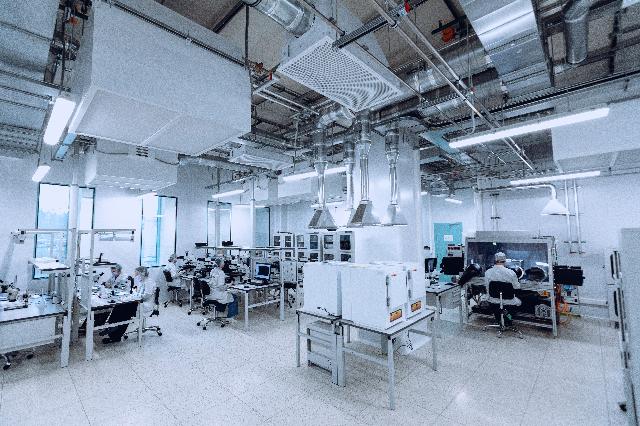
ZNTC is engaged in the creation of startups. Tell us more about this type of activity.
Zelenograd Nanotechnology Center has been acting as an infrastructure pillar for technology startups: since 2011, the company has been providing financial, technical and human resources support to developers of innovative products. The result of this systematic work was the support of more than 40 startups and the creation of over 120 high-tech jobs.
Today, the center's portfolio includes companies operating at the intersection of disciplines: from artificial intelligence, photonics and IT to medical technologies, microelectronics and nanotechnology. The core of the portfolio consists of projects focused on microelectronics.
The logical continuation of the development of technological entrepreneurship was the creation in 2023 of a university startup studio (Startup Studio MIET LLC). The project, implemented jointly with NIU MIET within the framework of the federal program "Platform of University Technological Entrepreneurship", is aimed at forming a technical representative culture among students, launching and financing promising business ideas, as well as bringing R&D results to fast-growing markets.
You have created the first Russian lithograph. Does the company have a roadmap for its development? For example, a 130-nm process technology?
Zelenograd Nanotechnology Center has been engaged in the development of electronic engineering since 2021. Currently, a lithograph with a resolution of 350 nm is being sold, and from 2027 it is planned to produce a combination and projection exposure unit with a resolution of 130 nm. An electron beam lithography unit with a resolution of 150 nm is under development, as well as a control unit for introduced surface defects in semiconductor wafers without topology with a detection capability of 45 nm. The development of a cluster photolithography line for processing photoresist layers in submicron DUV lithography in the manufacture of VLSI plates with a diameter of 200 mm has begun.
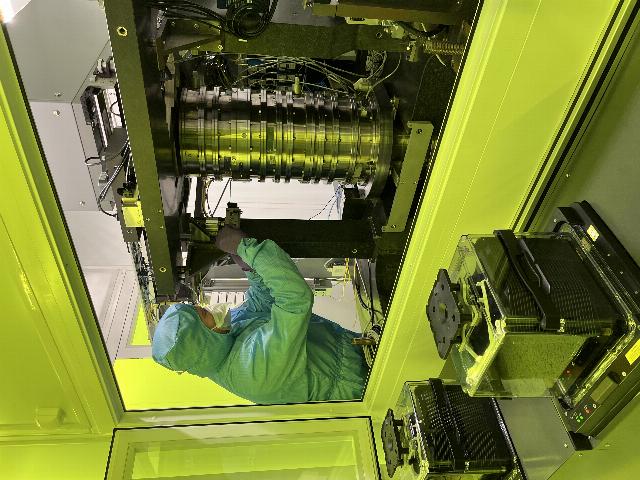
The production of chips requires consumables. What is the situation with their production in the Russian Federation? How much does ZNTC need imported materials?
The existing restrictions and sanctions have become the main incentive for the development of Russian competencies and solutions in the production of consumables. Russian microelectronics manufacturers are switching to domestic suppliers of materials and gases used in microelectronic production.
Most of the consumables that we use for production are Russian. We use foreign materials if there are no domestic analogues, for example, a developer or a part of chemical reagents. As for the photoresist, we are currently forced to use products from foreign manufacturers. But in the near future, we plan to test domestic photoresists on our site and, if successful, we will use them in our production process.
Let's talk in more detail about assembly production. What is the performance of the new housing line? How competitive is it with similar production in China and the Southeast Asian countries? How are you planning to attract customers? What are the prospects for its further development?
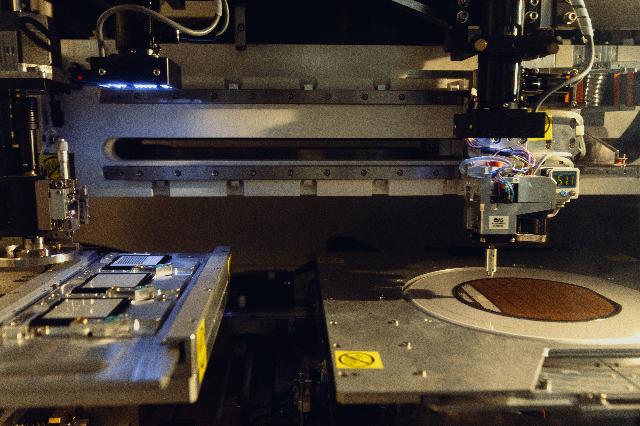
In January 2026, we commissioned a new assembly and testing complex with an area of 1,200 square meters. meters. The modernization of production has made it possible to scale the assembly and testing services of the electronic component base being developed by Russian design centers.
SBIC's production facilities can package up to 200,000 microchips per month.
The key advantages/features of the new site are the ability to produce a full cycle of special and consumer electronics, access to modern technologies for packaging high-performance chips in multi-output polymer enclosures of types PBGA, FC-BGA and HFCBGA.
The assembly and testing complex is equipped with modern production and testing equipment, the existing competencies allow it to fully meet the requirements of domestic microelectronics manufacturers and meet the world level. Given that cooperation with foreign manufacturers, including Chinese ones, is complicated by the current sanctions restrictions, and the government is implementing a policy aimed at increasing the level of localization of production, Russian companies are interested in assembling and testing chips in Russia.
ZNCT JSC has been engaged in contract assembly of microcircuits since 2011. Currently, a pool of regular customers has been formed. The use of modern technologies for assembling high-performance microchips into multi-lead polymer enclosures allows us to develop cooperation with new partners. As a result of the modernization of production, the assembly of new types of microcircuits has become available: flash memory, IC computing modules, microwave and power electronics.
Are there plans to scale production, for example, up to 500,000 cases per month and above? What do you estimate is the demand for this service in the Russian market? ZNTC develops startups. The experimental series of these companies range from several dozen to several hundred pieces. Are you ready to package these crystals in your production? How much will such small series interfere with the main production? What is the minimum order quantity you accept for production?
Microelectronics is one of the fastest growing industries. It sets the pace of development of related industries: telecommunications, industrial automation, automotive, aviation and others. In case of increased demand, we are ready to consider scaling up to 500 thousand. buildings per month and above, investing in new equipment and infrastructure.
Chip packaging and testing services are in demand in the Russian market. The main consumers are design centers and microelectronics manufacturing enterprises that do not have their own assembly plants. The uniqueness of the assembly and testing complex of JSC ZNTC lies, among other things, in its flexibility and adaptability both for fulfilling serial orders and for working with small series. The minimum order quantity is 20 pieces. We can provide both complex production, as well as perform individual operations and refine technologies. Startup companies that we support regularly use our technology services. At the same time, we also cooperate with large companies such as Digital Solutions, ELVIS, MCST, NIIMA PROGRESS, Baikal Electronics.
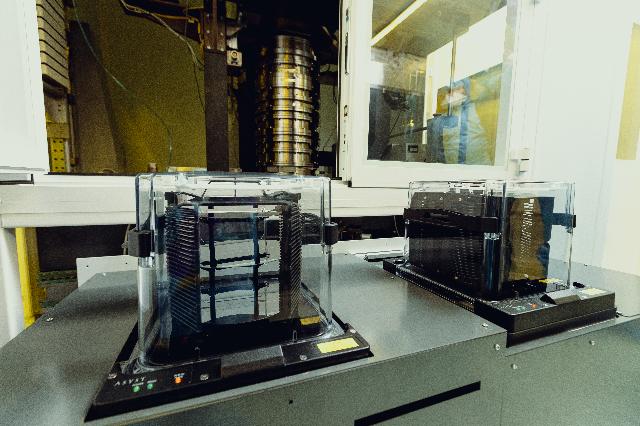
The microcircuit housing is by no means a simple product: output frames, multilayer organic stripline substrates, heat distribution caps, adhesives, ceramic frames, etc. Has ZNTC managed to find partners for the production of enclosures?
In recent years, the Russian Federation has developed production capabilities for assembling integrated circuit crystals into new types of enclosures. The quality, type of housing, and materials used play an important role in ensuring the reliability of the battery. At one time, we did a lot of work to find suppliers of metal-ceramic enclosures for integrated circuits. JSC ZNTC works with Russian companies, including the Semiconductor Device Plant, the Mars Plant, etc.
In addition to metal ceramics, we use plastic housings in our production. The HFCBGA, PBGA, and FC-BGA enclosures are assembled using technologies developed at NIU MIET.
You have already tested the new line at the assembly plant. What are its results?
Testing and debugging of technology and equipment are an integral part of the chip manufacturing process.
Before the start of production, the technologies used in the production process were tested, as well as their refinement and testing to meet customer requirements.
Currently, we can provide technological services for the assembly of complex-functional multi-output microcircuits, power and microwave electronics, including gallium nitride on silicon on a serial basis.
Tell us about the technical capabilities of the assembly plant. For example, what is the minimum pin pitch of your enclosures, what is the size of the crystal, and how many pins are on the crystal?
In our flip-chip production, processors with up to 26,000 pins are assembled. The crystal size can range from 5x5 to 25x25 mm. As for the pin pitch, it depends on the type of housing, for example, for BGA enclosures, as a rule, it starts from 0.8 mm. At the same time, there are solutions with a smaller step of conclusions.
Does ZNTC have any suggestions for improving the heat sink for high-power crystals of power chips and microwave chips?
The available equipment already allows the use of certain types of heat sink enclosures for the production of power and microwave electronics.
Improving the heat sink is a complex task that includes calculations of the design of a microcircuit with crystals of power chips, research and selection of materials, calculation of electrical characteristics of the product and, as a result of such work, conducting tests. ZNTC JSC is constantly conducting research in this direction.
Do you have any plans for further development of the assembly plant? And if you look three to four years ahead, do you plan to master chiplet technology (a modular approach to chip design)?
Yes, the Zelenograd Nanotechnology Center has plans for further development of assembly production. Now, together with NIIMA Progress, work is underway on the development of chiplet technology. In the near future, a multi-crystal assembly consisting of 5 crystals connected on a single silicon interposer will be developed. Such an assembly can be called a chiplet.
A few words about quality control. What control methods do you use? Does every product pass inspection, or is only selective inspection carried out? What is the yield percentage?
At each stage of production, its own type, methods and scope of control are provided, as well as product testing, in accordance with the requirements of technical specifications and technical documentation, including monitoring the compliance of components and materials with the requirements of regulatory documentation. The yield percentage depends on the products produced, for example, in assembly production, on average, it is at least 90%.
And a "provocative" question. Let's say that all obstacles in ordering housing services in China and the Southeast Asian countries have been eliminated. Will ZNTC be able not to lose its customers? How will the company keep them?
We currently have a pool of regular customers. Events aimed at attracting new customers are being held. The existing sanctions restrictions and the requirements of Resolution 719, of course, encourage Russian design centers to produce their products in Russia. And this, of course, helps to increase the demand for our services. However, it must be borne in mind that the production of an electronic component base is a complex technological process that requires equipment adjustment and technology adaptation to the product line. Moving production to another factory requires significant time and financial resources.
An individual approach to our customers, a flexible pricing policy, the availability of unique equipment and highly qualified personnel allow us to be sure that the lifting of sanctions restrictions will not lead to the loss of customers.
What kind of personnel will domestic microelectronics require in the coming years? What measures should be taken in this regard to form them and attract them to the industry?
In the near future, engineering personnel, including designers of technological equipment, CAD developers, and process engineers, will be in high demand for the electronics industry.
The most effective measure for forming the necessary personnel reserve and attracting young specialists to microelectronics is the cooperation of industrial enterprises and specialized universities, the joint development of educational programs adapted to modern production conditions. As mentioned above, the Zelenograd Nanocenter actively cooperates with technical universities to solve this problem. Working conditions play an important role. To date, ZNTC has created all the conditions for the professional development of young specialists. Zelenograd Nanocenter is one of the leading enterprises equipped with unique equipment and using modern technologies for the production of microelectronics.
The interview was prepared by Leonid Chanov
